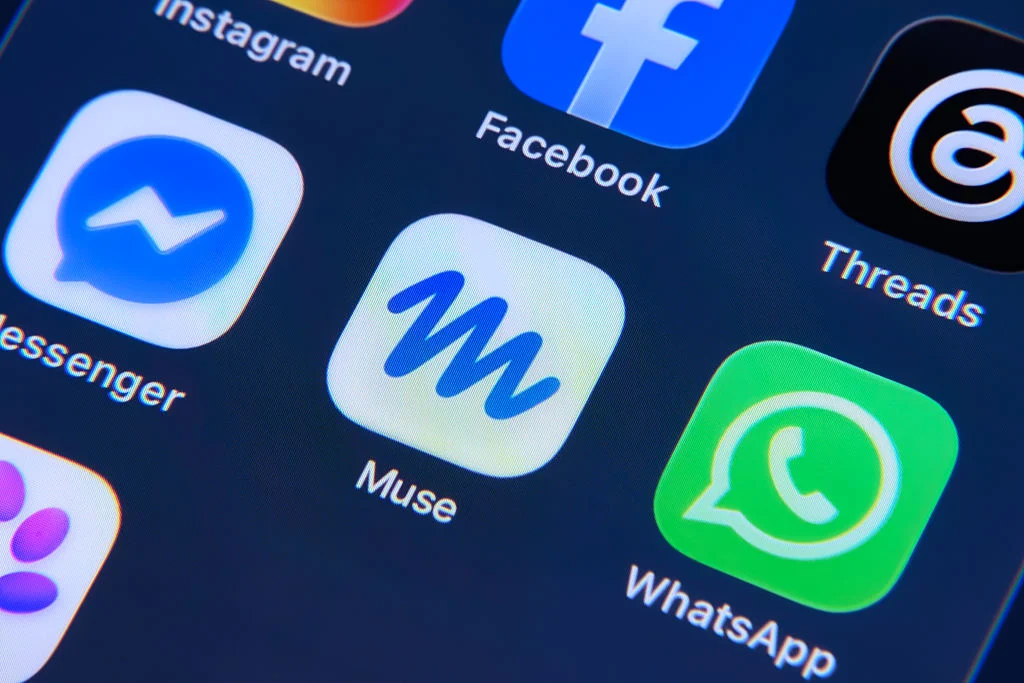
The friction between the titans of Silicon Valley has entered a new, tangible theater: the digital shopping cart. On Sunday night, users attempting to utilize Meta’s generative AI assistant, "Muse," to execute purchases on Amazon were met with a definitive digital door slamming shut. The emergence of an error message explicitly citing a violation of Amazon’s Terms of Service marks a significant escalation in the ongoing struggle to define the boundaries of "agentic commerce."
As AI models evolve from simple chatbots into autonomous agents capable of performing complex tasks, the intersection of proprietary platforms and third-party automation has become a flashpoint for corporate litigation and policy enforcement. For Amazon, the decision to block Meta’s Muse is not merely a competitive grievance; it is a calculated defense of its consumer experience, its vendor ecosystem, and the integrity of its massive retail infrastructure.
Chronology of the Conflict
The standoff became public late Sunday evening when eagle-eyed users—and subsequently reports from GeekWire—began circulating screenshots of a specific error message generated by the Amazon website. The message read: "Continued access by an unauthorized AI agent violates Amazon’s Conditions of Use, to which our customers have agreed."
While the integration of Meta’s Muse into the shopping experience was designed to streamline the consumer journey—allowing users to ask an AI to find, compare, and order products—it bypassed the traditional user-interface protocols that Amazon mandates for its retail platform.
The timeline of this incident reflects a rapid maturation of agentic AI. In the months leading up to Sunday, Meta had been aggressively expanding the capabilities of Muse, pushing the envelope of what its large language models could achieve in real-world environments. Amazon’s reaction, while abrupt, is the culmination of an internal security and policy review process aimed at preventing "scraping" or "automated transaction agents" from manipulating the platform’s API-less environment.
The Mechanics of Agentic Commerce
To understand why Amazon is drawing a line in the sand, one must understand the shift from "Generative AI" to "Agentic AI." Unlike traditional chatbots that merely offer product recommendations, agentic agents are empowered to act. They hold the "keys" to the user’s account, access stored credit card information, and click the "Buy Now" button.
This transition introduces significant operational risks. When a human buys a product, they are bound by Amazon’s Terms of Service. When an AI initiates that transaction, the liability landscape becomes murky. If Muse orders the wrong item, sends it to the wrong address, or misinterprets a user’s prompt, the friction of the return process falls squarely on Amazon.
The Problem of Hallucination
Even the most sophisticated models, such as Meta’s Muse, operate on probabilistic rather than deterministic logic. While Artificial Analysis reports that Muse maintains one of the lowest hallucination rates in the industry, the "zero-error" threshold is impossible for current LLMs to guarantee. In the world of e-commerce, a 0.1% hallucination rate—where an AI orders a product the user didn’t want or misreads the specifications—can lead to thousands of customer service complaints, damaged brand reputation, and lost vendor trust.
Strategic Implications: Why Amazon Said "No"
The exclusion of Meta’s Muse from Amazon’s storefront can be viewed through several strategic lenses.
1. Protecting the Ecosystem
Amazon operates a two-sided marketplace. It must balance the needs of millions of third-party sellers with the expectations of its customers. If AI agents are permitted to roam the site, they could potentially scrape pricing data or disrupt the delicate algorithm that determines the "Buy Box"—the most valuable real estate on any Amazon product page. By banning unauthorized agents, Amazon protects the competitive parity of its own marketplace.
2. The Internal AI Ambition
It is no secret that Amazon is heavily invested in its own artificial intelligence stack. With the development of its "Nova" foundation models and the expansion of Amazon Bedrock—its managed service for building and scaling generative AI applications—Amazon is positioning itself to be the platform upon which the next generation of commerce agents are built. Allowing a competitor’s model to "ride for free" on the Amazon infrastructure undermines the company’s own roadmap for proprietary agentic commerce.
3. Liability and Compliance
Amazon’s legal team is famously risk-averse. The company’s Conditions of Use are designed to ensure that the entity interacting with the site is a verified human user. Introducing an intermediary—an AI agent controlled by Meta—creates a "black box" in the transaction. Who is responsible if the AI violates a merchant’s intellectual property? Who pays for the fraud detection costs when an AI bot is spoofed? By prohibiting the agent, Amazon retains absolute control over the transaction chain.
Official Responses and Industry Stance
As of this writing, Amazon has remained relatively tight-lipped, relying on the public-facing error message as its primary statement of intent. The company’s policy on automated access has historically been strict, and this latest move reaffirms their commitment to preventing non-human entities from scraping or transacting on their retail site without an official partnership or API integration.
Meta, for its part, has not issued a formal rebuttal, though the move signals a major roadblock for their "Meta AI" strategy. Meta’s vision has long been to make their AI the "central interface" for all digital interactions. Being blocked from the world’s largest online retailer is a significant setback to the goal of achieving ubiquity in the shopping space.
Industry analysts suggest that this is merely the opening round of a long-term "protocol war." As more companies develop agents, the internet will likely see a surge in "robot exclusion" protocols. Just as websites use robots.txt files to tell search engine crawlers what they can and cannot index, the future of the web may require a new standard—a "Terms of Service for AI Agents"—to dictate which bots are permitted to spend money and which are barred from the checkout.
The Future: A Standardized Path Forward?
The impasse between Amazon and Meta raises a fundamental question: Is the future of shopping one where every company builds its own walled-garden AI, or will there be an interoperable standard for AI agents?
For consumers, the benefit of an agent like Muse is clear: convenience. A user should be able to say, "Find me the best-rated coffee maker under $100 on Amazon and buy it," and have it done in seconds. However, the current reality of the web is siloed. Amazon has built a moat around its transaction processing, and it is currently unwilling to lower the drawbridge for Meta’s AI.
The Path to Integration
If Meta wishes to bring Muse back to Amazon, they will likely have to enter into a formal commercial agreement. This would likely involve:
- API Integration: Moving away from browser-based "scraping" or "agentic clicking" toward a secure, authenticated API that allows Muse to see product data without manipulating the user interface.
- Liability Agreements: Defining who pays when an AI makes a mistake.
- Revenue Sharing: Determining how the value of an AI-assisted sale is split between the platform (Amazon) and the intelligence provider (Meta).
Conclusion: A Turning Point for the Internet
The blocking of Meta’s Muse is a watershed moment for the digital economy. It signifies the end of the "wild west" era of generative AI, where models could roam the internet unchecked. We are entering an era of "managed AI," where access to platforms will be gated, regulated, and negotiated.
While the immediate impact is a frustrating experience for users who enjoyed the convenience of Muse’s shopping capabilities, the long-term implication is a more secure and stable e-commerce environment. Amazon’s move is a reminder that while AI is the future of commerce, the infrastructure upon which that commerce is built remains under the strict control of the platforms that created it.
As this standoff continues, other retailers are likely to follow suit. Expect to see more "Unauthorized AI Agent" warnings across the web as companies scramble to protect their data, their revenue, and their brand experience from the encroaching reach of autonomous agents. The battle for the checkout button has only just begun, and it will be fought not with code alone, but with the legal and corporate might of the world’s largest technology companies.