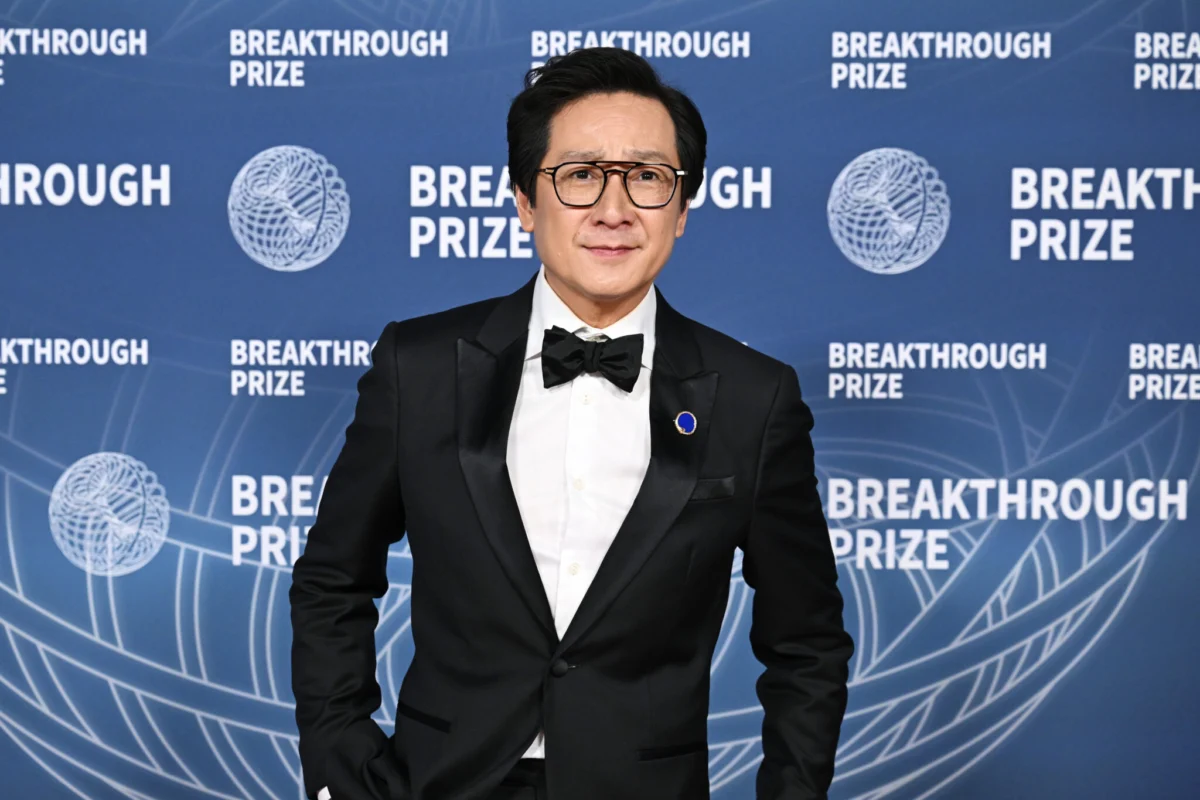
In the glittering, often fickle ecosystem of Hollywood, the trajectory of a career is rarely a straight line. For Ke Huy Quan, the path has been a labyrinthine journey of harrowing displacement, early fame, decades of obscurity, and an unprecedented, Oscar-winning resurrection. In his newly released memoir, Never Say Die, the beloved actor pulls back the curtain on a pivotal moment from his childhood that serves as a microcosm of his unique journey: the day he received a life-altering residual check for $100,000 for his work on Indiana Jones and the Temple of Doom.
The Genesis of a Star: The $100,000 Revelation
Long before he captured the hearts of modern audiences as Waymond Wang in Everything Everywhere All at Once, a 12-year-old Ke Huy Quan stood in his family’s kitchen, staring at an envelope that would redefine their financial reality. Having been cast as Short Round, the spirited sidekick to Harrison Ford’s legendary archaeologist, Quan was navigating the surreal world of a massive blockbuster film.
At the time, the concept of a child actor receiving residuals—ongoing payments for the re-airing or distribution of a project—was virtually non-existent, particularly for a performer in their debut role. Yet, as Quan recounts in his memoir, Lucasfilm took an extraordinary step that resonated far beyond the boardroom.
"One afternoon, I walked into the kitchen and found my parents standing together at the table," Quan writes. "Mom was holding an envelope with my name printed across it. Dad had the papers that had been inside." The scene, described with the clarity of a core memory, highlights the profound confusion and eventual awe of a young boy encountering a sum of money that defied his understanding of the world. "They were both smiling, the kind of smile that comes from surprise and disbelief mixed together. They handed everything to me. It was a check from Lucasfilm. It was for almost $100,000, an amount that didn’t make any sense to me."
Chronology of a Remarkable Life
To understand the significance of this check, one must look at the timeline of Quan’s early life, which was marked by trauma and transition long before he stepped onto a film set.
Fleeing Vietnam
Born in Saigon in 1971, Quan’s early childhood was defined by the chaos of the Vietnam War. In 1975, his family was forced to flee their home. Quan’s father took part of the family to Taiwan, while his mother fled to Malaysia with the other siblings. The family eventually reunited in the United States, but the journey was marked by time in refugee camps—an experience that instilled in Quan a deep sense of humility and a relentless work ethic.
The 1980s: A Brief Taste of Fame
Quan’s entry into Hollywood was serendipitous. Accompanying his brother to an open casting call for Indiana Jones and the Temple of Doom, he was spotted by casting directors who were impressed by his natural charisma. His turn as Short Round in 1984 made him an instant international sensation. The following year, he cemented his status as a childhood icon by playing the gadget-obsessed Data in Richard Donner’s cult classic, The Goonies.
The "Lost Years"
Following his early success, the industry began to shift. As Quan matured, roles for Asian actors became increasingly scarce and stereotypical. By the early 1990s, the offers stopped coming. For nearly three decades, Quan transitioned behind the scenes, working as a stunt choreographer and assistant director. He largely stepped away from the spotlight, a period he describes not as a failure, but as a time of personal growth and observation.
The Triumphant Return
The year 2023 marked the completion of a circle that began nearly forty years prior. With his role in Everything Everywhere All at Once, Quan returned to the screen with a performance that resonated deeply with global audiences. His subsequent Best Supporting Actor Oscar win was not just a personal victory, but a cultural milestone, proving that talent and tenacity can transcend even the longest professional winters.
The Industry Context: Why the Check Mattered
The $100,000 payment was not merely a financial windfall; it was a radical anomaly in the 1980s film industry. As Quan notes in his memoir, the financial structure of Hollywood at the time favored studios and top-tier A-list stars exclusively.
"Back then, almost no actors got a piece of a movie’s profits," Quan reflects. "Even today, only the biggest stars do. That a kid like me, making his first film, would be included in something like that was unheard of."
This payment underscores the generosity of the production team behind Temple of Doom. In an era where child actors were often treated as disposable labor, Lucasfilm’s decision to provide a residual—effectively a profit-sharing arrangement—provided a level of financial security that allowed the Quan family to stabilize their lives in America. For a family of refugees who had lost everything only a decade prior, this gesture was, in his own words, "life-changing."
Implications: The Legacy of a Child Star
The story of the $100,000 check serves as a poignant reminder of the power of institutional support. While Quan would later face years of hardship, the stability provided by his early work allowed him to pursue his education and find his way back to the industry on his own terms.
The Evolution of Residuals
Today, the conversation around residuals has become a central pillar of labor disputes in Hollywood, most notably during the 2023 SAG-AFTRA strikes. Quan’s experience serves as a historical case study in the importance of fair compensation for all actors, regardless of their age or status at the time of filming. His story highlights that when production companies treat their talent—even the youngest among them—with respect, the ripple effects can last a lifetime.
Representation and Longevity
Quan’s narrative is now a beacon for actors of color who find themselves facing the same systemic barriers he encountered in the 90s. His return proves that longevity is possible, even when the industry suggests otherwise. By sharing the reality of his financial and emotional journey in Never Say Die, Quan is demystifying the life of a Hollywood star, showing that success is not just about the red carpets and golden statues, but about the resilience required to survive the quiet moments in between.
A Reflective Conclusion
Ke Huy Quan’s memoir, Never Say Die, is more than a retelling of a successful career; it is a testament to the resilience of the human spirit. From the refugee camps of his youth to the center stage of the Academy Awards, his life has been a series of profound surprises.
The $100,000 check, which once baffled a 12-year-old boy, now stands as a symbol of the unexpected kindnesses that can shape a trajectory. As readers delve into his memoir, they aren’t just reading about a child actor who made it big; they are witnessing the endurance of a man who never lost sight of his gratitude. In an industry defined by its ability to create illusions, Ke Huy Quan remains a rare figure of authentic, enduring substance. His story is a poignant reminder that even in the most cynical of worlds, a little bit of support—and a lot of perseverance—can truly change everything.