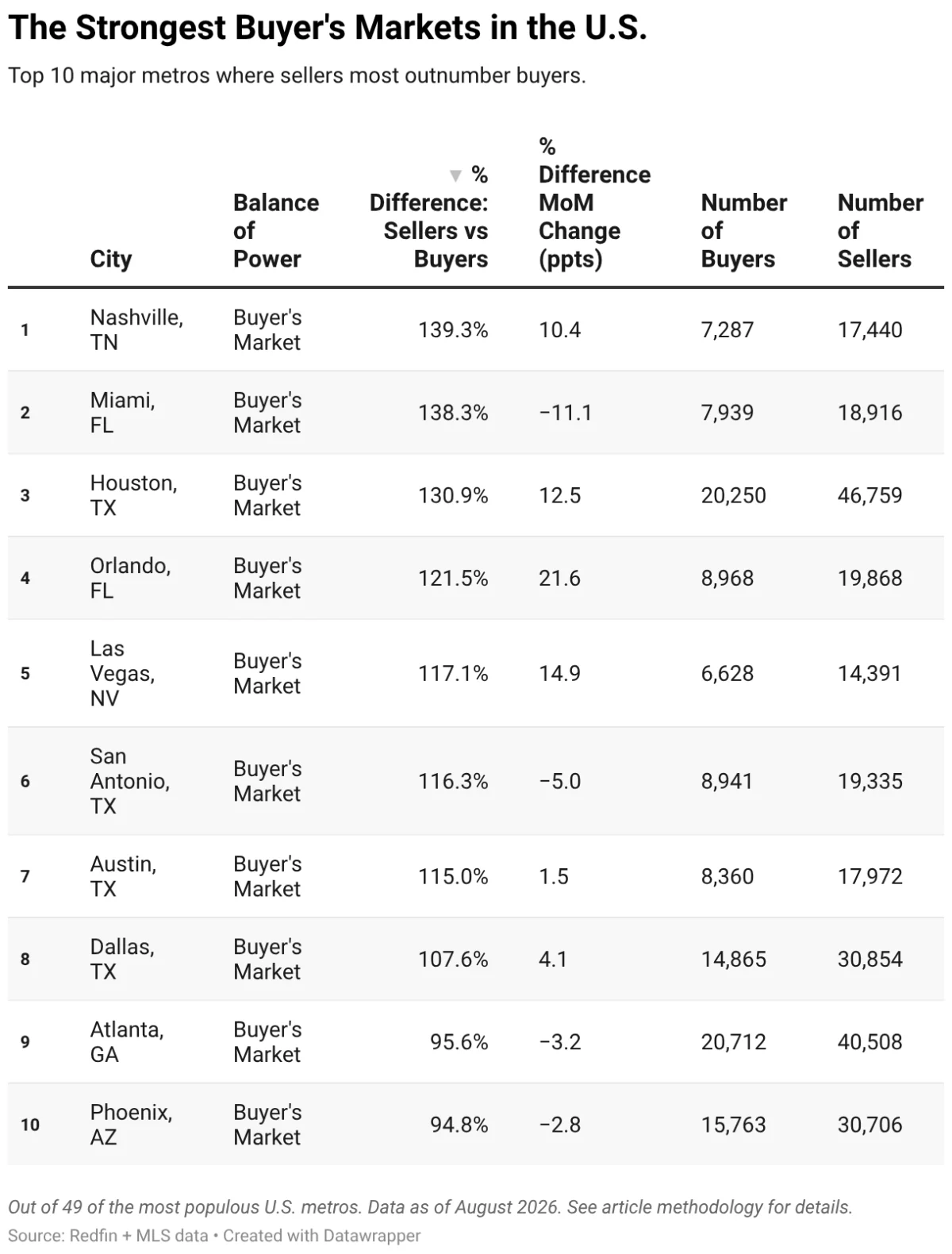
The American housing market has officially crossed a threshold into uncharted territory. As of August 2026, the United States is navigating the most pronounced buyer’s market on record, a stark reversal from the frantic, seller-dominated landscape that defined the pandemic era. While the headlines suggest a "buyer’s market," the reality for millions of Americans remains a complex paradox: a landscape where leverage has shifted toward the purchaser, yet the broader affordability crisis keeps many sidelined.
The Core Dynamics: A Statistical Shift
For the first time in recent history, sellers outnumber buyers by a staggering 58%. According to recent data, the market is currently populated by approximately 1.53 million sellers facing off against just 972,000 active buyers. In the lexicon of real estate economics, this imbalance—a significant seller surplus—traditionally serves as the primary indicator of a buyer’s market.
When sellers outnumber buyers, the typical power structure of a transaction inverts. Buyers, who were once forced to engage in desperate bidding wars and waive critical contingencies, are now finding themselves in the driver’s seat. They are increasingly able to demand concessions, negotiate lower closing costs, and conduct thorough inspections without the fear of losing the property to a cash-heavy competitor.
However, this statistical "buyer’s market" is fraught with friction. A persistent, historic affordability crisis acts as a ceiling on market activity. Most prospective homeowners are currently holding their breath, waiting for economic stabilization. Conversely, more sellers are entering the market, forced to list their properties as they adjust to the reality of a slower, more deliberate sales environment. This widening gap between supply and demand is the defining characteristic of the 2026 housing climate.
A Chronology of the Shift: From Pandemic Frenzy to 2026
To understand how we arrived at this historic pivot, one must look back at the trajectory of the post-2021 market.
- 2021–2022: The Peak Seller’s Market. During the height of the pandemic, low interest rates and a sudden, mass migration of remote workers created a vacuum in housing supply. Demand soared, prices reached record highs, and homes routinely sold within days of hitting the market.
- 2023–2024: The Cooling Phase. As the Federal Reserve aggressively hiked rates to combat inflation, the affordability of homes plummeted. The "zoomtowns"—pandemic boomtowns like Austin, Texas—began to see significant price corrections as the initial surge in demand evaporated.
- 2025: The Tipping Point. Throughout 2025, inventory began to accumulate. In regions like Florida, housing supply hit record highs as a combination of rising insurance costs, climate-related migration concerns, and high listing prices caused buyers to retreat to the sidelines.
- 2026: The New Normal. By August 2026, the market had settled into a definitive buyer’s advantage. While the national trend leans toward buyers, the shift is not uniform, creating a geographic divergence that separates the Sun Belt from the rest of the country.
Regional Divergence: Where Leverage Lives
The 2026 market is defined by a geographic split. The Sun Belt—stretching from the Southeast to the Southwest—has become the epicenter of the buyer’s market.
Miami, Florida, currently leads the nation in buyer leverage. Austin, Texas, remains a focal point of this shift, serving as "ground zero" for the cooldowns that have swept through former pandemic hot spots. The logic behind this shift is twofold: speculative overbuilding during the boom years and a recent cooling in demand. In Florida, the surge in homebuilding that occurred between 2021 and 2023 resulted in an inventory glut that now sits on the market, waiting for buyers who are increasingly wary of surging property insurance premiums and climate risks.
Conversely, a small group of markets remains stubbornly in favor of the seller. The Midwest and the Northeast have become the last bastions of the seller’s market. In these regions, the factors are structural rather than speculative: homebuilding and population growth have historically lagged, creating a chronic supply shortage. Furthermore, San Francisco has seen a surprising, localized resurgence. An "avalanche of demand" fueled by the recent influx of AI-related wealth has transformed the city into the nation’s most expensive metro, shifting it into a seller’s market for only the second time in four years.
The Mechanics of Market Power: Expert Perspectives
Understanding whether one is in a buyer’s or seller’s market requires more than just glancing at national headlines. Real estate analysts point to the "months of supply" metric as the most reliable indicator.

- Seller’s Market: Characterized by less than four months of supply. Here, demand exceeds supply, leading to rapid price appreciation and competitive bidding.
- Buyer’s Market: Characterized by five to six months or more of supply. Here, sellers must compete for a limited pool of buyers, often resulting in price stagnation or targeted concessions.
Local real estate professionals emphasize that the national data is a "baseline," not a rule. "Even within a single city, neighborhoods can behave like entirely different markets," notes one industry analyst. "A buyer’s market at the median price point might still look like a seller’s market for entry-level starter homes."
Economic Implications and Future Outlook
The transition to a buyer’s market is being heavily influenced by macroeconomic headwinds. Inflation remains a persistent concern, and the geopolitical landscape—including ongoing conflicts in the Middle East and international trade tariffs—has injected a layer of uncertainty that makes consumers hesitant to commit to long-term mortgage debt.
Furthermore, the construction industry is facing its own crisis. Building a home today is more expensive than at any point in recent history due to labor shortages and the rising cost of raw materials. This puts additional pressure on an aging housing stock, as new construction struggles to keep up with the specific needs of modern families.
However, the outlook is not entirely bleak. As market competition cools, price growth is moderating. In many areas, home prices have begun to stabilize or even correct, which may eventually improve affordability for those who have been priced out for years. Redfin economists suggest that as the market adjusts to the higher-rate environment, the potential for increased housing affordability in the coming years is high, provided that the supply-demand imbalance is addressed through sustainable policy and development.
What Stakeholders Should Do
For those currently navigating the market, the advice from industry experts is specific to their role:
For Buyers:
- Leverage your position: Since you are in the driver’s seat, do not be afraid to request repairs, inspection concessions, or seller-paid closing costs.
- Research local inventory: Use the Redfin Data Center to track "months of supply" in your specific target zip code.
- Prioritize long-term value: In a cooling market, focus on properties that offer long-term stability rather than short-term appreciation.
For Sellers:
- Price aggressively: If your local market has five or more months of supply, overpricing your home is the quickest way to ensure it sits on the market.
- Enhance curb appeal: In a market where buyers have options, your property must stand out immediately.
- Work with a local expert: An agent who understands the nuance of your specific neighborhood is vital to navigating the current, slow-moving environment.
As the U.S. housing market continues to evolve, the era of the "uncontested seller" has effectively closed. The 2026 market demands a more analytical approach, favoring those who are patient, well-informed, and prepared to capitalize on the shifting power dynamics. While the affordability crisis remains a significant hurdle, the transition to a buyer’s market represents a necessary correction in a landscape that has long been defined by extreme, unsustainable growth.