Main Facts: A Strategic Meeting Amid Global Turbulence
As the international community prepares for the upcoming G7 summit in the picturesque French lakeside town of Evian-les-Bains, the spotlight is shifting toward a high-profile bilateral engagement between U.S. President Donald Trump and French President Emmanuel Macron. The two leaders are scheduled to convene for a formal dinner at the opulent Palace of Versailles, a venue steeped in historical significance, immediately following the conclusion of the G7 proceedings.
The summit, which brings together the world’s leading industrialized nations—the United States, Britain, Canada, France, Germany, Italy, and Japan—serves as the primary stage for addressing a complex array of modern challenges. From the stability of global supply chains and the rapid evolution of artificial intelligence to the pressing issues of illegal migration and sustainable economic growth, the agenda is as dense as the current geopolitical climate is volatile.
For President Trump, the trip to France arrives on the heels of his 80th birthday celebrations. The President is expected to maintain a rigorous schedule, prioritizing one-on-one dialogues with various foreign heads of state. Most notably, sources within the administration have signaled that the White House is keen to make substantive progress on a potential resolution regarding the ongoing tensions with Iran.
Chronology of Events
The diplomatic sequence for the coming week is structured to balance formal multilateral cooperation with critical bilateral negotiations:
- Sunday: President Trump concludes his 80th birthday celebrations at the White House with a unique social event—a mixed martial arts exhibition hosted on the Executive Mansion’s lawn.
- Monday: President Trump arrives in France, marking the official commencement of his diplomatic tour. Initial meetings with President Macron are expected to begin shortly after his arrival.
- Mid-Week: The G7 summit officially convenes in Evian-les-Bains. The sessions will feature intense discussions on economic development, AI regulation, and security protocols regarding critical minerals.
- Wednesday Evening: The pinnacle of the bilateral visit occurs as President Macron hosts President Trump at the Palace of Versailles. This dinner serves a dual purpose: celebrating the 250th anniversary of the independence of the United States and reinforcing the historic alliance between France and the U.S.
- Post-Summit: Trump is slated to engage in a series of side-line discussions with leaders from Qatar, the United Arab Emirates, Egypt, and India—nations invited by the French presidency to participate in the broader conversation.
The Historic Stage: Versailles as a Diplomatic Tool
The choice of the Palace of Versailles is far from coincidental. As the former residence of French monarchs from Louis XIV to Louis XVI, the site serves as an architectural testament to French grandeur. However, in contemporary statecraft, it functions as a "soft power" instrument.
President Macron has frequently utilized the palace to cultivate personal relationships with global leaders. In 2017, early in his first term, Macron hosted Russian President Vladimir Putin at the palace—a stark contrast to the current state of relations between Paris and Moscow following the invasion of Ukraine. More recently, in 2021, the palace hosted King Charles III and Queen Camilla to mark its 400th anniversary, with a lavish banquet held in the famed Hall of Mirrors.
By inviting President Trump to this venue, Macron is signaling a desire to elevate the current U.S.-French dialogue, framing the dinner as a symbolic reaffirmation of the long-standing friendship between the two nations that traces back to the American Revolution.
Supporting Data: The G7 Agenda and Regional Conflicts
The G7 summit arrives at a time when the post-World War II international order is being tested on multiple fronts. The discussions in Evian-les-Bains will be dominated by several key pillars:
The War in Ukraine
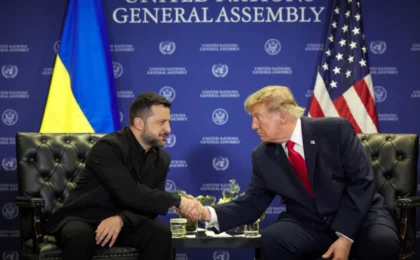
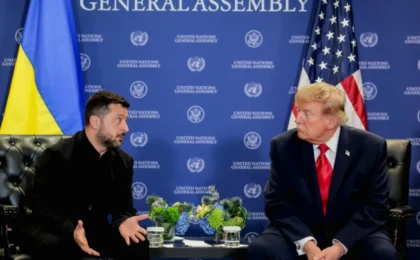
While no formal sit-down meeting between President Trump and Ukrainian President Volodymyr Zelensky has been confirmed on the official calendar, the presence of both leaders in Evian-les-Bains suggests that informal, impromptu discussions are highly likely. The G7 remains the primary forum for coordinating financial and military support for Kyiv, and the leaders are expected to renew their commitment to countering Russian aggression.

The Iranian Question
White House officials, speaking on the condition of anonymity, have emphasized that the Trump administration is treating the Iran conflict as a top-tier priority. The administration is seeking a viable pathway to finalize a new agreement that would address the regional security vacuum. The inclusion of leaders from Qatar, the UAE, and Egypt in the summit discussions is a clear indication that Washington is pursuing a multilateral approach to regional stability in the Middle East.
Global Economic and Technological Challenges
The G7 will also grapple with the "New Economy." Key focus areas include:
- Critical Minerals: Establishing secure supply chains to break dependencies on adversarial states.
- Artificial Intelligence: Attempting to forge a common regulatory framework to manage the risks associated with rapid AI deployment.
- Migration: Addressing the humanitarian and security challenges posed by uncontrolled, illegal migration flows, particularly into Europe.
Official Responses and Administration Stance
The White House has maintained a disciplined stance regarding the upcoming trip. Officials have clarified that while the schedule is packed, the administration is prioritizing "result-oriented diplomacy." Regarding the potential for meetings with leaders from the Middle East, the briefing highlighted that these conversations are intended to leverage regional partnerships to solve localized conflicts.
The French presidency has been equally deliberate, characterizing the Versailles dinner as a celebration of the "unbreakable bond" between the two nations. For Macron, the challenge lies in balancing the deep-seated historical alliance with the U.S. while maintaining a distinct European voice on issues like climate change and trade, which often see friction between the two administrations.
Implications for Global Geopolitics
The significance of this summit, and the Trump-Macron meeting in particular, cannot be overstated.
1. Realigning the Atlantic Alliance
The relationship between Washington and Paris has seen ebbs and flows over the last decade. A successful meeting at Versailles could serve to stabilize the trans-Atlantic relationship, providing a united front ahead of the G7’s collective decisions. Conversely, any public disagreement regarding the handling of the war in Ukraine or trade policies could fracture the G7 consensus.
2. The Future of Middle East Security
If the Trump administration manages to gain traction on an Iran deal through its meetings in France, it would represent a major diplomatic victory. However, the involvement of diverse regional players—including the UAE and Qatar—complicates the calculus, as each nation brings its own security requirements and strategic interests to the table.
3. The Shift Toward Multipolarity
The invitation extended to non-G7 members like India, Egypt, and the Gulf states underscores a shift in how the G7 views its role. It is no longer just a "rich countries’ club"; it is evolving into a platform for building ad-hoc coalitions to tackle specific, pressing crises.
As the delegations descend upon the French lakeside, the world will be watching to see if the elegance of Versailles can foster the necessary compromise to navigate a increasingly fractured global landscape. Whether the dinner results in a breakthrough or remains a symbolic gesture, the events in France next week will set the tone for the remainder of the year in international diplomacy.