For millions of aspiring homeowners, the dream of property ownership has felt increasingly like a mirage over the past five years. With home prices surging 20% since 2020 and mortgage rates nearly doubling, the American housing market has become a battleground of affordability. As the market enters a new phase in 2026, many prospective buyers remain sidelined, waiting for a "pop" in the bubble that economists insist is unlikely to happen.
Instead of a crash, the nation is witnessing a slow, calculated cooling—a necessary correction to the unsustainable frenzy of the pandemic era. Here is an in-depth analysis of why the market is holding steady, how affordability is quietly improving, and what this means for the future of American real estate.
The Core Reality: Why Prices Aren’t Going Down
There is a persistent misconception among prospective buyers that house prices are destined to revert to pre-pandemic levels. However, the fundamental mechanics of the U.S. housing market suggest that a national price collapse is not on the horizon.
According to Daryl Fairweather, Chief Economist at Redfin, "House prices aren’t going to fall on a national scale any time soon—and that’s actually a good thing." Fairweather explains that gradual appreciation is a hallmark of a healthy, functioning economy. The volatility observed between 2020 and 2022 was an anomaly, driven by a "perfect storm" of low-interest rates, a sudden shift in lifestyle needs, and a historic inventory crunch.
Today, the market is moving toward a more sustainable growth trajectory. While the days of hyper-acceleration are largely over, the structural demand for housing remains robust. Prices are no longer surging, but they are unlikely to decline significantly because the costs of land, labor, and materials remain high, establishing a "new floor" for home valuations.
A Chronological Look at the Market’s Evolution
To understand where we are going, we must look at the path that brought us here:
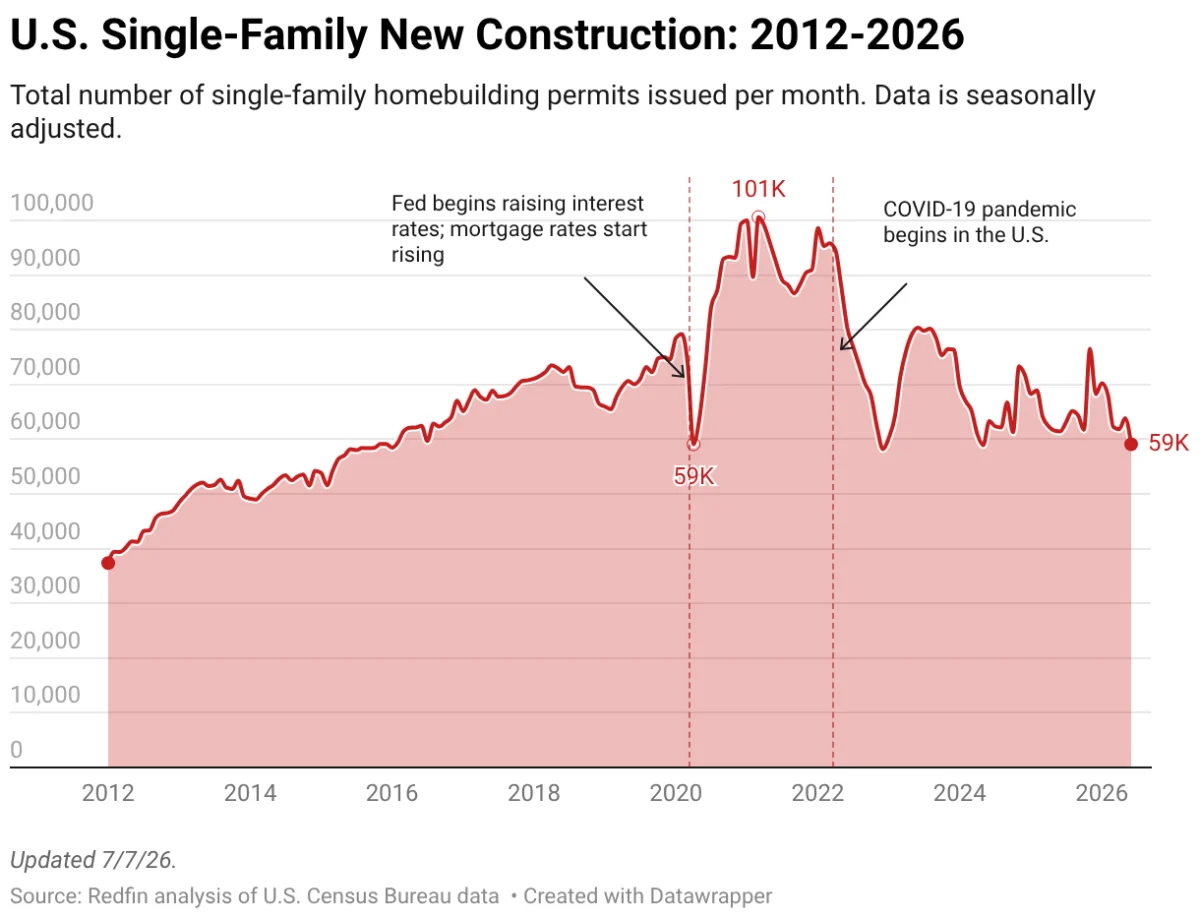
- 2020–2021: The Pandemic Catalyst. As COVID-19 forced millions into remote work, the demand for residential space exploded. Simultaneously, mortgage rates plummeted to record lows, incentivizing a buying spree that rapidly depleted the nation’s available inventory.
- 2022–2023: The Inflationary Spike. To combat rampant inflation, the Federal Reserve began a series of aggressive interest rate hikes. This effectively killed the "refinance boom" and sent mortgage rates soaring, causing a sudden freeze in buyer activity.
- 2024–2025: The Plateau. The market entered a period of stagnation. Sellers, locked into low-interest-rate mortgages from the pandemic, refused to list their homes, further constricting supply. Buyers, faced with both high prices and high interest rates, were forced to the sidelines.
- 2026: The Beginning of the Reset. We are currently in a phase of stabilization. Wages have finally begun to outpace housing cost growth, and the market is adjusting to the "new normal" of interest rates.
The Pillars of High Costs: Why Inventory and Construction Stalled
The primary driver behind today’s expensive market is a simple, brutal equation: there are far more people looking for homes than there are homes to buy.
1. The Chronic Inventory Shortage
The U.S. faces a systemic housing shortage estimated by various institutions to be between 1.5 million and 7 million units. This gap began to widen at the turn of the century and accelerated sharply following the Great Recession of 2008, when many homebuilders went out of business and stopped developing new properties for years. When inventory is scarce, prices naturally rise, creating a cycle where homeowners are hesitant to list their properties because they fear they won’t find a replacement home in a competitive market.
2. The Failure of Homebuilding
For decades, the U.S. relied on a steady pipeline of new construction to accommodate population growth. However, after the 2008 collapse, new home starts plummeted and never fully recovered to meet the demand of the Millennial generation entering their peak buying years. Current efforts, such as the ROAD to Housing Act, aim to remove the regulatory hurdles that prevent developers from increasing supply. However, building a house is a long-lead-time endeavor; even if the legislation is successful, it will take years for the new supply to hit the market.
3. The Mortgage Rate "Lock-In" Effect
Mortgage rates are the heartbeat of the housing market. During the pandemic, millions of Americans locked in rates below 3%. Today, with rates significantly higher, these homeowners are effectively "locked" into their current properties. Moving would mean trading a 3% mortgage for a 6% or 7% rate, which would drastically increase their monthly payments. This has caused "lock-in," where existing inventory remains off-market, keeping prices elevated due to a lack of supply.
Is Affordability Improving?
While the sticker price of a home might remain daunting, the affordability of housing is showing signs of life. Since late 2025, wage growth has begun to outpace the rise in housing costs.
"A more accurate question to ask would be ‘when will housing affordability improve?’" notes Fairweather. "And the answer is ‘right now!’"
Affordability is not just a function of the price tag; it is a function of the price relative to the buyer’s income. As interest rates begin to stabilize and wage growth continues, the "pain" of the monthly mortgage payment is slowly decreasing for the average consumer. This is a quiet, incremental process, but it is the most reliable way for the market to heal.
Regional Anomalies: Where Prices Are Actually Falling
While the national trend is one of stabilization, some markets are experiencing a correction. Cities that saw the most aggressive price spikes during the pandemic—notably Austin, Nashville, and San Antonio—are seeing prices soften.
These areas were "pandemic darlings." When remote work was at its peak, these cities saw an influx of residents fleeing expensive coastal hubs. As companies began calling employees back to the office and the "work-from-anywhere" trend normalized, the migration slowed. Consequently, inventory in these regions has ballooned, and sellers are finding they can no longer command the premiums of 2022. Austin, in particular, has seen prices drop by over $100,000 from their peak, serving as a cautionary tale for investors who banked on never-ending appreciation.
Implications for Buyers and Sellers
For the Homebuyer
If you are waiting for a crash to enter the market, you may be waiting for a catalyst that never arrives. Waiting carries its own risks: you may lose out on the opportunity to build equity, and you may find yourself priced out if competition increases when rates eventually drop. Instead of looking for a "crash," buyers should focus on local market dynamics. In many areas, the current lack of buyer competition gives savvy shoppers the upper hand to negotiate concessions, home repairs, or price reductions with motivated sellers.
For the Seller
Sellers must adjust their expectations. The era of receiving ten over-asking offers in a weekend is largely over. Sellers in today’s market need to be prepared for longer days on market and the possibility of having to make concessions to close a deal. For those who bought at the peak, selling now might result in a "break-even" scenario, but for those with significant equity, the market remains stable enough to facilitate a move, provided they price their home realistically.
Conclusion: The Path Toward Stability
The U.S. housing market is not in the throes of a crash; it is in the midst of a transition. The turbulence caused by the pandemic, inflation, and global economic shifts is being smoothed out by the steady, if slow, return to fundamentals.
While global factors—from shifting labor markets and artificial intelligence to international conflicts—continue to create an atmosphere of uncertainty, the housing market has shown a remarkable degree of resilience. The "reset" we are experiencing is painful for those caught in the middle, but it is a necessary evolution to ensure long-term stability. For both buyers and sellers, the best strategy is not to wait for an economic miracle, but to navigate the market with a clear understanding of current realities: homeownership remains a long-term commitment, and today’s market, while challenging, is finally starting to find its footing.