As of June 2026, the American housing market has reached a sobering milestone: the median home price has climbed to a record-shattering $409,000. This figure represents a staggering 20% surge over the last five years, a period defined by pandemic-era volatility, stubborn inflation, and a fundamental shift in the American dream. For millions of prospective homeowners, the path to property ownership has become not just difficult, but seemingly impassable, as elevated mortgage rates, rising property taxes, and a shaky economic landscape create a perfect storm of affordability challenges.
This article examines the structural, political, and economic forces behind these record prices, the role of government policy, and what the future holds for buyers and sellers caught in this historic impasse.
The Core Realities: Why Is Housing So Expensive?
The current state of the market is not the result of a single policy failure, but rather a convergence of three primary stressors: a chronic, decades-long supply shortage; archaic zoning laws; and the aggressive expansion of institutional real estate investors.
1. The Chronic Supply Gap
At the heart of the crisis is a simple, brutal equation: demand far outstrips supply. Economists estimate that the United States is short anywhere from 1.5 million to 7 million homes. This deficit traces its roots back to the Great Recession, when the construction industry collapsed, leading to widespread bankruptcies and a decade of underbuilding. By the time the economy recovered, the industry lacked the workforce and capital to ramp up at the pace required by a growing population.
The pandemic accelerated this existing fracture. A surge in remote work and a frantic scramble for space drained the already thin inventory to record lows. Today, the market is defined by "stale" inventory—homes that are sitting on the market longer because they are priced beyond the reach of the average American, yet homeowners are reluctant to sell and lose their existing low-rate mortgage positions.
2. The Zoning Bottleneck
"WWII-era zoning laws" have become a primary antagonist in the quest for affordable housing. In states like California, as much as 96% of available land is zoned exclusively for single-family homes. These regulations prevent the construction of "missing middle" housing—duplexes, townhomes, and small apartment complexes—that are essential for urban density and affordability.
Construction costs, further inflated by supply chain disruptions and labor shortages, have made it financially unviable for developers to build smaller, entry-level starter homes. Builders have largely pivoted to luxury, high-margin projects, further widening the gap for first-time buyers.
3. The Rise of the Institutional Investor
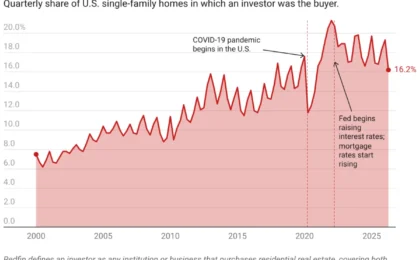
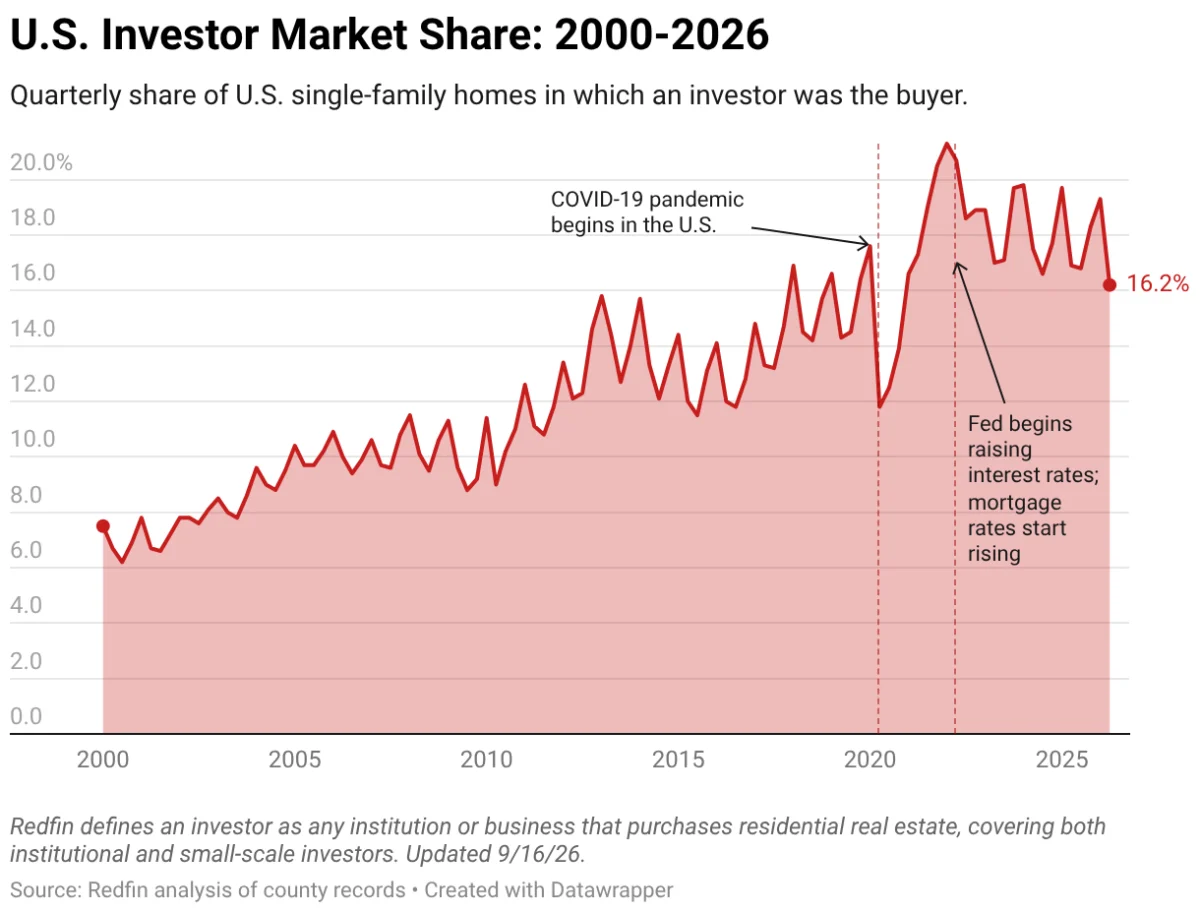
Institutional investors—firms that purchase residential real estate for profit—became a polarizing force during the post-pandemic recovery. By 2022, investors accounted for 21% of all home purchases. While this share has declined as interest rates rose, their presence remains significantly higher than in pre-pandemic years.
However, experts like Chen Zhao, Head of Economics Research at Redfin, caution against viewing investors as the sole villain. "Large institutional investors actually account for only around 1% of total home purchases," Zhao notes. "While limiting them sounds like a solution, it ignores the fact that these firms often contribute to the rental supply. Restricting them without first addressing the core issue—the lack of construction—will only tighten the rental market further."
A Chronology of the 2026 Housing Crisis
To understand how we arrived at this moment, it is necessary to look back at the trajectory of the last several years:
- 2020–2021 (The Frenzy): The pandemic triggers a flight from urban centers. Low interest rates lead to a buying frenzy, depleting existing home stocks and pushing prices to new heights.
- 2022–2023 (The Rate Hike): The Federal Reserve begins an aggressive campaign to combat inflation, pushing mortgage rates to multi-decade highs. The housing market freezes; sellers refuse to list, and buyers are priced out.
- 2024–2025 (The Stagnation): Prices refuse to drop despite falling demand because of the extreme supply shortage. Economic uncertainty and high construction costs keep building starts lower than projected needs.
- 2026 (The Current Impasse): Prices reach the $409,000 median peak. The "ROAD to Housing Act" is introduced and passed, signaling a shift in federal policy toward supply-side interventions and restrictions on large-scale institutional buying.
Official Responses and Political Maneuvering
The federal government has recently attempted to intervene, with the "ROAD to Housing Act" serving as the centerpiece of current policy. President Trump’s administration has focused on a dual strategy: reducing environmental and regulatory hurdles for developers while simultaneously aiming to restrict institutional investors from hoarding single-family stock.
However, these policies face significant criticism from economists. While reducing "red tape" is welcomed by the construction industry, the administration’s harder stance on immigration is expected to exacerbate the labor shortage in the construction trades, potentially driving up building costs and negating the benefits of deregulation.
Daryl Fairweather, Redfin’s Chief Economist, offers a pragmatic view: "It is normal for house prices to rise slowly over time, but the current market is historically slow and expensive. It will take a concerted political and industry-wide effort to close the supply gap. We need to normalize costs, not just hope for a market crash that might never come."
Economic Implications: Renting vs. Buying
The most profound shift in the American housing landscape is the changing psychology of homeownership. In every major U.S. city, renting has become more affordable than buying. This has led to a fundamental restructuring of the American dream, particularly for Gen Z and Millennials, who are increasingly viewing homeownership as a distant, or perhaps even secondary, goal.
The rental market, while under pressure, has remained more resilient than the for-sale market, largely because local governments have been more successful in updating zoning to allow for multifamily development. As long as the monthly cost of a mortgage—compounded by high insurance and property taxes—remains significantly higher than rent, the transition from renter to owner will continue to slow.
Strategic Guidance: Navigating the Market
For those still looking to participate in this volatile landscape, experts suggest a highly localized approach.
For Buyers: The Power of Patience and Location
- Understand Your Local Micro-Market: While the national narrative is one of stagnation, some regions (like parts of the Midwest and Northeast) remain competitive, while the South is seeing price corrections.
- The "Starter Home" Pivot: If a single-family home is unattainable, look for condos or townhomes. These are often the only segment where inventory is growing.
- Negotiation Over Competition: In a slow market, buyers have more leverage than they have had in years. Do not be afraid to request concessions, inspection repairs, or rate buydowns.
For Sellers: The Reality of "Stale" Inventory
- Pricing Discipline: The era of "bidding war" pricing is over. Homes that are priced based on 2024 or 2025 peak expectations are staying on the market for months.
- Preparation is Key: With fewer buyers, the homes that do sell are those in turnkey condition. Investing in curb appeal and interior upgrades is no longer optional—it is a necessity to attract a limited pool of qualified buyers.
- Local Expertise: Partner with a real estate agent who can provide granular data on neighborhood-specific demand, rather than relying on national headlines.
Future Outlook: Will Prices Fall?
Looking ahead to the remainder of 2026, a total collapse in home prices is unlikely. Instead, the market is expected to continue its current trend of "slow growth." Since mid-2025, prices have been increasing by about 2% year-over-year—a rate that is generally lower than wage growth, which has actually helped improve long-term affordability for those who can secure financing.
However, the "wild cards" remain significant. The conflict in the Middle East continues to impact bond markets and oil prices, which directly influence mortgage interest rates. Furthermore, if the U.S. enters a recession, the resulting job market instability could force a surge of inventory onto the market, potentially lowering prices but simultaneously removing the pool of qualified buyers.
The consensus among analysts is that the housing market will remain a "slow, expensive" environment until one of two things happens: a massive, coordinated surge in new home construction that exceeds population growth, or a significant, structural change in the financing and taxation of residential real estate.
Until that inflection point arrives, the American housing market will remain a game of waiting—a delicate balance between those who must sell and those who are waiting for the market to reflect the realities of the modern economy. The dream of homeownership is not dead, but it is currently undergoing a painful, necessary evolution.