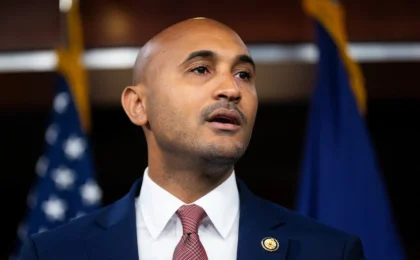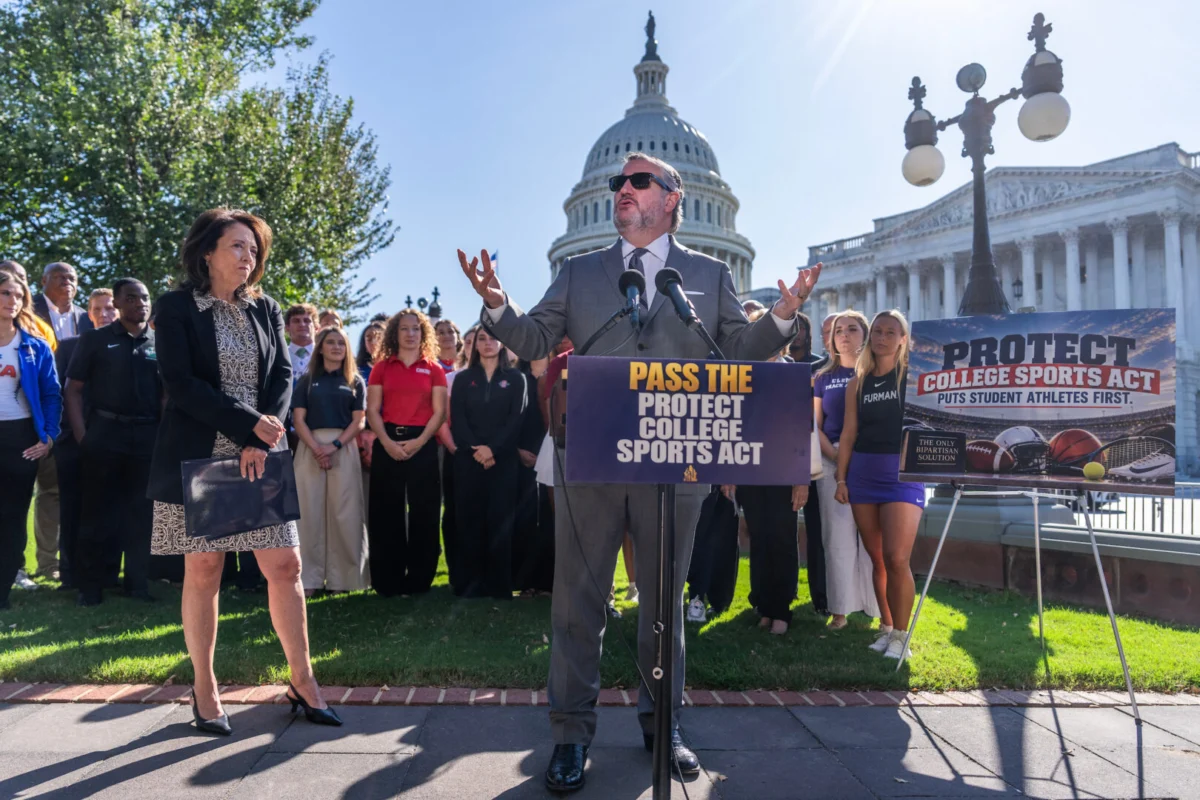
WASHINGTON — Seeking to restore order to what lawmakers and coaches alike describe as a chaotic "Wild West" in collegiate athletics, bipartisan Senate leaders rallied outside the U.S. Capitol on Monday alongside hall-of-fame coaches and current student-athletes. The high-profile demonstration aimed to shore up support for the "Protect College Sports Act," a landmark piece of legislation slated for a critical Senate floor vote this month.
The bill, negotiated primarily by Senate Commerce Committee Chair Ted Cruz (R-TX), Ranking Member Maria Cantwell (D-WA), panel member Eric Schmitt (R-MO), and Sen. Chris Coons (D-DE), represents the most comprehensive attempt yet by Congress to establish a single federal framework for college sports. The measure seeks to curb runaway spending, streamline Name, Image, and Likeness (NIL) practices, cap frequent athlete transfers, and protect universities and the National Collegiate Athletic Association (NCAA) from endless antitrust litigation.
However, as the Senate enters its final weeks of session before the November midterm elections, the bill faces a gauntlet of political hurdles—ranging from fierce opposition by organized labor to contentious amendments regarding culture-war issues.
Main Facts: The "Protect College Sports Act" and the Capitol Rally
Standing on the Capitol grounds, proponents of the legislation argued that federal intervention has become an unavoidable necessity. For decades, congressional non-interference allowed federal antitrust lawsuits to incrementally strike down NCAA rules governing player compensation, transfers, and eligibility.
"Some have asked why should Congress get in the middle of this? The answer is simple: because Congress screwed it up in the first place," Sen. Ted Cruz said during Monday’s press conference. "It has been the federal antitrust laws applied in litigation after litigation after litigation that have had the effect of tearing down essentially all the rules. So right now, it is the Wild West. The ‘Protect College Sports Act’ is bipartisan legislation designed to bring order to the chaos."
The proposed legislation establishes a standardized federal standard for NIL deals, replacing a fragmented patchwork of state laws that currently gives certain institutions regulatory advantages over others. Key pillars of the bill include:
- Transfer Restrictions and Age Caps: Instituting caps on the number of times a student-athlete can transfer without penalty, alongside maximum age restrictions for eligibility to prevent non-traditional athletes from dominating collegiate rosters.
- NIL Transparency: Clearing out fraudulent or predatory third-party NIL contracts and establishing national oversight to ensure compensation reflects legitimate marketing value rather than disguised "pay-to-play" recruitment inducements.
- Athlete Welfare Guarantees: Mandating long-term healthcare protections, coverage for sports-related injuries, and guaranteed educational scholarships even if an athlete suffers a career-ending injury.
- Targeted Antitrust Protection: Providing limited legal immunity to the NCAA and athletic conferences, allowing them to enforce uniform governance rules, eligibility requirements, and transfer policies without facing continuous antitrust lawsuits.
- Employment Neutrality: Explicitly taking no legal position on whether college athletes should be classified as employees of their respective institutions—a critical compromise meant to bridge the divide between Democrats and Republicans.
Joined by University of Arkansas head men’s basketball coach John Calipari—who won a national title at the University of Kentucky—and Craig Bohl, executive director of the American Football Coaches Association (AFCA) and former head coach at North Dakota State University, lawmakers framed the bill as a pragmatic solution to a systemic crisis.
Legislative Chronology: From Legal Chaos to the Senate Floor
The momentum behind the "Protect College Sports Act" is the culmination of years of legal turmoil that began in earnest following the Supreme Court’s landmark 2021 NCAA v. Alston decision, which opened the door to expanded athlete benefits and crippled the NCAA’s authority to enforce amateurism rules.
+-----------------------------------------------------------------------------------+
| CHRONOLOGY OF THE COLLEGE SPORTS LEGISLATIVE PUSH                                 |
+-----------------------------------------------------------------------------------+
| June 2021       | Supreme Court rules against NCAA in NCAA v. Alston; NIL era    |
|                 | officially begins without uniform federal guidelines.           |
+-----------------+-----------------------------------------------------------------+
| Early 2024      | Sens. Cruz, Cantwell, Schmitt, and Coons initiate cross-party   |
|                 | negotiations to draft a unified federal college sports bill.    |
+-----------------+-----------------------------------------------------------------+
| Summer 2024     | S.4668 ("Protect College Sports Act") advances out of the      |
|                 | Senate Commerce Committee.                                      |
+-----------------+-----------------------------------------------------------------+
| August 2024     | Bipartisan deal falls short before August recess; Senate         |
|                 | Majority Leader John Thune files cloture on motion to proceed.  |
|                 | Sen. Hawley introduces biological sex sports amendment.         |
|                 | AFL-CIO issues formal letter opposing the bill's antitrust shield.|
+-----------------+-----------------------------------------------------------------+
| Early Sept 2024 | Cruz embarks on national media blitz (including ESPN's College  |
|                 | GameDay) to build public pressure on Senate holdouts.           |
+-----------------+-----------------------------------------------------------------+
| Mid-Sept 2024   | Senate reconvenes; Capitol press conference held. Procedural    |
|                 | vote scheduled between Sept. 15–23 requiring 60 votes.          |
+-----------------+-----------------------------------------------------------------+
Efforts to bring the bill to the Senate floor before the August recess faltered when lawmakers ran out of legislative time to resolve key disagreements. During the recess, opponents and proponents mobilized. Cruz launched a national media push to educate the public on the bill’s necessity, including an unusual 10-minute Saturday morning appearance on ESPN’s flagship pregame show, College GameDay.
Before senators departed Washington for the summer break, Senate Majority Leader John Thune (R-SD) filed cloture on the motion to proceed, setting up a mandatory 60-vote procedural threshold. Thune confirmed that a procedural vote would take place between Sept. 15 and Sept. 23, pending the completion of floor action on an unrelated cryptocurrency package.
"Hopefully we’ll get on it, and I think if we can pass it and send it to the House, we got a chance of making law with it," Thune told commentator Scott Jennings at a Republican political event in Dallas.
Cruz indicated Monday that he expects a full Senate vote within the next 10 days, predicting that advocates are "very close" to securing the necessary votes to send the bill to the House. He added that President Donald Trump has expressed enthusiasm for the measure and is "eager" to sign it into law should it reach his desk.
Supporting Data and Context: The Financial and Roster Crisis
The push for statutory intervention comes amid widespread concern over the financial sustainability of college athletics. The arrival of booster-driven NIL "collectives"—third-party organizations pooling funds to pay recruits—has created an arms race that has pushed athletic department budgets to their limits.
Commerce Committee Ranking Member Maria Cantwell highlighted the financial drain the current system imposes on higher education institutions, warning that athletic spending is actively undermining academic and research missions.
"This is about reining in the bad practices that are happening in college sports today, the runaway costs that are sending people to the state legislature asking for bailouts from taxpayers to pay for sports," Cantwell said. She warned that schools are increasingly pressured to redirect resources, "asking people to take endowment funds that really should go to things like wheat research or AI, and instead have to be spent because of the runaway arms race in sports spending."
+-----------------------------------------------------------------------------------+
| KEY PROVISIONS OF THE "PROTECT COLLEGE SPORTS ACT"                                |
+-----------------------------------------------------------------------------------+
| AREA            | PROPOSED FEDERAL STANDARD                                       |
+-----------------+-----------------------------------------------------------------+
| NIL Contracts   | Replaces state laws with single federal standard; bans fake     |
|                 | contracts and unvetted third-party recruiting inducements.      |
+-----------------+-----------------------------------------------------------------+
| Roster Dynamics | Caps multi-time transfers; imposes athlete age limits.          |
+-----------------+-----------------------------------------------------------------+
| Player Welfare  | Mandates long-term healthcare for sports injuries and guarantees |
|                 | educational scholarships regardless of athletic status.        |
+-----------------+-----------------------------------------------------------------+
| Antitrust Shield| Grants limited legal immunity to NCAA/conferences to enforce    |
|                 | rules without constant threat of federal litigation.           |
+-----------------+-----------------------------------------------------------------+
| Employment      | Neutral stance; does not classify athletes as employees,        |
| Status          | preserving room for bipartisan Senate support.                  |
+-----------------+-----------------------------------------------------------------+
Coaches argue that the lack of transfer limits has ruined team continuity and turned every off-season into free agency. With thousands of athletes entering the transfer portal annually, mid-major programs frequently lose developed talent to power-conference programs offering higher NIL payouts.
Proponents argue that by establishing clear, enforceable rules shielded from antitrust challenges, the bill will stabilize rosters, protect smaller programs, and shield academic budgets from athletic spillover costs.
Official Responses and Political Obstacles
While the bill’s primary sponsors project optimism, the legislation faces resistance from both ends of the political and ideological spectrum.
Labor Unions Push Back
The primary challenge on the Democratic side stems from organized labor. In an Aug. 5 letter addressed to members of the Senate, the AFL-CIO expressed strong opposition to the bill (S.4668), criticizing it as "a legislative effort that preserves institutional control at a time when courts, lawmakers, and the public are increasingly questioning the fairness of the existing model."
Labor leaders argue that shielding the NCAA and athletic conferences from antitrust laws strips athletes of their primary legal leverage to fight for fair compensation. Even though the bill remains neutral on employment status—avoiding explicit language that would ban athletes from becoming employees—labor unions contend that antitrust immunity effectively blocks future unionization and collective bargaining efforts.
Congressional aides acknowledge that explicitly granting student-athletes employment rights would guarantee total opposition from Republicans, killing any chance of passage in the GOP-controlled House. However, Sen. Chris Coons expressed confidence that the bill’s built-in player protections would persuade labor-aligned Democrats.
"Members of both parties, Republicans and Democrats, understand that college sports are in crisis, and the ‘Protect College Sports Act’ is the best way to ensure that student-athletes at every level and in every sport gain meaningful new protections like health care and scholarship guarantees," Coons said in a statement. "When the ‘Protect College Sports Act’ comes to the floor, we’re optimistic that it will have the support of a significant number of Senate Democrats," noting he anticipates up to 20 Democrats could support the bill.
Republican Culture-War Amendments
On the Republican side, the bill has encountered headwinds regarding social policy. In August, Sen. Josh Hawley (R-MO) introduced an amendment designed to ensure the federal law does not preempt state legislation that prohibits biological males from participating in women’s sports. The inclusion of controversial culture-war amendments risks alienating key Democratic co-sponsors whose votes are vital to reaching the 60-vote threshold.
Perspectives from the Sidelines
Coaches at Monday’s event urged lawmakers to put political differences aside and pass the legislation.
John Calipari acknowledged that while the bill might not solve every challenge facing college athletics, it represents an essential first step. "I think this clears up about 75 to 80 percent of our issues," Calipari noted. "Nothing is perfect. This is a bite out of the apple."
Former North Dakota State coach Craig Bohl invoked football terminology to rally lawmakers ahead of the vote: "A little coach-speak as the Senate goes back into session: Our encouragement is, let’s buckle those chin straps up, let’s get our hands in the dirt, let’s cross the goal line and get this bill to the president."
Implications for the Future of Collegiate Athletics
The upcoming vote on the "Protect College Sports Act" represents a pivotal juncture for American sports and higher education. The outcome will determine whether college athletics continues toward an unregulated professional model or returns to a centralized, nationally regulated structure.
                  +-----------------------------------+
                  |   SENATE FLOOR VOTE (SEPT 15-23)  |
                  |     60-Vote Cloture Threshold     |
                  +-----------------+-----------------+
                                    |
            +-----------------------+-----------------------+
            |                                               |
            v                                               v
  [ PASSES SENATE ]                                 [ FAILS SENATE ]
            |                                               |
            v                                               v
+-----------------------+                       +-----------------------+
| - Builds momentum     |                       | - Patchwork state     |
|   for House vote.     |                       |   laws persist.       |
| - Standardizes NIL &  |                       | - Continued antitrust |
|   transfer rules.     |                       |   litigation against  |
| - Grants limited      |                       |   the NCAA.           |
|   antitrust shield.   |                       | - Ongoing roster &    |
+-----------------------+                       |   financial chaos.    |
                                                +-----------------------+
Potential Outcomes and Impact:
- If the Bill Passes: Passing the Senate with a strong, bipartisan majority would create pressure on the House of Representatives to act before Congress adjourns for the midterms. If signed into law, the NCAA and athletic conferences would regain the legal standing necessary to enforce eligibility caps, penalize recruiting violations, and stabilize transfer portal activity. Student-athletes would gain guaranteed medical protections and multi-year academic scholarships, while athletic departments would see spending capped by standardized NIL rules.
- If the Bill Fails: A failure to reach the 60-vote threshold would likely leave college sports without federal oversight for the foreseeable future. State legislatures would continue drafting conflicting NIL laws to give their local universities competitive advantages, accelerating the divide between elite programs and mid-major institutions. Furthermore, ongoing antitrust lawsuits would continue to chip away at remaining NCAA rules, likely forcing courts—rather than elected officials—to determine whether college athletes must be classified as school employees.
As the Senate prepares to vote, the fate of the nation’s multi-billion-dollar college sports industry hangs in the balance, with lawmakers, administrators, and athletes watching closely to see if Congress can cross the goal line.