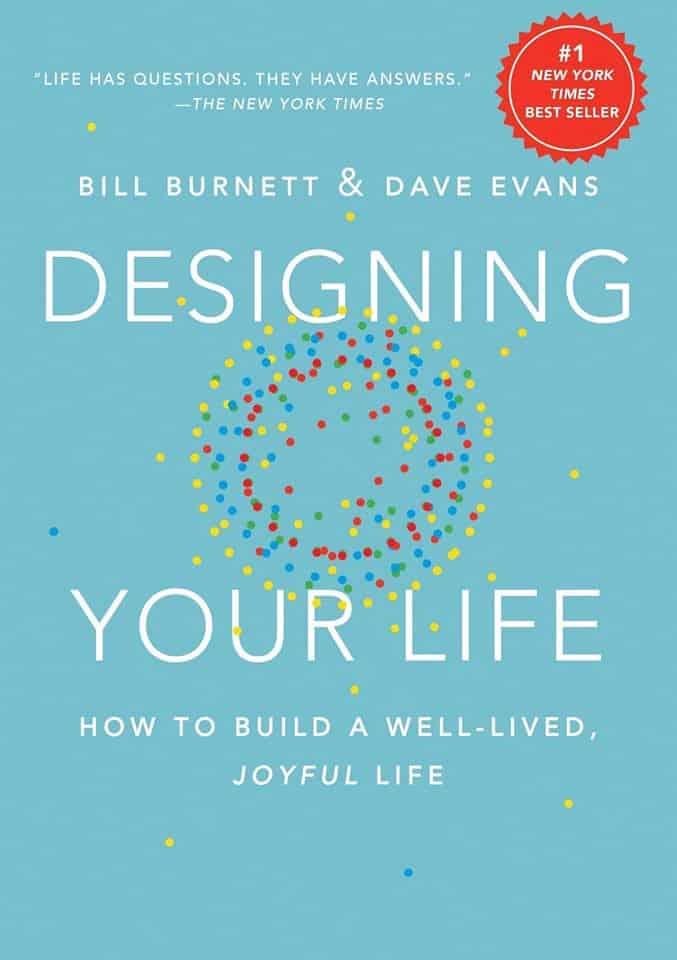
In an era defined by rapid technological change, economic uncertainty, and a pervasive sense of digital isolation, the question "What do you want to be when you grow up?" has lost its age-bound exclusivity. For many, the inquiry has shifted from a childhood milestone to a perpetual, existential project. Addressing this challenge, Stanford design professors Bill Burnett and Dave Evans have authored the seminal work Designing Your Life, a blueprint that applies the principles of industrial design to the architecture of human existence.
By treating life as a prototype—something to be iterated upon rather than a fixed destiny to be discovered—the authors suggest that anyone can build a more coherent, fulfilling future. This article explores the initial stages of this design process, drawing on personal experiences and a comparative analysis of personal mission statements to understand how we can better align our daily actions with our deeper values.
The Genesis of a Personal Design Project
The decision to embark on a structured "life design" journey often begins with a recognition of friction—a gap between one’s current reality and a desired state of being. Last week, I began documenting my engagement with the concepts presented in Burnett and Evans’ text. What started as a solo reading venture quickly transformed into a collaborative experiment.
Recognizing that peer accountability is a catalyst for behavioral change, I invited two key individuals into this process: my long-term partner, Kim, and my college classmate, Craig. Over the coming months, our goal is to systematically work through the book’s exercises, treating our lives as "design problems" that require observation, ideation, and testing. To respect the intellectual property of the authors, this exploration will not replicate the exercises verbatim but will provide a narrative framework, reflecting on our findings as we navigate the complexities of personal growth.
Phase One: Starting Where You Are
The foundational principle of design—and, as it happens, the bedrock of sound financial planning—is the requirement to "start where you are." It is a deceptively simple directive. Before one can construct a bridge to the future, one must conduct an accurate geological survey of the present.
Burnett and Evans advocate for a candid self-assessment across four critical domains: health, love, play, and work. This is not a diagnostic tool for perfection, but a snapshot in time. Much like a net worth statement in finance, this assessment offers an objective look at the current state of one’s "assets" and "liabilities."
By rating each of these four categories and providing a brief, honest description of their current state, the individual establishes a baseline. This is the "you are here" marker on the map of life. Without this anchor, any attempt to set a course for the future is essentially drifting. Once this snapshot is captured, the focus shifts from assessment to orientation: the construction of a metaphorical compass.
Building the Compass: Workview and Lifeview
If the self-assessment provides the "where," the second phase of the design process provides the "why." This involves drafting two distinct mini-essays: a Workview and a Lifeview. These documents serve as a personal mission statement, acting as a navigational tool for future decision-making.
On a recent video call, Craig and I compared our respective essays. Despite the passage of years since our time at Willamette University, our perspectives showed a profound, almost eerie, degree of overlap. We both view work not merely as a mechanism for capital accumulation, but as a potential conduit for societal contribution.
The Workview: Beyond the Paycheck
Craig’s Workview emphasizes the necessity of growth and the dangers of allowing monetary concerns to cloud one’s purpose. He writes: "I work for money happily for a while if the pay seems fair, but experience, learning, and growth are essential if I am to remain happy for long." His philosophy leans toward "right livelihood"—a Buddhist concept emphasizing work that supports life and avoids harm. He finds the most resonance in tangible production, particularly in the restoration of natural systems.

My own Workview mirrors this sentiment but emphasizes the integration of personal fulfillment and public utility. I strive to make my work at Get Rich Slowly a resource that improves the lives of others while providing me with a sense of ikigai—a Japanese term for a "reason for being." My goal is to prioritize the reader, ensuring that the platform remains an uncluttered, reliable guide to financial mastery, even if the financial rewards remain secondary to the mission in the short term.
The Lifeview: Defining the Meaning of Existence
The Lifeview exercises invite even deeper reflection. Craig’s outlook is rooted in humility and the natural cycle of life. He acknowledges the absurdity of existence, citing Jane Austen’s Pride and Prejudice to underscore his belief that laughter is the only reasonable response to life’s vicissitudes.
In contrast, my Lifeview posits that while life may have no inherent meaning, that absence is an opportunity for creation. My focus is on the ethics of interpersonal relationships: "Morality is about one thing only: How you treat other people." I argue that we grow through deep, local connections, and that our societal conflicts are often symptoms of an unwillingness to engage with those who hold differing views. My aim is a form of "rational self-centeredness," wherein I ensure my own needs are met so that I may be a more effective contributor to my family, my community, and the world at large.
The Implications of Shared Values
The striking similarity between Craig’s worldview and my own—and indeed, our shared connection to the motto non nobis solum nati sumus ("not unto ourselves alone are we born")—suggests that our shared educational background played a formative role in our development. This motto, a hallmark of Willamette University, serves as an ethical anchor that seems to have persisted long after graduation.
This leads to a broader societal implication: the erosion of "social capital." As Robert Putnam detailed in Bowling Alone, the connective tissue of our society—our clubs, our local organizations, our informal social networks—has frayed significantly. Craig and I discussed this at length, noting that while the internet has provided new forms of connection, it has arguably undermined the deep, community-based bonds that foster trust and mutual aid.

Our commitment to this design process is, in many ways, an attempt to reclaim that social capital. By treating our lives as projects that require intentionality, we are also making a conscious effort to ensure our work contributes to the "abundance" Craig mentioned, creating win-win scenarios rather than zero-sum outcomes.
Looking Forward: The Good Time Journal
As we move into the next phase of our experiment, we are turning our attention to chapters three and four of the Designing Your Life curriculum. The primary tool for this stage is the "Good Time Journal."
Over the next two weeks, we will log our daily activities and, more importantly, track our levels of engagement and energy throughout those tasks. By documenting when we feel "in flow" and when we feel drained, we aim to uncover patterns that are not immediately obvious to the conscious mind. Following this, we will utilize mind-mapping techniques to translate these observations into actionable insights.
The process of designing a life is not a one-time event; it is an iterative cycle of prototyping. By starting where we are, building a compass through deep reflection, and logging our lived experience, we move closer to a state where our actions and our values are not just aligned, but mutually reinforcing. Whether you are navigating a career change, a personal crisis, or simply seeking more meaning in your daily routine, the act of intentional design offers a structured path toward a more purposeful existence. The journey is ongoing, and as our initial sessions have proven, it is far more effective—and enjoyable—when navigated in the company of those who share our commitment to growth.