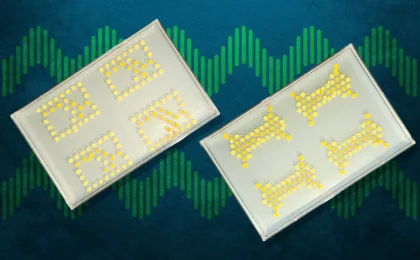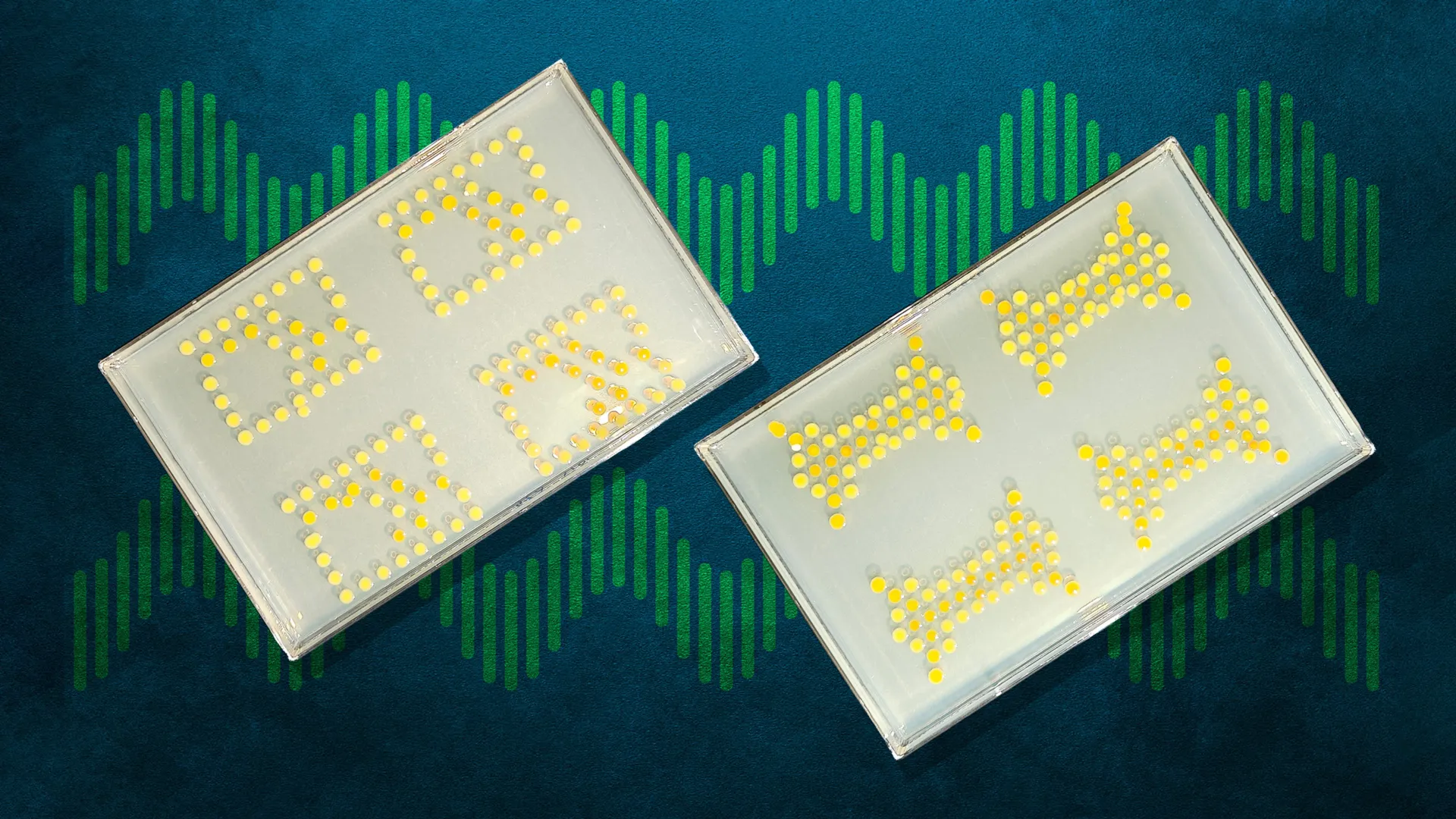
In a development that blurs the lines between silicon-based electronics and synthetic biology, researchers at the Massachusetts Institute of Technology (MIT) have successfully engineered bacterial cells to function as biological transistors. By printing these living components onto agar plates, the team has effectively created "living circuit boards," a milestone that paves the way for sophisticated, autonomous biological control systems capable of complex decision-making in real-world environments.
This breakthrough, detailed in the journal Nature Chemical Biology, moves beyond the traditional limitations of synthetic biology. While previous efforts focused on cramming entire logic circuits into the genome of a single cell, the MIT approach treats individual bacterial strains as modular components that can be wired together—much like a traditional integrated circuit—to perform logic operations, additions, and signal routing.
The Architecture of Life: From Silicon to Synthetic Biology
In conventional electronics, the transistor is the fundamental building block. It acts as a gatekeeper, a switch that dictates the flow of electrons through a circuit based on specific electrical inputs. For decades, the miniaturization of these silicon switches has driven the exponential growth of computing power.
The MIT team, led by Christopher Voigt, head of MIT’s Department of Biological Engineering, has replicated this architecture using the bacterium Pantoea agglomerans. Instead of electrons, these biological transistors use chemical signaling molecules to carry information. By engineering the bacteria to produce or suppress these molecules in response to specific chemical triggers, the researchers have created a platform where biological "logic" can be scaled and organized into complex architectures.
Overcoming the Bottlenecks of Cellular Engineering
Historically, synthetic biology has faced a "complexity ceiling." When researchers attempt to pack multiple logic gates into a single bacterial cell, they quickly run into two major problems:
- Transcription Factor Interference: Biological logic gates rely on specific proteins (transcription factors) to trigger responses. Using too many of these within one cell leads to crosstalk, where unintended interactions scramble the signals.
- Metabolic Overload: Forcing a single cell to produce a multitude of proteins and process complex logic imposes a significant metabolic burden, often causing the cell to grow slowly, fail, or mutate.
By distributing the circuit across multiple, distinct bacterial colonies—each acting as a single transistor or relay—the MIT team bypasses these constraints. Each colony performs one specific, simple task, and the circuit’s complexity emerges from the network, not the individual cell.
Chronology: Developing the Living Circuit
The journey to this achievement involved years of iterative design, moving from basic cellular engineering to the assembly of complex, multi-component biological "boards."
- Phase I: Component Design: The researchers identified two versions of Pantoea agglomerans that respond to the molecule OC 6. One strain acts as a "positive" transistor (switching on in the presence of OC 6), while the other acts as a "negative" transistor (switching off). Both strains were further engineered to sense a secondary molecule, OC 12, allowing them to perform conditional logic operations.
- Phase II: Establishing the Relays: To connect these transistors, the team engineered three additional bacterial strains to act as "relays." These strains receive an output signal (OHC 14) from a transistor and convert it into a different input signal that the next transistor in the sequence can recognize.
- Phase III: Printing the Circuit: The researchers utilized a precision printing technique, placing distinct bacterial colonies onto an agar growth medium. By spacing the colonies approximately 5 millimeters apart, they ensured that chemical signals traveled in one direction, preventing "noise" and maintaining the integrity of the circuit’s logic.
- Phase IV: Scaling to Complexity: The project culminated in the assembly of a 24-colony circuit. This system demonstrated the ability to perform addition, logical "or" gates, and demultiplexing, which directs a signal to one of several destinations based on a control input.
Technical Specifications and Performance
The MIT system relies on a modular "library" of parts. Because the components are distinct strains, they can be rearranged to create nearly any logical operation.
Signal Logic and Routing
The transistors operate through a series of chemical inputs and outputs. An input molecule (OC 6) triggers the cell, which then evaluates the presence of a second molecule (OC 12). If the conditions are met, the cell produces an output (OHC 14). This output is then passed to a relay, which propagates the signal to the next node in the circuit.
Comparative Computing Power
When asked about the capabilities of these living circuits, Dr. Hamid Doosthosseini, the study’s lead author, noted that the modular nature of the system allows for virtually unlimited logical operations. "We’ve built some initial computer architecture components that are commonly used, but any operation can be built with these five strains," he stated.
Professor Voigt added a bold perspective on the potential of this technology: "Computationally, there’s nothing that your iPhone can do that these circuits couldn’t do."
However, the comparison comes with a significant caveat: speed. While a silicon processor operates at gigahertz frequencies, performing billions of operations per second, the biological circuits operate on a "chemical clock." Each calculation requires approximately eight hours to complete as the bacteria produce the necessary proteins and diffuse signals across the agar medium.
Official Perspectives: The Philosophy of Biological Control
The research team emphasizes that the goal is not to compete with the speed of digital computers, but to embed intelligence into biological systems that currently operate without it.
"We’re not trying to replace computers," Voigt clarified in a post-publication interview. "We are putting computational control into biology."
The distinction is critical. A smartphone is designed to process data rapidly for human interaction, whereas these bacterial circuits are designed to interface with the natural world. If a circuit is deployed on the root of a crop, an eight-hour processing time is negligible compared to a multi-month growing season. The utility of the system lies in its ability to wait, sense, and respond with high precision to environmental changes that would otherwise go unnoticed by the host plant.
Implications: The Future of Synthetic Biology and Agriculture
The implications of this research are profound, particularly for the fields of agriculture and environmental remediation.
Smart Agriculture
One of the most promising applications for these "living circuits" is the development of autonomous crop protection systems. Imagine a plant coated in a probiotic-like bacterial film. If the bacteria detect the chemical signatures of a drought or an early-stage pest infestation, the circuit could process this information and trigger the production of a fungicide, an insecticide, or a growth-promoting hormone.
This would shift agriculture from a "reactive" model—where farmers spray fields after damage is already visible—to a "proactive" model, where the plants manage their own health in real-time.
Environmental Sensing
Beyond agriculture, these circuits could be deployed in soil or water systems to monitor for contaminants. Because the transistors are modular, they could be tuned to detect heavy metals, synthetic pollutants, or pathogens. The circuit could then provide a visual output (such as a change in color) or initiate a bioremediation process, essentially turning the bacteria into a self-maintaining sensor network.
Ethical and Safety Considerations
As with all synthetic biology, the deployment of engineered organisms requires rigorous safety protocols. The MIT team’s use of Pantoea agglomerans—a common, non-pathogenic bacterium—is a deliberate choice to minimize risk. However, as these circuits become more complex, the scientific community will need to address how to ensure that these "living computers" remain contained and do not outcompete native microbial populations in the wild.
The research, funded by the U.S. Defense Advanced Research Projects Agency (DARPA) and the Intelligence Advanced Research Projects Activity (IARPA), underscores the strategic interest in developing systems that can operate in remote or austere environments where traditional electronics might fail.
Conclusion
The MIT study marks a fundamental shift in how we approach biological engineering. By moving from a "monolithic" cell design to a modular "circuit board" approach, the team has provided a blueprint for building complex, logical, and autonomous systems within the natural world. While we are still years away from seeing these living circuits on every farm, the successful demonstration of a 24-colony processor proves that the barrier is no longer logical complexity—it is simply a matter of scaling the hardware.
As we look toward a future defined by climate change and the need for more efficient food production, the ability to grant plants and ecosystems the power of computation may be one of the most important technological leaps of the 21st century. The era of the "living computer" has officially begun.