In the shifting landscape of global fashion, a profound dichotomy has emerged. On one side stand the storied heritage houses, often revitalized by guest designers under the umbrella of multi-billion-dollar luxury conglomerates. On the other, a resilient wave of independent couturiers is redefining the medium through personal narrative, scientific exploration, and radical sustainability.
As of September 2026, the industry is witnessing a pivotal moment where the line between "traditional craft" and "technological art" has never been more porous. From the archives of Jean Paul Gaultier to the laboratory-inspired ateliers of Iris van Herpen, the current state of haute couture serves as a mirror to a world struggling to balance rapid modernization with ancestral identity.
The New Guard: Modernizing the Giants
The role of the "guest couturier" has become one of the most closely watched positions in high fashion. Luxury groups, desperate to remain relevant to younger, digitally native audiences, have begun courting designers known for their subversive, non-traditional approaches to garment construction.
Duran Lantink and the Gaultier Legacy
Perhaps no appointment better illustrates this trend than the collaboration between Duran Lantink and the house of Jean Paul Gaultier. Lantink, who rose to prominence through his deconstructive, upcycling-heavy approach, has been tasked with revisiting Gaultier’s iconic ballet-costume era.
By deconstructing the "enfant terrible" aesthetic of the 1990s and reframing it through a lens of modern fluid tailoring, Lantink is not merely reproducing archive pieces; he is interrogating the very nature of archival relevance. His work serves as a bridge, proving that historical heritage can be a springboard rather than a cage.
Chronology: The Evolution of Independent Couture
To understand the current dominance of the independent voice, one must look at the timeline of the last decade, which saw a shift away from logo-mania toward artisanal storytelling.
- 2018–2020: The rise of the "sustainability-first" narrative. Designers like Kevin Germanier began proving that recycled materials could occupy the same prestige category as traditional silks and velvets.
- 2021–2023: The "Digital Pivot." Iris van Herpen pioneered the integration of 3D printing and biomorphism, establishing couture as a field of scientific inquiry.
- 2024: The "Identity Renaissance." Designers like Imane Ayissi gained global recognition for centering the African diaspora and indigenous craftsmanship within the rigid structures of the Paris Haute Couture Federation.
- 2025–2026: The Current Era of Synthesis. The industry has reached a point where scientific innovation, heritage reverence, and environmental consciousness are no longer viewed as competing interests, but as a unified methodology.
Scientific Artistry: The Iris van Herpen Paradigm
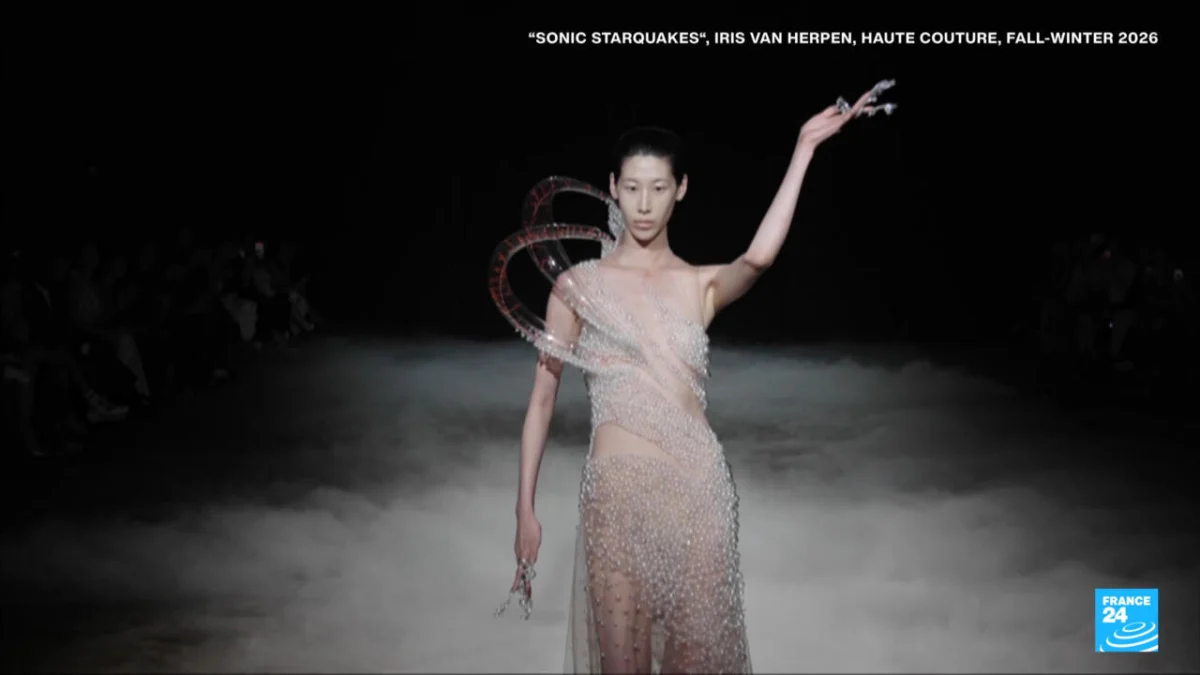
While heritage houses often look backward, Iris van Herpen looks toward the molecular structure of life itself. Her work has consistently pushed the boundaries of what is possible in an atelier, utilizing laser-cutting, magnetic weaving, and 3D-printed bio-polymers.
Van Herpen’s influence extends far beyond the runway. By positioning herself as a designer-scientist, she has challenged the fashion industry to treat its materials with the same rigor as an architectural project. Her current collections are not merely garments; they are wearable simulations of biological processes, challenging the traditional "needle and thread" definition of the couturier.
Cultural Narratives and Personal Heritage
While some look to science, others look to the divine. Rahul Mishra, a designer who has become a cornerstone of the modern couture schedule, finds his primary source of inspiration in the intricate beauty of Hindu iconography and the domestic traditions of his native India.
Mishra’s process is a deliberate counter-narrative to the speed of modern fashion. By employing hundreds of artisans to execute hyper-detailed, hand-embroidered surfaces, he elevates the status of the "maker." Similarly, Imane Ayissi has transformed the couture runway into a space for historical reckoning. His tribute collections, often dedicated to the memory of his late mother and the history of West African textile techniques, serve as a poignant reminder that couture is, at its core, a vessel for personal and collective memory.

Supporting Data: The Sustainability Shift
The environmental impact of haute couture is a subject of intense scrutiny. The industry, historically known for its excessive waste, is undergoing a transformation led by figures like Kevin Germanier.
Data from the 2026 Sustainable Fashion Index indicates a 40% increase in the use of "pre-loved" or "recycled-high-end" materials among independent designers. Germanier, whose work with discarded beads, plastic, and crystal off-cuts has become the gold standard for "upcycled luxury," proves that desirability is not tethered to the extraction of new raw materials. His work suggests a future where the "most desirable" couture is that which creates beauty from the wreckage of previous production cycles.
Official Responses and Industry Implications
The Paris Haute Couture Federation has expressed cautious optimism regarding the current diversification of the schedule. In a recent statement, a spokesperson for the Federation noted:
"The inclusion of diverse, independent voices is not merely a gesture of inclusivity; it is a necessity for the survival of the craft. When we invite designers like Lantink or celebrate the technological rigor of van Herpen, we are ensuring that couture remains a laboratory for the future of the entire fashion system."
However, the implications for the broader industry remain complex. As independent designers gain prestige, the barrier to entry for new, smaller houses remains prohibitively high. The cost of labor, the scarcity of specialized ateliers, and the sheer capital required to participate in the couture ecosystem mean that while the vision of the industry is broadening, the economic structure remains stubbornly exclusive.
The Road Ahead
As we look toward the remainder of the 2026 cycle, several key questions remain:
- Economic Sustainability: Can the independent models of Mishra and Ayissi be scaled without sacrificing the very artisanal quality that defines them?
- Technological Integration: Will the scientific approach championed by van Herpen eventually be adopted by the larger luxury groups to minimize material waste?
- The Definition of Luxury: As upcycling becomes a hallmark of high-end design, will the market finally decouple "luxury" from "newness"?
The current state of couture is a testament to the fact that fashion is no longer just about the silhouette. It is about the philosophy of the maker. Whether it is the scientific precision of a lab-grown garment or the deeply personal embroidery that tells a story of heritage, the couturiers of today are doing more than making clothes—they are writing the history of the 21st century through fabric.
In this era, the most successful designers are those who understand that they are not just creating objects for consumption, but are curators of culture. By blending the reverence for the past with the radical potential of the future, these designers ensure that the art of haute couture does not merely survive—it evolves.
Summary of Key Players
- Duran Lantink: Re-interpreting the archives of the 1990s through a modern, fluid, and deconstructive lens.
- Iris van Herpen: Utilizing science and technology to create garments that mimic biological complexity.
- Rahul Mishra: Centering artisanal, manual labor and spiritual, iconographic heritage.
- Imane Ayissi: Elevating West African history and personal family legacy within the high-fashion canon.
- Kevin Germanier: Redefining luxury through the lens of extreme recycling and upcycling.
As the industry continues to navigate the pressures of a rapidly changing global climate and shifting consumer values, the synergy between these diverse approaches will likely dictate the next chapter of fashion history. Whether the focus is on the thread, the circuit board, or the ancestral memory, the craft remains as vital and as challenging as ever.