The geopolitical volatility of the Strait of Hormuz—the world’s most critical maritime chokepoint—has entered a volatile new chapter. This past Sunday, United States military forces conducted targeted strikes against Iranian rocket launchers stationed on Larak Island. The Pentagon asserts that the operation was a preemptive measure to neutralize a sophisticated new threat: the deployment of sea mines via land-based rocket systems. This development, if confirmed, would represent a significant tactical evolution in the ongoing naval standoff between Washington and Tehran, raising fresh concerns for global energy security and international shipping lanes.
The Trigger: A New Calculus of Maritime Denial
The US military’s decision to resume strikes after a month-long operational hiatus was precipitated by intelligence reports suggesting that forces from the Islamic Revolutionary Guard Corps (IRGC) were actively preparing to launch rockets equipped with sea mines into the vital waterway.
For decades, the standard Iranian doctrine for mining the Strait of Hormuz has relied on high-volume, low-tech methods: small, fast-attack boats scattering mines under the cover of darkness, or low-altitude aircraft dropping payloads. These methods have historically forced commercial vessels to traverse the strait in a state of constant anxiety, never certain if their keel would strike an undetected explosive.
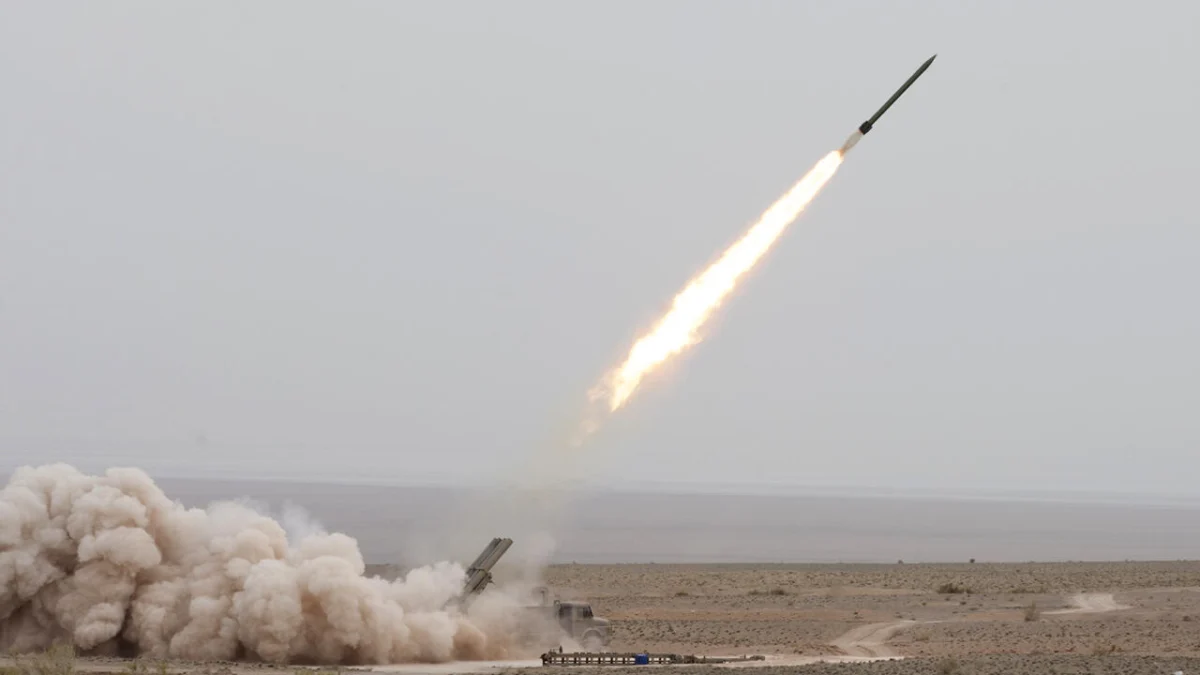
However, the Pentagon’s claim of a rocket-based delivery system introduces a troubling variable. According to US officials, the use of modified multiple launch rocket systems (MLRS) would allow the IRGC to seed the shipping lanes with mines from a distance, significantly reducing the "exposure time" for Iranian personnel and complicating the US Navy’s ability to interdict the deployment.
Chronology of Escalation: From Rhetoric to Kinetic Action
The tensions in the Strait are the culmination of a multi-year erosion of diplomatic channels and a tightening of the US-led economic blockade.
- January 2025: Iranian state media releases promotional footage showcasing the Fajr-5 Multiple Launch Rocket System (MLRS). The propaganda explicitly labels the platform as a new weapon for maritime mining in the Strait of Hormuz.
- June 2026: A series of incidents involving "near-misses" and suspected minelaying activities triggers a sharp rise in maritime insurance premiums, signaling the market’s growing fear of a blockade.
- Late August 2026: High-level talks between Iran and Qatar regarding the status of the Strait falter as US economic sanctions reach a fever pitch, effectively choking Iranian oil exports.
- August 31, 2026: US military intelligence observes increased activity on Larak Island, specifically the positioning of Fajr-5 systems aimed at the shipping channel.
- September 1, 2026: The US launches precision strikes on the Larak Island positions, officially ending a temporary tactical pause and escalating the "shadow war" into a visible kinetic confrontation.
Expert Analysis: Tactical Genius or Technological Blunder?
The international maritime security community remains deeply divided over the credibility of the US claim. While the Pentagon maintains that the threat is real and urgent, several analysts have voiced profound skepticism regarding the feasibility of firing naval mines via rocket launchers.

"This alleged capability is, to put it mildly, puzzling," noted an anonymous maritime security specialist. The primary technical hurdle, according to former US Naval officer Harlan Ullman, is physics. "It is highly likely that a sea mine would be destroyed or rendered inert upon impact with the water if fired from a high-velocity rocket," Ullman explained in a recent interview. He argued that the violent deceleration involved in a water entry would shatter the delicate sensors and trigger mechanisms required for a mine to function effectively.
Conversely, others suggest that the "missile-mine" concept is not entirely outlandish. Mark Hilborne, an expert in aviation and space security at King’s College London, notes that if the mines are equipped with small parachute recovery systems or stabilizers, the impact forces could be mitigated. "In principle, missiles can carry payloads and drop them over target areas," Hilborne said. "The use of parachutes is a standard aerospace solution to the problem of impact stress."
Sidharth Kaushal, a researcher at the Royal United Services Institute (RUSI), emphasizes that even if the precision is low, the speed of the system is the primary advantage for Iran. "Using a boat requires loading, crew assembly, travel, and deployment—a process that gives the US Navy time to detect and intercept. With a rocket launcher, you load, fire, and retreat. It minimizes the ‘window of opportunity’ for American surveillance."
Implications for Global Shipping and Regional Stability
The implications of this standoff extend far beyond the immediate military theater. The Strait of Hormuz handles roughly 20-30% of the world’s total oil consumption. Any disruption, or even the credible threat of one, sends immediate shockwaves through global markets.
The Psychology of Deterrence
Some experts, such as Christian Bueger of the University of Copenhagen, argue that the narrative of "rocket-launched mines" may be as much about psychological warfare as it is about actual military capability. "It is war propaganda," Bueger contends. "The United States needs a fresh, tangible threat to justify its continued presence and to reassure shipping companies that they have the situation under control."
From Tehran’s perspective, the mere suggestion that they can deploy mines via rocket launchers serves as a potent deterrent. If international shipping companies believe the Strait is "mined," they may voluntarily divert their vessels, creating an effective, cost-free blockade that serves Iranian interests without the need to fire a single shot.

The "Own Goal" Factor
There is also the pragmatic issue of navigation. Dirk Siebels, a specialist at Risk Intelligence, points out that mining the Strait is a "reckless" tactic because it is a double-edged sword. "Iranian cargo ships also need to know exactly where the mines are to avoid them," Siebels noted. If the deployment is imprecise—which is highly likely with rockets—Iran would essentially be closing the sea lanes to its own remaining exports, further crippling its already strained economy.
The Future of Naval Asymmetry
The controversy surrounding the Larak Island strikes highlights a broader transformation in modern warfare. As drones, AI-enhanced targeting, and precision-guided munitions become more accessible, the gap between conventional state navies and asymmetric actors continues to narrow.
The current conflict is a microcosm of this era. On one side, the US seeks to project dominance through total maritime control and the "destruction" of the Iranian navy. On the other, Iran attempts to circumvent that dominance by repurposing land-based weaponry to exert influence over the sea.
"The use of rocket launchers is typical of how Iran employs unconventional methods to thwart enemy plans," says Shahin Modarres of the International Team for the Study of Security (ITSS). "When faced with economic strangulation, Tehran will always seek a way to blindside the Americans, whether the weapon is a sophisticated missile or a repurposed, low-tech rocket system."
As the dust settles on the Larak Island strikes, one thing remains clear: the threat of naval mines has not faded with the advent of high-tech warfare. In fact, in the narrow, congested waters of the Strait of Hormuz, the "dumb" mine remains one of the most effective tools for disrupting global trade. Whether Iran actually possesses the capability to launch them via rockets or is merely bluffing, the strategic calculation for every captain of a tanker passing through the Strait has become significantly more complex.
The lull in the conflict has officially ended. As the US and Iran continue to dance on the edge of a wider confrontation, the world watches the Strait of Hormuz, waiting to see if the next "threat" will be a reality or another layer of psychological smoke and mirrors in an increasingly dangerous game of maritime brinkmanship.