Introduction: A New Vision at San Sebastián
As the 74th San Sebastián Film Festival prepares to host its prestigious Europe-Latin America Co-Production Forum, one project stands out for its blend of grounded family drama and ethereal, genre-bending storytelling. “The Rehearsals” (Los Ensayos), the latest endeavor from acclaimed Argentine filmmaker Celina Murga, has been selected as one of 15 projects to seek international backing at the forum, which runs from September 21 to 23.
Known for her keen, observational style and her long-standing creative partnership with executive producer Martin Scorsese, Murga returns with a narrative that promises to be her most personal and structurally ambitious work to date. Drawing inspiration from the short stories of Japanese-Argentine author Alejandra Kamiya, the film navigates the harrowing, tender, and often surreal landscape of caring for an aging parent.
Chronology: From Debut to the Scorsese Connection
Celina Murga’s career has been defined by a quiet, consistent commitment to the human condition. Her trajectory began in 2003 with the release of Ana and the Others (Ana y los otros), a film that immediately marked her as a distinctive voice in the New Argentine Cinema movement. Her ability to capture the nuance of interpersonal relationships and the weight of unspoken history garnered international attention.
In the years that followed, Murga cemented her status as a critical darling. Her later works, including The Third Side of the River (2014) and the more recent The Freshly Cut Grass (2023), saw her gain a powerful ally in Martin Scorsese. Through his mentorship initiatives, the legendary director became an executive producer on these films, providing not just financial support but a bridge to global audiences.
Reflecting on this enduring mentorship, Murga notes, “He has a deep understanding of the challenges of making films in different parts of the world, particularly as a woman filmmaker. He is always attentive to what I’m doing—he emails me to ask about my projects and suggest new ones.” This relationship has transcended simple professional guidance; it has instilled in Murga a "sense of mission" regarding the power of cinema to bridge cultural divides and illuminate the universal nature of the human experience.
The Narrative Architecture of “The Rehearsals”
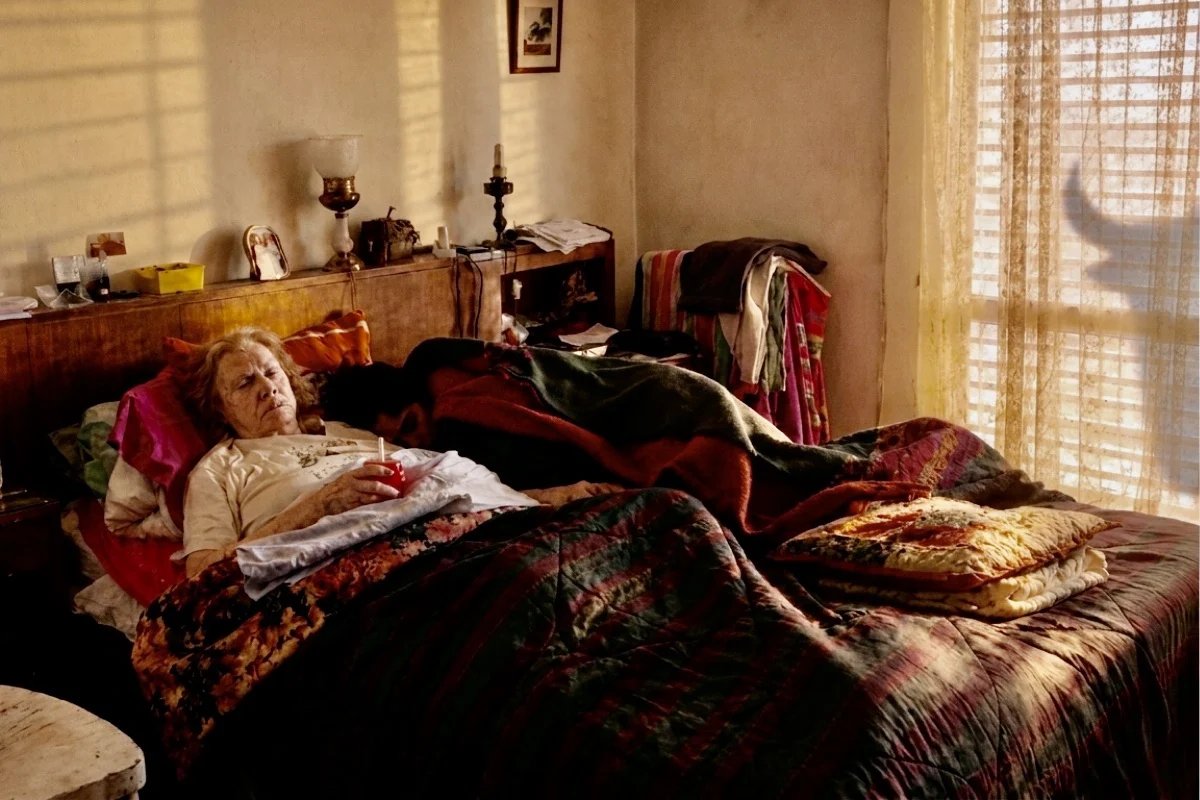
At the heart of The Rehearsals is the story of Eva, a woman approaching her 50th year who finds herself the primary caregiver for her 80-year-old mother—a retired, once-prominent doctor now grappling with the onset of Alzheimer’s. The household is a microcosm of modern domestic complexity, shared by Eva’s teenage son and her younger sister, both of whom participate in the rotating duties of care.
The film is not a linear drama, however. Murga has adapted the source material from Kamiya’s books, The Patience of Water Over Every Stone and The Fallen Trees Are Also the Forest, to create a unique atmospheric tension. In the film, the mundane reality of hospital visits, familial disagreements, and small, desperate celebrations is punctured by a surreal element: the mysterious, recurring presence of bulls surrounding the family home.
“I was drawn to a narrative style that subtly shifts reality toward the fantastic,” Murga explains. “This coexistence of the everyday and the extraordinary suggested to me a cinematic way of approaching death—not as a spectacular intrusion, but as a presence that slowly infiltrates daily life.”
Supporting Data and Production Strategy
The production of The Rehearsals is a testament to the shifting landscape of Latin American cinema. Facing a period of reduced state support within Argentina, Murga has strategically pivoted toward regional co-production. The project is being spearheaded by the Uruguay-based production house Alterna Media, a move that allows the film to leverage Uruguay’s recently introduced audiovisual tax credit, which covers up to 30% of eligible local expenditures.
The team behind Alterna Media—Maria Laura Berch, Joaquin Romero Vercellino, and Lucia Vela—brings a wealth of experience to the table. With credits ranging from the award-winning La noche sin mi to the Berlinale Silver Bear winner El mensaje and the recent collaboration with César Charlone and Fernando Meirelles, La de Punta Carretas, the production house is well-positioned to navigate the complexities of an international co-production.
The choice of setting—the province of Entre Ríos, Argentina—is geographically and culturally contiguous with the Uruguayan side of the river. Murga sees this not as a concession to economic necessity, but as an opportunity for regional artistic solidarity. “Uruguay has created a dynamic environment for audiovisual projects, and we see these opportunities not as a replacement for Argentine production, but as a way to strengthen connections between filmmakers and producers on both sides of the river,” she states.
Thematic Implications: Aging and the Politics of Care
“The Rehearsals” positions itself as a philosophical inquiry into the nature of existence. Murga challenges the audience to consider why modern society is so uncomfortable with the decline of the body.
“The film reflects on the way our society looks at aging, deterioration, and death,” says Murga. “We live in a culture that rewards youth and productivity, making aging bodies and slowing time increasingly invisible. Old age has a political dimension that is rarely acknowledged: it confronts us with our finitude and with the fact that neither technology nor the market can buy permanence.”
Murga’s approach to this subject is deeply ethical. She is wary of “aestheticizing suffering” or falling into tropes of pity. Instead, she argues that the act of observing a loved one in decline can, if handled with radical empathy, become an act of love. The film asks: How can we look at someone experiencing deterioration without reducing them to their fragility?
Implications for the Future of Independent Film
The project represents a broader trend in independent cinema, where directors are increasingly looking toward "emotionally essential territories" and collaborative regional networks to bypass the instability of national funding models. By grounding a story in a specific, intimate domestic setting while utilizing international co-production frameworks, Murga is creating a blueprint for the "global-local" film of the future.
Furthermore, by moving beyond the biographical focus on Alzheimer’s to explore the broader, almost mythological theme of human finitude, Murga is positioning The Rehearsals as a work that resonates far beyond the borders of Argentina or Uruguay. Her commitment to a "deeply human perspective" suggests a film that will prioritize intimacy over spectacle, a trend that continues to find a home at prestigious festivals like San Sebastián.
Conclusion: A Mission of Love
As production gears up for a 2028 shoot, the anticipation surrounding The Rehearsals continues to grow. It is a film that asks the viewer to sit with the uncomfortable, to witness the slow erosion of memory and health, and to find the grace that exists in that witness.
For Celina Murga, the goal is simple but profound: to strip away the artifice and reclaim the act of caring as a central, vital human experience. As she continues to communicate with her mentor, Martin Scorsese, and refine her vision for this project, one thing remains clear: The Rehearsals will be less a clinical study of illness and more a testament to the endurance of connection in the face of the inevitable.
In the words of the director, “I want to make a film rooted in affection, far from both condescension and the aestheticization of suffering—a sensitive, human portrait centered on relationships, shared time, and our ability to accompany one another. More than a film about Alzheimer’s or death, I want The Rehearsals to be, above all, a film about love.”