The delicate architecture of European security suffered a significant jolt this week as the German government officially attributed an attempted act of sabotage at Leipzig/Halle Airport to the Russian state. The incident, involving an explosive-laden drone discovered on the tarmac last month, has been classified by Berlin as a “hybrid attack,” marking a dangerous evolution in the clandestine conflict between Moscow and the West.
In a swift and decisive response, Germany has announced a suite of punitive measures, including the closure of a Russian consulate and the rescinding of contracts for Russian cultural entities. As NATO and the European Union rally behind Berlin, the incident has exposed the vulnerability of vital logistics hubs that serve as the lifeline for aid to Ukraine, signaling that the “grey zone” of hybrid warfare is rapidly encroaching on critical civilian infrastructure.
The Leipzig Incident: A Anatomy of a Hybrid Attack
On the evening of August 4, security protocols at Leipzig/Halle Airport—a facility of immense strategic importance to both the German economy and NATO’s logistical operations—prevented what could have been a catastrophic event. A drone, heavily modified and rigged with explosive components, was discovered in close proximity to a Ukrainian transport aircraft.
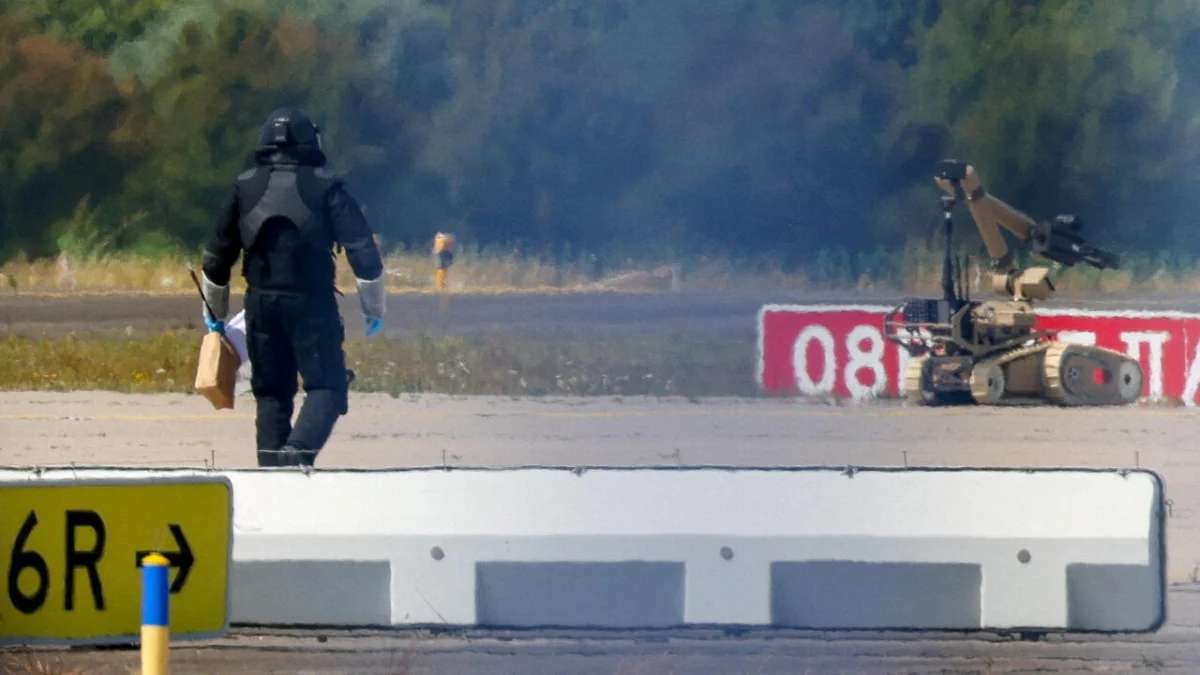
German authorities, utilizing specialized bomb-disposal units, successfully defused the device before it could be detonated. While the immediate danger was neutralized, the discovery sent shockwaves through German intelligence circles. Interior Minister Alexander Dobrindt confirmed that the technical sophistication of the device—ranging from its unique configuration to the specific nature of its explosive charge—bore the unmistakable signature of previous Russian operations in Ukraine and across Europe.
“The evidence is conclusive,” stated a government spokesperson. “The combination of police investigation, intelligence data, and the forensic breakdown of the drone components points directly to Russian state-sponsored actors.” While the orchestration of the plot suggests a high degree of technical expertise, officials believe the final execution was likely outsourced to "low-level" operatives, a hallmark of Moscow’s "plausible deniability" strategy.
A Chronology of Escalation
The attempted drone attack is not an isolated event but rather the latest in a mounting series of hostile activities attributed to Russian intelligence services across the European continent.
- Early 2024: A fire erupts at a logistics center at the Leipzig/Halle Airport. An incendiary device was found to have ignited a freight container destined for a cargo plane. Security officials now view this as a dry run or a precursor to the August 2026 attempt.
- August 4, 2026: A drone equipped with explosives is discovered and neutralized near a Ukrainian aircraft at Leipzig/Halle Airport.
- Late August 2026: Intensive forensic and intelligence investigations are conducted by the German Federal Criminal Police (BKA) and domestic intelligence agencies.
- September 2026: The German government formally accuses the Russian state of orchestrating the attack.
- September 18, 2026: The scheduled closure of the Russian consulate in Bonn and the termination of the contract for the "Russian House" cultural center in Berlin.
Strategic Significance of Leipzig/Halle Airport
The choice of Leipzig/Halle Airport as a target was far from coincidental. The facility serves as one of Europe’s most vital logistics hubs. It is the home base for NATO’s Strategic Airlift International Solution (SALIS), a critical program that provides heavy-lift capabilities for the alliance.
SALIS aircraft are operational almost daily, ferrying essential military equipment, humanitarian aid, and medical supplies to NATO battle groups stationed along the eastern flank, stretching from the forests of Finland to the borders of Romania. Furthermore, the airport is a frequent transit point for Ukrainian Antonov transport aircraft, which have been instrumental in maintaining Ukraine’s logistical bridge to the West. By targeting this site, Moscow intended not only to destroy physical assets but to disrupt the psychological and logistical continuity of Western support for Kyiv.
Official Responses and Diplomatic Fallout
The reaction from Western allies was swift and unified, reflecting a growing consensus that Russian “hybrid” tactics—ranging from cyberattacks and disinformation to physical sabotage—require a robust, coordinated response.
NATO Secretary-General Mark Rutte, following high-level discussions with German Chancellor Friedrich Merz, offered "full solidarity" with Berlin. "NATO will continue to strengthen our ability to deter and defend all Allies against any threat—including malign actions like those seen in Leipzig," Rutte declared. He emphasized that the intelligence shared by Germany regarding Moscow’s role was "clear and unambiguous."

Similarly, European Commission President Ursula von der Leyen reaffirmed the EU’s commitment to a collective response. "The message is clear: hybrid attacks will not go without a response," von der Leyen stated, noting that the European Commission is already preparing a new package of sanctions targeting Russian interests.
The Russian Foreign Ministry, in a terse response to the Interfax news agency, characterized the German measures as an "anti-Russian decision" and promised that Moscow "would respond." This tit-for-tat dynamic suggests that the diplomatic rift between Berlin and Moscow is set to widen, with little room for de-escalation in the immediate future.
Implications for European Security
The implications of the Leipzig incident are profound, signaling a new, more dangerous phase in the ongoing standoff between Russia and the West.
1. The "Shadow Fleet" and Economic Warfare
In addition to the closure of diplomatic and cultural outposts, Germany has announced an increase in pressure on the so-called "shadow fleet"—an armada of aging, poorly maintained tankers that Moscow uses to circumvent international oil sanctions. Germany intends to push for even stricter EU enforcement, aiming to cut off the illicit revenue streams that often fund these very acts of sabotage.
2. Tightening of Border and Security Controls
The German government has confirmed that it will be stepping up entry controls for Russian nationals. This represents a tightening of the Schengen zone’s external borders and a move to prevent the influx of intelligence assets posing as civilians. This is expected to complicate travel for Russian citizens, adding another layer of friction to the already strained bilateral relations.
3. The Shift in Counter-Intelligence Strategy
The realization that Russian operatives are successfully utilizing local "proxies" to conduct high-stakes sabotage has forced a shift in European security strategy. Intelligence agencies are moving away from traditional counter-espionage toward a broader focus on "infrastructure protection." This includes the integration of advanced drone detection systems at airports, rail hubs, and power plants, and a closer sharing of threat intelligence between EU member states.
4. Normalization of Sabotage
Perhaps the most worrying implication is the “normalization” of such attacks. By engaging in low-level, high-risk kinetic operations on NATO soil, Russia is testing the boundaries of Article 5—the alliance’s collective defense clause. If these actions remain below the threshold of “armed attack,” they become a persistent, attritional form of warfare that undermines public confidence and economic stability without triggering a full-scale military confrontation.
Conclusion
The attempted attack at Leipzig/Halle Airport is a stark reminder that the war in Ukraine is not confined to the frontlines of the Donbas or the skies over Kharkiv. It is a borderless struggle that is increasingly spilling over into the heart of Europe. As Germany takes bold steps to excise Russian influence and retaliate against these hybrid incursions, the incident serves as a clarion call for the rest of the European Union.
The security architecture of the 21st century is no longer just about tanks and missiles; it is about the resilience of logistics hubs, the integrity of supply chains, and the ability of democratic states to identify and neutralize threats that operate in the shadows. As Chancellor Merz and his European counterparts prepare for further escalations, one thing remains clear: the era of relative stability in European infrastructure is over, replaced by a new, more vigilant reality.