For decades, paleoanthropologists have relied on a rigid anatomical blueprint to decipher the movements of our ancient past. The assumption was simple: to be a proficient vertical climber, a primate required the specialized, highly flexible ankles characteristic of modern apes, such as chimpanzees. However, groundbreaking new research from The Ohio State University is upending this long-held dogma, suggesting that the Last Common Ancestor (LCA) shared by humans and chimpanzees may have been far more versatile—and far less reliant on "ape-like" anatomy—than previously believed.
The study, published this week in the Proceedings of the National Academy of Sciences, offers a radical reassessment of how early primates navigated their environments. By observing wild monkeys in West Africa, researchers have demonstrated that vertical climbing is not the exclusive domain of those with flexible ankles, effectively blurring the lines that scientists use to reconstruct the lifestyles of our extinct ancestors.
The Evolutionary Crossroads: Reconstructing the LCA
Between 6 and 7 million years ago, the lineage that would lead to modern humans diverged from the lineage leading to chimpanzees. This split occurred at the Last Common Ancestor (LCA), a mysterious creature whose skeletal structure and behavioral repertoire remain the "holy grail" of human evolutionary biology.
Understanding the LCA is essential for answering one of the most profound questions in anthropology: how and why did our ancestors transition from tree-dwelling primates to the habitual bipedal walkers we are today? To solve this, researchers have historically looked at the fossil record, searching for specific skeletal markers—such as the shape of the talus bone in the ankle—to determine whether an ancient creature was an arboreal specialist or a ground-dweller.
The prevailing hypothesis has been that if an ancestor were a capable vertical climber, it must have possessed the ape-like ankle flexibility that allows for a deep range of motion. Conversely, if a fossil lacked these traits, it was often assumed to be a terrestrial creature, incapable of navigating the vertical trunks of the forest canopy. This new research suggests that this binary logic is deeply flawed.
Chronology of a Scientific Shift
The journey to this discovery began in the dense canopy of the Taï Forest in Ivory Coast. Under the direction of W. Scott McGraw, a professor and chair of anthropology at Ohio State, the Taï Monkey Project has spent years documenting the locomotion of wild primates.
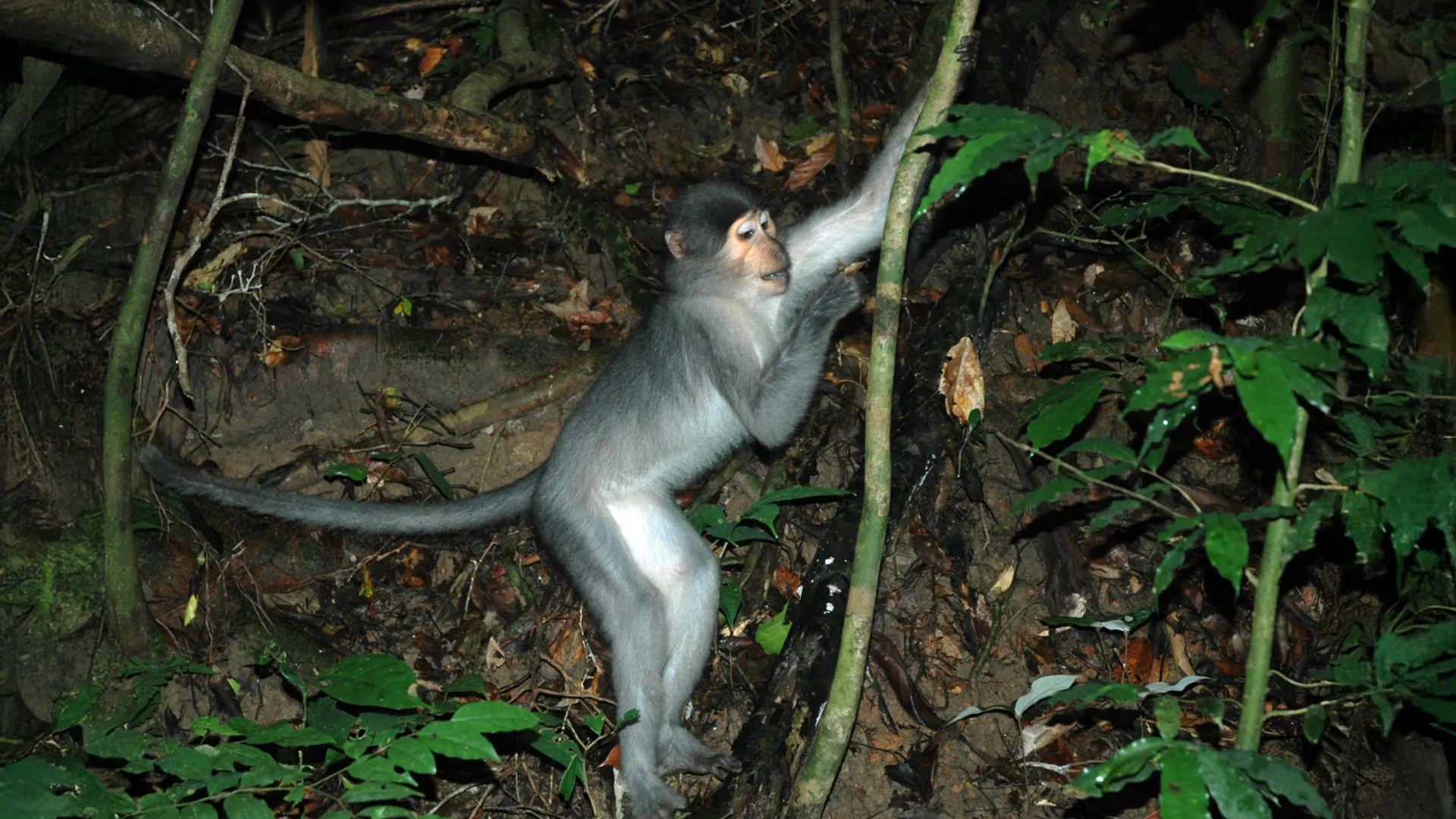
For years, the research team observed sooty mangabeys—monkeys that, by all traditional anatomical accounts, should have struggled with the vertical demands of the forest. While chimpanzees possess ankles that can flex upward by roughly 45 degrees, mangabeys were thought to lack this mechanism. However, as Luke Fannin, lead author of the study and an assistant professor of anthropology at Ohio State, began analyzing high-resolution video footage of the mangabeys, a different story emerged.
The researchers utilized precision kinematic analysis to track the movement of the monkeys’ limbs as they navigated vertical trunks to forage, hide from predators, or find sleeping spots. The footage revealed that while the mangabeys’ ankles remained relatively rigid, they were compensating with a surprising degree of flexibility in the midfoot. This "functional equivalence" allowed them to scale vertical surfaces with the same efficiency as their ape counterparts, despite having fundamentally different skeletal architectures.
Supporting Data: The Biomechanics of the Midfoot
The mechanical data gathered by Fannin and his team provides a compelling argument against anatomical determinism. While a chimpanzee ankle flexes at the joint to accommodate the vertical angle of a tree, the sooty mangabey achieves the exact same biomechanical outcome through the midfoot.
Fannin’s measurements revealed that the mangabeys’ midfoot could flex as much as 46 degrees during vertical climbing—a figure strikingly similar to the 45-degree ankle flexion observed in chimpanzees. This evidence serves as a "smoking gun" for evolutionary biologists: it proves that nature has multiple ways to solve the same environmental problem.
By utilizing high-resolution video, the researchers moved beyond the "hunches" that have plagued the field for decades. Instead of relying on static fossil fragments, they were able to observe the loading of joints in real-time, confirming that structural differences do not necessarily translate to functional differences. As McGraw noted, this shift from speculation to precise, kinematic observation is the future of paleoanthropology.
Official Responses: A Fuzzier, More Complex Picture
The implications of this study are profound, creating what researchers call a "fuzzier" picture of human evolution. If a monkey-like foot can perform the same feats as an ape-like foot, then the presence or absence of specific ankle bones in the fossil record can no longer be used as a definitive diagnostic tool for climbing ability.
"People are making behavioral inferences from fossils, and some say a monkey can’t vertically climb as well as an ape can," Fannin explained. "We’re saying there’s a functional equivalence here. So you can’t rule out vertical climbing just because something doesn’t have a chimpanzee-like foot."
McGraw emphasized the significance of the findings, noting that the study challenges the notion that vertical climbing is an "advanced" ape behavior. "What’s neat about this paper is it adds clarity, but it also makes the broader picture more fuzzy," McGraw said. "Because this notion that you have to have a foot like an advanced ape to vertically climb is not true. You’ve got a bunch of monkeys that aren’t extinct—and which can be filmed—that are very competent at performing a biomechanically challenging behavior right now in a forest in West Africa."
Implications for Human Ancestry
The findings carry significant weight for our understanding of the human story. If the LCA possessed a foot that looked more like that of a modern monkey, it does not preclude the possibility that it was an expert climber. This suggests that the evolutionary "transition" to bipedalism may have been less about losing the ability to climb and more about the expansion of locomotor possibilities.
Furthermore, the study reminds us that the "ape vs. monkey" divide is not as rigid as it appears in textbooks. Humans themselves occupy a unique position in this spectrum. While we are biologically classified as apes, modern human foragers and hunter-gatherers remain highly capable climbers. However, our climbing ability relies on the flexibility of soft tissues—ligaments, tendons, and muscles—rather than the specific bone morphology that scientists look for in the fossil record.
This underscores a fundamental truth about our evolutionary history: our bodies have been shaped by a deep, enduring relationship with the trees. From our nails instead of claws to the complex articulation of our wrists and ankles, the legacy of an arboreal existence is woven into our DNA.
Future Directions: The Need for More Fossil Data
While the study provides a critical piece of the puzzle, Fannin and McGraw are the first to admit that it does not provide all the answers. The "monkey-like vs. ape-like" debate regarding the LCA remains unresolved. The new findings simply prove that we cannot solve the debate using current anatomical assumptions alone.
"Regardless of where you’re starting from, which we don’t know yet, vertical climbing is universal, and the anatomy is going to perform that behavior," Fannin concluded. "So I think that to get at the question of a monkey-like or ape-like last common ancestor, we need more fossils."
As technology advances, the ability to combine fossil evidence with biomechanical models derived from living primates will likely provide the clarity that has eluded scientists for generations. Until then, the sooty mangabeys of the Taï Forest serve as a living reminder of the ingenuity of nature—and a warning that in the quest to understand our origins, we must be careful not to mistake the shape of a bone for the limit of an animal’s potential.
This research, supported by institutions including the U.S. National Science Foundation, the Emory National Primate Research Center, and the Primate Society of Great Britain, marks a vital step toward a more nuanced, evidence-based understanding of the primate tree of life. As we continue to bridge the gap between the fossilized past and the living present, one thing is certain: our ancestors were likely far more capable, and far more diverse in their movements, than we ever dared to imagine.