In the summer of 1960, the Everly Brothers released their melancholic hit, "When Will I Be Loved?" With its signature harmonies, the song articulated the timeless human frustration of offering loyalty and dependability, only to be repeatedly overlooked. More than 65 years later, the global financial community is singing a similar tune, though the object of their frustration is not a wayward lover, but one of the largest, most foundational asset classes in history: the bond market.
For decades, bonds were the bedrock of the “60/40” portfolio—the gold standard of conservative, balanced investing. They provided a dual-engine of stability: a steady stream of income and a reliable hedge against equity market volatility. Yet, after enduring the longest drawdown in the history of the Bloomberg U.S. Aggregate Bond Index, investors are left asking: Has the bond’s role in our portfolios permanently changed, or are we simply witnessing a cyclical shift in a long-term interest rate environment?
The Fall of the Bond: A Chronology of Disruption
To understand why bonds have lost their luster, one must look at the historical context of their dominance. For a financial professional with 40 years in the industry, bonds were rarely questioned. From the wreckage of the dot-com bubble in 2000 to the harrowing uncertainty of the 9/11 attacks, the 2008 Global Financial Crisis, and the 2020 COVID-19 lockdowns, the Federal Reserve’s playbook was remarkably consistent. Whenever the economy shuddered, the Fed stepped in with monetary easing, which served as a rising tide for bond prices.
However, the post-pandemic era brought a "hangover" that the market was unprepared for. The confluence of massive fiscal stimulus, global supply-chain fractures, and severe labor shortages ignited the highest inflation rates seen in four decades.
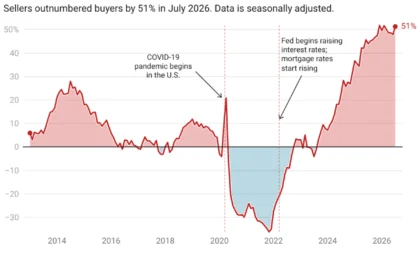
The Federal Reserve was forced into an aggressive pivot. In a frantic bid to cool the overheating economy, the central bank executed one of the most rapid interest-rate-hiking campaigns in modern history. Short-term rates, which hovered near zero in early 2022, were catapulted above 5% by mid-2023.
This environment created a mathematical trap for bondholders. Because bond prices move inversely to interest rates, the value of existing bonds plummeted as yields rose. Long-duration bonds—often considered the safest haven—suffered the most catastrophic losses. By August 1, 2026, the Bloomberg U.S. Aggregate Bond Index had endured a 72-month drawdown. This was not merely a dip; it was the longest, deepest downturn in the history of the index, lasting five times longer than any previous period of stagnation.
Supporting Data: Why the 60/40 Model is Under Fire
The data paints a sobering picture of why the traditional 60/40 portfolio—which allocates 60% to stocks and 40% to bonds—is being scrutinized. The logic was always sound: when stocks zig, bonds should zag. But for the better part of the last six years, they have moved in tandem toward the downside.
When the correlation between stocks and bonds turns positive during periods of market stress, the diversification benefit of bonds effectively vanishes. Investors who relied on the “40” in their portfolio to cushion their retirement accounts found that, in this specific inflationary regime, there was nowhere to hide.
Financial thinkers are now challenging the assumption that bonds should be a static allocation. Bob Pozen, a prominent academic and former financial executive, has been at the forefront of this debate. In a recent Wall Street Journal analysis, Pozen argued that for affluent investors whose living expenses are already covered by alternative income streams, the 40% bond allocation is a legacy habit rather than a strategic necessity. He posits that a 90% stock, 10% money-market allocation may be a more efficient path to long-term wealth, effectively suggesting that the bond market no longer offers the “safety” premium required to justify its weight in a modern portfolio.
Conflicting Philosophies: The Debate Among Experts
The investment world is currently split between two distinct schools of thought regarding the future of fixed income.
On one side, there are those who believe the era of the traditional bond allocation is over. They point to the rise of alternative investment strategies—merger arbitrage, private credit, and infrastructure assets—as superior tools for modern portfolio construction. These advocates argue that investors have evolved and that the market has become more complex; relying on a simple two-asset mix is a relic of a bygone era.
On the other side, contrarian investors—such as market commentator Jared Dillian—argue that the universal hatred for bonds is exactly why they might be ripe for a comeback. In the world of finance, the “crowded trade” is often the most dangerous, and conversely, the most unloved asset class often holds the most upside. If everyone has abandoned bonds, the supply-demand imbalance may eventually tip in favor of those who held their ground.
This dichotomy reminds us that investing is rarely about finding a “correct” answer. It is about assessing probabilities. The current skepticism toward bonds is not necessarily an indictment of the asset class itself, but rather a reflection of how deeply the trauma of the 2022-2026 interest rate shock has permeated investor sentiment.
The Implications of a New Rate Landscape
As we look toward the future, we must address the "anomaly" of the last 40 years. Many investors who entered the market after 1982 experienced a one-way street: declining interest rates. This environment created one of the greatest bull markets in bond history, where investors enjoyed both consistent income and massive capital appreciation as rates fell.
It is vital to recognize that the period from 1982 to 2020 was an outlier. We are now returning to a more “typical” interest-rate landscape, characterized by higher volatility and a higher cost of capital.
What does this mean for the average investor?
- The Death of Passive Diversification: The "set it and forget it" 60/40 portfolio may require more active management. Investors must decide whether to seek duration risk in bonds or look to alternative assets to dampen volatility.
- Yield as a Driver: With rates higher than they have been in years, bonds are actually generating real income again. While the capital losses of the past few years were painful, the higher “coupon” payments available today may provide a buffer that was absent during the low-interest-rate era of the 2010s.
- Inflation Sensitivity: Any strategy moving forward must account for the persistent threat of inflation. Bonds are inherently vulnerable to inflation, meaning that in a high-inflation environment, bonds alone cannot protect purchasing power.
Preparing for the Unknown
As legendary investor Howard Marks frequently reminds his audience, we cannot predict what the market will do, but we can prepare for what it might do.
Preparation, in this context, means expanding our definition of diversification. A portfolio that relies exclusively on traditional stocks and bonds is no longer as robust as it was in the late 20th century. Today’s investor has access to a wider array of instruments—from Treasury Inflation-Protected Securities (TIPS) and commodities to private equity and real estate—that can offer different correlations to the broader market.
The challenge for the modern investor is to avoid reacting to the rearview mirror. It is easy to be discouraged by the 72-month drawdown of the bond market, but reacting by selling at the bottom is the classic mistake of the amateur. Instead, the question should be: Does my portfolio have the resilience to handle a range of economic outcomes?
Conclusion: The Path Forward
The Everly Brothers’ question—“When will I be loved?”—ultimately finds its answer in patience and perspective. Bonds, much like any other asset class, will have their time in the spotlight again. Whether that happens because inflation subsides, or because the yields finally become too attractive for institutional investors to ignore, is a matter of timing.
Investors should not necessarily be looking for "love" in their portfolio, but rather for balance and discipline. We must recognize that the investment landscape is perpetually in flux. Today’s least-loved investment is often tomorrow’s star performer. The successful investor of the next decade will be the one who moves past the rigid dogmas of the past, embraces a broader toolkit for diversification, and maintains the humility to acknowledge that the rules of the game are always changing.
In the final analysis, the 60/40 portfolio is not "dead," but it is certainly in need of a reboot. By focusing on preparation rather than prediction, and by remaining disciplined in the face of market sentiment, investors can ensure that when the next shift occurs, they are positioned to benefit rather than to be left behind.
Disclaimer: This article is for informational purposes only and presents the views of the author. It does not constitute specific financial advice. Investors should verify the credentials of their financial advisors via the SEC or FINRA databases before making significant portfolio changes.