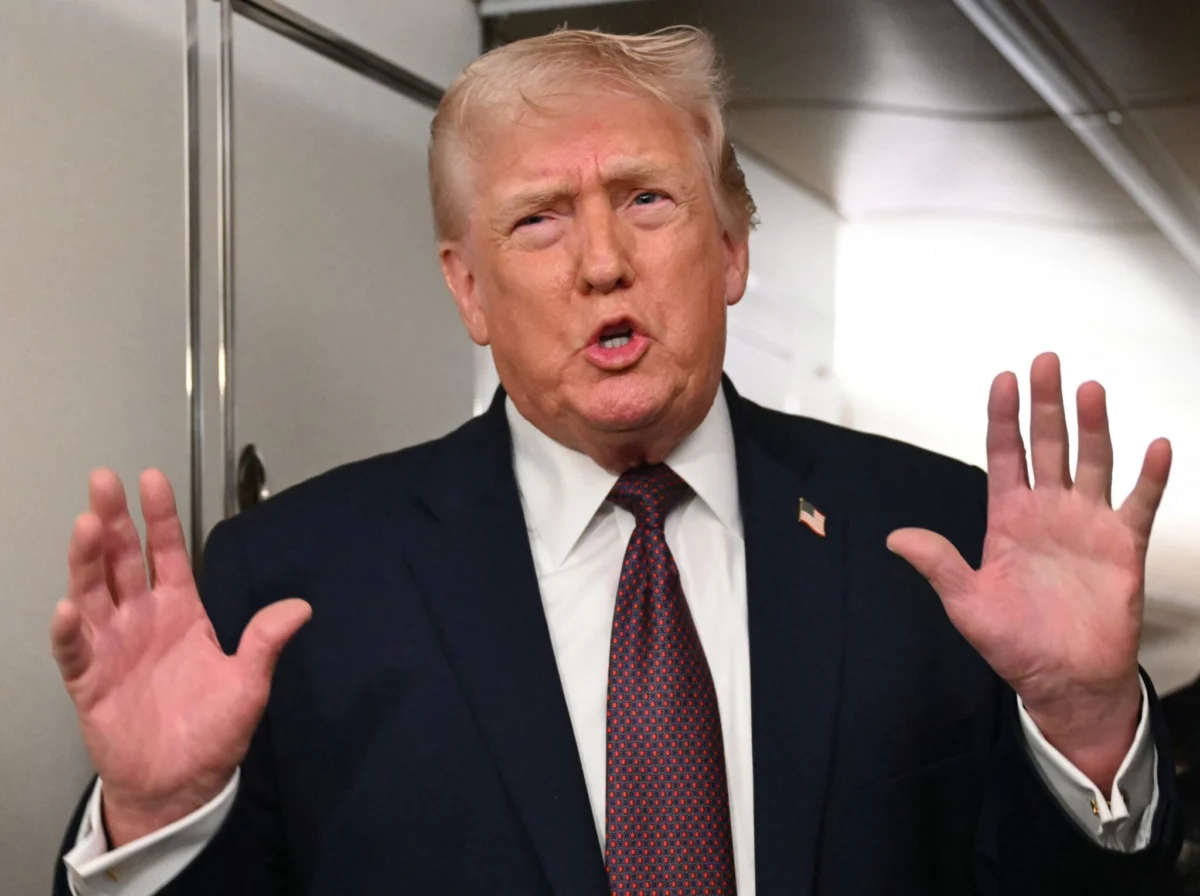
CARACAS/WASHINGTON D.C. — In a move that has sent shockwaves through global energy markets and ignited a firestorm of political controversy, U.S. President Donald Trump and Venezuelan Interim President Delcy Rodríguez have announced a sweeping bilateral oil agreement. However, the announcement has been met with immediate and fierce criticism from economic experts and constitutional scholars, who argue that the deal’s lack of transparency and the conditions of its signing render it both illegitimate and potentially illegal.
The deal, which aims to reorganize Venezuela’s struggling energy sector through American intervention, was reportedly brokered behind closed doors. Steve Hanke, a renowned economist and Special Adviser to Venezuelan Congressman Antonio Ecarri on Economic, Monetary, and Energy Affairs, has sounded the alarm, noting that even those at the highest levels of the Venezuelan legislature were kept in the dark.
"This deal was clearly arrived at in secrecy, with no public debate, and signed under duress," Hanke stated. "Therefore, it is illegitimate and probably illegal."
Main Facts: A Deal Shrouded in Shadow
The central controversy surrounding the U.S.-Venezuela oil deal lies in its opacity. While the executive branches of both nations have touted the agreement as a "new dawn" for the Western Hemisphere’s energy security, the specific terms—including equity stakes, environmental regulations, and revenue-sharing formulas—remain undisclosed to the public and the Venezuelan National Assembly.
Key points of contention include:
- The Lack of Legislative Oversight: Under Venezuelan law, major international contracts involving national resources must undergo rigorous debate and approval by the National Assembly. This process was bypassed.
- The "Duress" Argument: Critics argue that Venezuela’s current state of economic collapse and hyperinflationary pressure forced the interim administration into a "take it or leave it" position, undermining the sovereign equality of the negotiating parties.
- The Role of PDVSA: The agreement reportedly shifts significant operational control of Petróleos de Venezuela, S.A. (PDVSA) to foreign entities, a move that challenges the decades-old doctrine of state-led "resource nationalism."
For a nation that holds the world’s largest proven oil reserves, the stakes could not be higher. Yet, experts warn that without the "positive present value" generated by clear private property rights, the deal may be a house of cards.
Chronology: The Long Decay of a Petroleum Giant
To understand the desperation leading to this secret deal, one must examine the thirty-year trajectory of PDVSA, which was once the gold standard for state-owned enterprises (SOEs).
The Golden Era (1994–1998)
Under the leadership of Luis Giusti, PDVSA functioned with corporate autonomy and technical excellence. Production soared as the company embraced the Apertura Petrolera (Oil Opening), inviting foreign investment and maintaining high standards of human capital. By 1998, PDVSA was a global powerhouse, providing nearly 95% of Venezuela’s foreign exchange earnings.
The Chavismo Pivot (1999–2012)
The ascent of Hugo Chávez in 1999 marked the beginning of "Chavismo," an economic doctrine that viewed PDVSA as a "cash cow" for social programs rather than an industrial entity requiring reinvestment. Following a failed coup attempt in April 2002, Chávez purged the company of over 18,000 professionals, replacing engineers and geologists with political loyalists. Output began a slow, agonizing stagnation.
The Maduro Collapse (2013–2026)
Following Chávez’s death, Nicolás Maduro’s administration accelerated the decline. In 2017, the appointment of a National Guard general with zero industry experience to lead PDVSA signaled the final triumph of political loyalty over technical competence. Physical capital—pipelines, refineries, and tankers—was consumed by depreciation and lack of maintenance. By 2024, production had fallen to a fraction of its 1990s peaks, leaving the nation in a state of permanent economic emergency.
Supporting Data: The Mathematics of Worthless Oil
The most damning indictment of the current state of Venezuelan oil is not found in political rhetoric, but in the "depletion rate." Steve Hanke’s analysis highlights a startling reality: having oil in the ground is not the same as having wealth.
The Depletion Rate Crisis
The depletion rate is the speed at which an oil company extracts its reserves. It is the fundamental metric for determining the "present value" of an asset.
- ExxonMobil: Operates at a depletion rate of approximately 9% per year. This implies that Exxon will extract half of its current reserves in just 7.4 years.
- PDVSA: Currently operates at a depletion rate of a staggering 0.124% per year.
At this rate, it would take 558 years for Venezuela to deplete just half of its reserves. Due to the economic principle of "positive time preference"—the idea that a dollar today is worth more than a dollar in the future—a barrel of oil that cannot be sold for five centuries has a present value of zero. Effectively, the mismanagement of PDVSA has rendered the world’s largest oil reserves worthless in today’s market.
Human and Physical Capital Atrophy
The decline is further evidenced by the collapse of infrastructure. Capital expenditures (CAPEX) have fallen far below the value of annual depreciation and amortization.
- Equipment Breakdowns: Increased accident rates and "long downtimes" have become the norm.
- Brain Drain: The loss of human capital is irreparable in the short term. The professionals who fled in 2003 and during the 2010s are now driving the energy sectors of Colombia, Guyana, and the United States.
Official Responses: A Divided Front
The announcement of the Trump-Rodríguez deal has drawn a sharp divide between the executive branches and the legislative watchdogs.
The Interim Administration’s Defense:
Representatives for Interim President Delcy Rodríguez argue that the deal was a "necessary emergency measure" to prevent total state collapse. They contend that the secrecy was required to prevent sabotage from "radical elements" and to secure the most favorable terms possible before the 2026 election cycle.
The Congressional Opposition:
Congressman Antonio Ecarri and his team of advisers have rejected this narrative. They argue that any agreement involving the nation’s subsoil wealth that bypasses the National Assembly is a violation of the Constitution. "You cannot save a democracy by destroying its legal foundations," a spokesperson for Ecarri stated.
The International Context:
The deal comes on the heels of major shifts in the global energy landscape. In May 2026, the United Arab Emirates (UAE) officially exited OPEC after failing to secure a higher production quota. This "take the money and run" strategy, advocated by Hanke during his time on the UAE’s Financial Advisory Council, has set a precedent for nations to prioritize rapid depletion over cartel-mandated limits. Venezuela, however, remains trapped by its inability to even meet its existing quotas.
Implications: The Path to Recovery
If the U.S.-Venezuela deal is to have any lasting legitimacy or economic impact, experts suggest it must be accompanied by two radical shifts in policy:
1. Full Dollarization
The Venezuelan bolivar has become a relic of hyperinflation. Hanke and other economists argue that the only way to "kill inflation" is to mothball the bolivar and officially adopt the U.S. dollar. This would provide the "confidence shock" necessary to stabilize prices and allow for long-term capital planning. By removing the government’s ability to print money, Venezuela would force its leaders to live within a hard budget constraint.
2. Radical Privatization
The failure of the SOE model in Venezuela is absolute. The "present value" of the oil reserves can only be restored if the industry is privatized under a transparent legal framework that establishes clear property rights. This would allow for:
- A dramatic increase in the depletion rate (aiming for the 7–9% industry standard).
- The infusion of foreign technical expertise and modern equipment.
- The removal of the military from industrial management.
Conclusion: A Warning for the Future
The secret deal between President Trump and Interim President Rodríguez may provide a temporary lifeline, but it risks being overturned by future administrations if it is not ratified through legitimate, transparent channels. For Venezuela to transition from a "petro-state in ruins" to a functioning economy, it must move beyond backroom deals and embrace the rule of law, dollarization, and the rapid, private-sector-led extraction of its resources.
As the 2026 deadline for several major debt repayments looms, the window for a legitimate turnaround is closing. Without public debate and a return to constitutional norms, the "deal of the century" may simply be the latest chapter in a century of missed opportunities.