In the landscape of contemporary European cinema, few films possess the visceral, gut-wrenching urgency of Kosara Mitic’s debut feature, 17. Premiering in the Perspectives section of the Berlinale and earning high critical acclaim—including the Best Actress prize at the Sarajevo Film Festival for lead Eva Kostić—the film is a harrowing examination of trauma, systemic misogyny, and the suffocating culture of silence that often defines the teenage experience in Eastern Europe.
Mitic does not offer an easy viewing experience. From the opening frame, the audience is plunged into the immediate, traumatic aftermath of a sexual assault involving high-school student Sara (Kostić). The narrative then leaps forward several months, following Sara as she embarks on a class trip to Greece, only to find that one of her assailants is among the boisterous, unruly group of teenagers on the bus. What unfolds is a claustrophobic, unflinching study of a young woman carrying a secret that threatens to consume her, set against the backdrop of a society that prioritizes the comfort of perpetrators over the survival of victims.
Chronology of a Crisis: The Anatomy of the Trip
The narrative structure of 17 is deceptively simple, mirroring the confined, high-pressure environment of a school trip. The film’s bulk takes place over the first two days of the journey, beginning with a forced stopover in a hotel in Bitola.
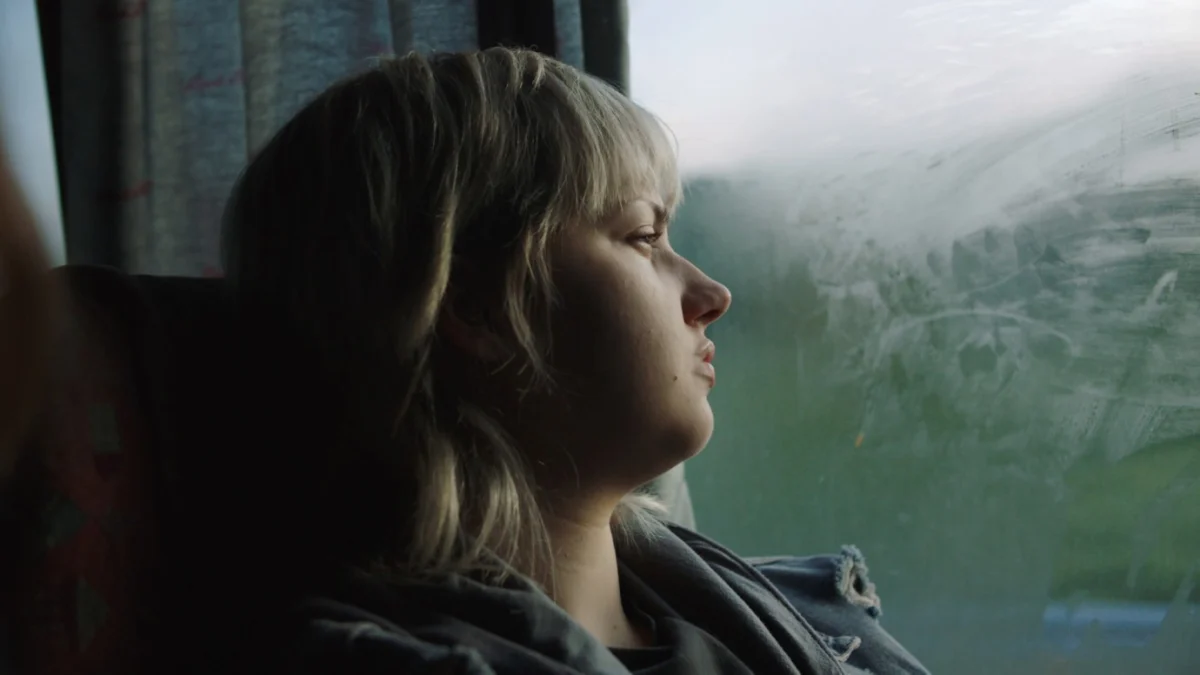
Cinematographer Naum Doksevski treats the hotel not merely as a set, but as a character in its own right. Bathed in dim, jaundiced lighting and elongated by deep, shifting shadows, the environment reflects the psychological decay of the characters inhabiting it. When the bus arrives, Sara is a study in protective posturing: clad in a baggy sweatshirt and loose jeans, her demeanor is openly hostile. She is a woman on the defensive, aware that her former attacker, the "apish" and volatile Filip (Dame Joveski), is lurking just feet away.
The tension is exacerbated by the incompetence of the adult figures. The two teachers tasked with chaperoning the group are portrayed as grossly resigned to the students’ insolence, choosing to ignore the overt bullying and toxic power dynamics that define the group’s social hierarchy. A hotel booking mix-up forces Sara into a room with her guileless, overly eager friend Lina (Martina Danilovska) and her former best friend, Nina (Eva Stojcevska). Nina, currently dating Filip, remains blissfully unaware of the history between her boyfriend and her friend, misinterpreting Sara’s icy, traumatized demeanor as mere jealousy.
As the narrative progresses through these forty-eight hours, the layers of Sara’s trauma are peeled back. We learn of her pregnancy—a physical manifestation of the violence inflicted upon her—and watch as she struggles to navigate a world that demands she remain "cool," compliant, and complicit in her own erasure.
Supporting Data: The Culture of Masculine Privilege
The script, penned by Mitic and Ognjen Sviličić, is a surgical dissection of the "don’t-ask-don’t-tell" culture that pervades much of the region. Through the lens of a school trip, the film exposes a rigid social code where masculine privilege is the primary currency.
The film highlights the intense peer pressure exerted on young girls to participate in a party culture that often treats their bodies as public property. The fear of "slut-shaming" acts as a powerful deterrent against speaking out; for Sara, the potential social fallout of revealing her assault is, in her mind, as terrifying as the assault itself. The film posits that this is not just a personal tragedy for Sara, but a systemic failure. When a hotel worker is brutally beaten by Filip and his friends, the violence is performed in full view of the party-goers, yet no one intervenes.
Mitic uses this, and a pointed remark from a teacher suggesting that the students should behave because Greece is a "civilized country with real rules," to frame the story as a broader metaphor for the Balkan experience—a region caught between the ghosts of the past and the desperate, often violent, reach toward European integration.
Official Responses and Critical Reception
Since its festival run, 17 has been compared to other notable festival breakouts, such as La Gradiva. However, where other films might adopt a voyeuristic or "sunny" approach to the coming-of-age genre, 17 remains steadfastly bleak. Critics have noted that while the film occasionally teeters on the edge of "shock-value miserablism," it is anchored by Kostić’s extraordinary performance.
Kostić conveys a "coiled rage" that simmer beneath her frayed reticence. Her performance is particularly noted for the complexity of her gaze; when she looks at Nina, who dismisses her pain as petty jealousy, Kostić’s smirk contains the weary, cynical pity of a veteran soldier observing a recruit. It is a nuanced, non-verbal performance that speaks volumes about the loss of innocence and the premature acquisition of wisdom born from trauma.
The film’s refusal to provide a tidy resolution has been a point of much discussion. At a border control checkpoint—the literal and symbolic crossroads of the film—Mitic leaves the audience in a state of suspended animation. Sara is forced to decide whether to continue burying her truth under the weight of her pregnancy or to finally break the cycle of silence, regardless of the consequences.
Implications: The Weight of the Secret
The implications of 17 extend far beyond the borders of Macedonia. By focusing on the intersection of sexual violence and adolescent social hierarchy, the film challenges audiences to consider how we prepare young people for the realities of power dynamics.
- Systemic Complicity: The film argues that the "innocence" of youth is often a myth used to protect those in power. By showing the teachers’ willful blindness, Mitic illustrates how institutions often become the primary enablers of abuse.
- The Burden of Womanhood: Sara’s experience is defined by the physical reality of her pregnancy, which acts as a constant, ticking reminder of her violation. The film asks: how can a young woman reclaim her body when the world is intent on claiming it for her?
- The Possibility of Solidarity: Amidst the despair, the film offers small, essential glimmers of light. The developing bond between Sara and the "dork" of the class, as well as the eventual opening up to Lina, suggests that while the system is designed to isolate the victim, individual acts of empathy can provide a necessary lifeline.
Conclusion: A Bracing Cinematic Statement
17 is not a film that invites the viewer to look away. It is a work of uncompromising intensity that utilizes the restlessness of fluid camerawork to ensure we are always in the center of Sara’s anxiety. Mitic’s directorial debut is a daring piece of work—one that forces a confrontation with the uncomfortable truths of masculine entitlement and the crushing weight of silence.
As the film reaches its final, breath-held moments, it does not offer a cathartic release. Instead, it offers something more honest: the realization that the hardest part of surviving trauma is not the event itself, but the daily, agonizing decision to either remain a victim or to risk everything to claim one’s own narrative. In the end, 17 succeeds because it trusts its audience to handle the weight of that truth, leaving us to grapple with the realization that for many, the "truth" is a burden they are forced to carry long after the credits roll.