Executive Summary: A Diplomatic Standoff
In a high-stakes standoff that bridged the gap between ivory-tower academic discourse and international diplomacy, Ghent University has reached a precarious resolution regarding the status of American postdoctoral researcher Nathan Cofnas. Cofnas, who had been placed on administrative leave following a series of controversial public claims—most notably his accusations of plagiarism against the late Cambridge University professor Jason Arday—will retain his position at the Belgian institution.
The decision follows a week of intense scrutiny that saw over 930 academics worldwide sign an open letter in his defense, as well as an unprecedented intervention from the United States government. U.S. Ambassador to Belgium Bill White publicly threatened to review the university’s federal funding, specifically citing its $869,000 in active U.S. Department of Defense (DoD) grants. While the immediate threat of termination has been averted, the university maintains that its disciplinary investigation remains "ongoing," leaving the long-term future of the researcher and the integrity of the institution’s research mandates under a cloud of uncertainty.
The Chronology of a Campus Crisis
The Catalyst: Plagiarism Accusations and Intellectual Controversy
The controversy began when Nathan Cofnas, a scholar whose work often focuses on "race realism" and the "hereditarian revolution," leveled public accusations of plagiarism against the late sociologist Jason Arday. Arday, a prominent figure in British academia known for his work on race and education, had passed away prior to the public airing of these claims. The accusations ignited a firestorm within the academic community, prompting Ghent University to launch an investigation.
The Suspension and the Disciplinary Notice
On August 18, 2026, Ghent University placed Cofnas on administrative leave. The disciplinary notice, which was later shared on social media, indicated that the institution was reviewing whether Cofnas had engaged in discrimination against Arday. Furthermore, the university raised fundamental questions about whether his scholarly focus on controversial hereditarian theories was "fundamentally inconsistent with the contractual scope of your employment." For the university, the issue was not merely the accusation against Arday, but whether Cofnas’s body of work violated the university’s core tenets regarding human dignity and non-discrimination.
The Global Academic Response
The suspension triggered an immediate outcry from civil libertarians and academics across the globe. An open letter, signed by 930 scholars, argued that the university’s actions constituted a "chilling effect" on academic freedom. Supporters maintained that regardless of the controversial nature of Cofnas’s research, the freedom to investigate "unpopular" topics is a cornerstone of the Western university system.
Diplomatic Intervention: The Role of Ambassador Bill White
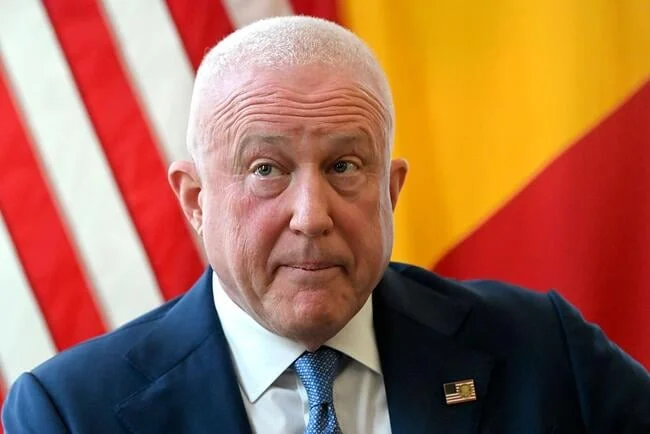
Perhaps the most significant development in the saga was the direct involvement of U.S. Ambassador to Belgium, Bill White. In a move that observers described as highly unusual for diplomatic protocol, White took to the social media platform X to condemn the university’s decision to suspend Cofnas.
The Threat to Federal Funding
The stakes were escalated when White explicitly linked the academic dispute to the financial relationship between Ghent University and the United States government. With $869,000 in DoD funding currently flowing to the institution for research projects, the Ambassador’s warning that the Trump administration would review "any relationships we have with Ghent University" sent shockwaves through the university’s administration.
The Resolution and Public Reconciliation
On Thursday, following private discussions, the tone shifted. Ambassador White announced that he had spoken with "all parties" and was pleased that an "amicable agreement" had been reached.
"I look forward to working with Ghent University Rector Petra De Sutter to continue the relationship between the university and the United States," White stated. "I am grateful for her willingness to listen to voices calling for protecting academic freedom."

Cofnas responded with visible relief, noting that the Ambassador’s intervention was "beyond my imagination." He confirmed that he would return to work, though his duties would be restricted to 60% of his time for the remainder of his one-year postdoc, focusing on a project titled "The Future of Liberalism."
Institutional Context: The Ongoing Investigation
Despite the public show of resolution, Ghent University has been careful to manage the narrative through its official channels. In a statement posted to its information page, the university acknowledged the contact with the U.S. Ambassador but emphasized that the "preliminary disciplinary inquiry" is far from concluded.
The Tension Between Values and Contracts
The university’s position rests on the assertion that it must uphold its internal regulations, which include strict mandates on human dignity and the prohibition of discriminatory speech. The administration faces a difficult balancing act:
- Academic Freedom: The obligation to allow controversial, even offensive, research to proceed without institutional censorship.
- Institutional Reputation: The need to protect the university’s standing as an inclusive environment that adheres to European standards on anti-discrimination.
- External Pressure: Managing the influence of foreign donors and government entities who view the institution through the lens of political ideologies.
The "confidentiality of the procedure," as cited by the university, suggests that the case is being handled with extreme caution. The institution is essentially testing whether a researcher’s controversial ideological outputs can be decoupled from his contractual obligations without infringing on protected speech rights.
Implications for Global Academia
The "Chilling Effect" and Political Polarization
The Cofnas case is a microcosm of the broader "culture wars" currently gripping higher education. As universities become battlegrounds for political discourse, the line between academic research and political activism is increasingly blurred. When an academic’s work is deemed "inconsistent" with institutional values, does the university have the right to intervene? Or does that intervention itself constitute a violation of the pursuit of truth?
The Precedent of Diplomatic Leverage
The intervention of Ambassador White marks a new and potentially dangerous precedent. By utilizing the threat of funding withdrawal to influence an internal university disciplinary matter, the U.S. government has signaled that it is willing to treat academic freedom as a component of foreign policy. For international universities that rely on American grants, this creates a scenario where they must weigh the potential for academic sanction against the risk of losing vital financial support.
The Future of "Hereditarian" Research
The case also underscores the ongoing controversy surrounding "race realism" and hereditarian studies. These fields are often rejected by the mainstream scientific community, yet they remain subjects of intense interest within certain ideological circles. The fact that Cofnas’s contract was not terminated suggests that even if a university finds such research abhorrent, it may be legally or politically constrained from firing the researcher if they are operating within the bounds of standard academic conduct.
Conclusion: A Precarious Peace
As Nathan Cofnas resumes his work at Ghent University, the academic community remains deeply divided. To his supporters, his reinstatement is a victory for the principle of free inquiry, proving that even in the face of institutional pressure, the right to hold and express controversial ideas can be defended. To his critics, the university has been bullied by an external political power, forced to host a researcher whose work they find fundamentally antithetical to the institution’s commitment to human dignity.
The reality, however, is more complex. The "amicable agreement" reached between the Ambassador and Rector De Sutter suggests a pragmatic compromise—a way to lower the temperature of a boiling conflict. But with the disciplinary inquiry still "ongoing," the final word on whether Nathan Cofnas’s work can coexist with the values of a modern European university has yet to be written. The case serves as a stark reminder that in the 21st century, academic freedom is no longer just a campus issue; it is a matter of international diplomacy, federal funding, and the shifting boundaries of permissible thought.