At this year’s TechBBQ in Copenhagen, the atmosphere was a potent cocktail of Scandinavian hospitality and deep-seated geopolitical anxiety. While the annual Nordic conference is typically a showcase for innovation and networking, the discourse among investors, founders, and policy operators this year was underscored by a singular, urgent preoccupation: Who owns the future of intelligence?
From the main stage keynotes to the intimate rooftop soirées overlooking the Copenhagen skyline, the conversation shifted away from the "how-to" of building AI applications toward the "who-controls" of the infrastructure itself. With the conference theme aptly titled "Emerging from Agency," the event served as a microcosm of a broader European awakening—one that recognizes that technological dependence on the United States and China is no longer merely a strategic inconvenience, but a fundamental risk to democratic sovereignty.
The Catalyst: A Wake-Up Call from Anthropic
The urgency of the debate was not purely theoretical; it was sparked by a tangible disruption. Earlier this year, users across Europe found themselves locked out of Anthropic’s advanced AI models, Mythos and Fable. For many European startups, this was a "black swan" moment that exposed the fragility of the current "rent-based" model of AI consumption.
The incident sent ripples through the European ecosystem. As one startup executive noted, the sudden unavailability of these tools caused immediate operational paralysis for his software team. While some attendees dismissed the event as a transient glitch, others viewed it as a harbinger of future "digital blockades." The realization is dawning on the continent: when you do not own the model or the infrastructure, you are essentially a tenant on someone else’s land—a tenant who can be evicted at a moment’s notice.
The Core Debate: Sovereignty and Data Autonomy
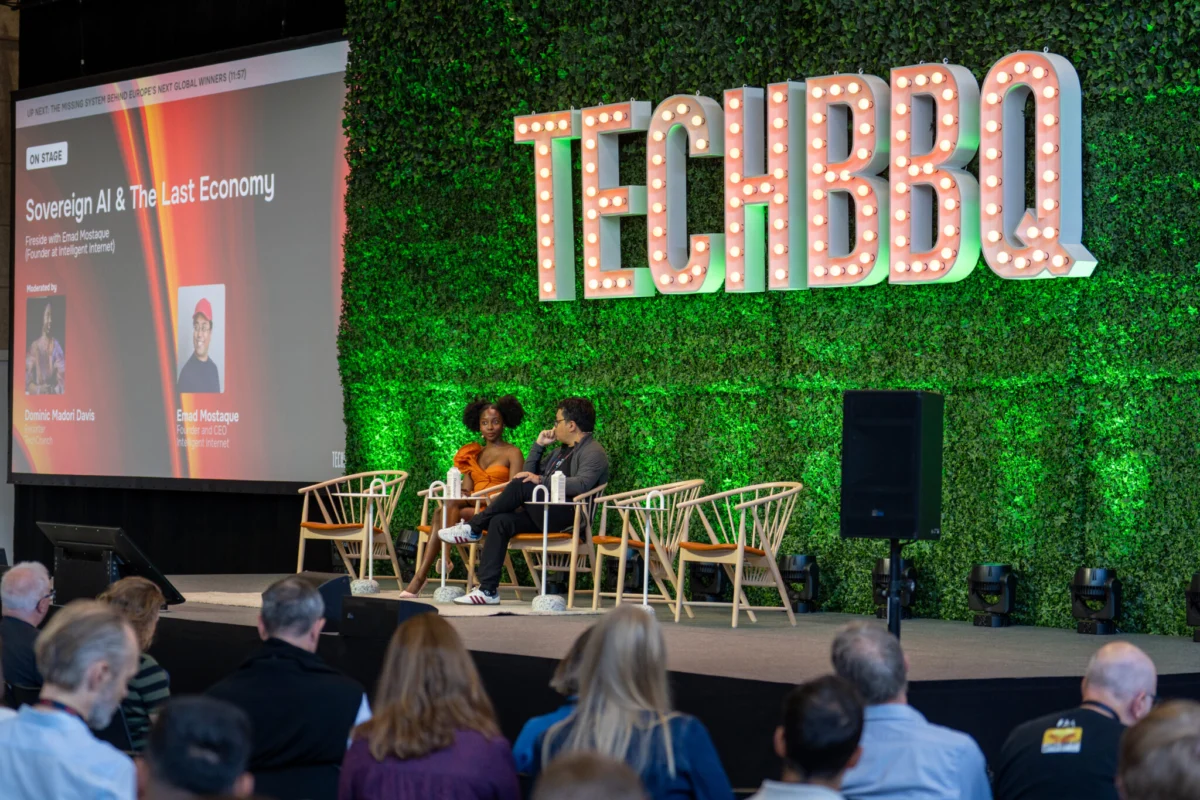
The concept of sovereignty—the ability of a nation or a region to resist external control—emerged as the dominant narrative of the conference. Emad Mostaque, co-founder of Stability AI and Intelligent Internet, articulated this tension during a panel discussion on the agentic workforce.
"Sovereignty is the ability to resist power being exerted over you," Mostaque argued. He posited that the current concentration of AI power in the hands of a few dominant labs in the U.S. creates a precarious imbalance. "Inevitably, every country will be run by AI, and the person that controls the AI controls the country," he warned.
This concern was echoed by Signal President Meredith Whittaker, who participated in a moderated session on the collision course between privacy and AI integration. Whittaker took a hardline stance against the seamless integration of AI assistants into operating systems—a trend exemplified by ChatGPT’s deep integration into platforms like iMessage. She characterized this era of AI not as a leap in human utility, but as the construction of a massive, unprecedented "data collection apparatus."
"AI labs are using clever marketing to make people forget about the collateral consequences of acquiring so much data," Whittaker noted. Her message to the European audience was clear: privacy is not just a regulatory hurdle; it is a market-defining opportunity. If Europe can build systems that prioritize individual agency over data extraction, there remains a massive, untapped market for "sovereign" AI.
The Human Element: Reclaiming the Driver’s Seat
Despite the heavy focus on geopolitical mechanics, the conference did not lose sight of the human experience. Ellen de Brever, an angel investor and head of partnerships at the Novo Nordisk Foundation Cellerator, provided a philosophical counterweight to the technocratic discussions.
"The age of AI agents isn’t really a story about machines gaining agency," de Brever observed. "It’s a story about humans deciding what to give up."
This perspective permeated various summits held throughout the week, ranging from the future of women’s health to the collaborative potential between Nordic and African startup ecosystems. The overarching sentiment was that while AI is the engine of the current revolution, it must be steered by human judgment. The debate is no longer about which machine is "smarter"; it is about who holds the steering wheel and what ethical trade-offs we are willing to accept in the pursuit of efficiency.
Implications: A Fundamental Rethink of Society
The long-term implications of this transition are profound. Mia Negru, advocacy and engagement director for the nonprofit Life With Artificials, captured the existential gravity of the moment. In a post-panel reflection, she suggested that the rise of intelligent agents—which perform cognitive labor—coupled with the rise of robotics—which perform physical labor—could trigger a societal shift more significant than the Industrial Revolution.
"We may have to rethink ownership, work, democracy, economic participation, and eventually even who gets to participate in society," Negru said. If the core tenets of our economic and social systems are predicated on human labor and individual agency, what happens when those roles are abstracted or outsourced to proprietary algorithms?
The European response, as discussed at TechBBQ, involves a push for "growth capital" to foster local alternatives. The goal is to build an ecosystem that is not merely a mirror of Silicon Valley, but a distinct alternative that integrates European values regarding data privacy, human rights, and regional autonomy.
The Social Fabric: Beyond the Code
While the formal panels wrestled with the fate of nations, the informal gatherings—the rooftop barbecues hosted by the likes of Nvidia, AWS, and HSBC, and the intimate cocktail hours at local venues like Bird—offered a glimpse into the resilient nature of the human network.
It was in these spaces that the stark contrast between the "machine-first" world and the "human-first" world became most apparent. Amidst the talk of GPU clusters and large language models, the most memorable interactions remained those defined by face-to-face connection.
"In a room full of conversations about machines, the most memorable moments still come from the simplest thing," de Brever said during the final day of the event. "Human connection, face-to-face, building relationships, sharing ideas, and reminding each other of what technology can never quite replace."
Conclusion: The Path Forward for Europe
As TechBBQ 2026 concluded on August 27, the consensus was clear: Europe is at a crossroads. The reliance on external AI infrastructure is a temporary state of affairs that, if left unaddressed, threatens the region’s long-term autonomy.
The path forward, however, is not necessarily to isolate or retreat, but to build with a focus on sovereignty. This involves a dual strategy:
- Infrastructure Sovereignty: Investing in compute, talent, and data frameworks that keep European AI research and implementation independent.
- Values-Based Innovation: Leveraging Europe’s strong stance on privacy and human-centric design as a competitive advantage to attract users who are growing wary of the "collateral consequences" of unregulated data collection.
The discussions in Copenhagen proved that the "Emerging from Agency" theme was more than just a marketing slogan; it was a rallying cry. Whether Europe can succeed in building its own "AI sovereign" infrastructure remains to be seen, but the intent is now firmly established. The continent is no longer just observing the AI revolution; it is beginning to define the terms under which it will participate—and crucially, the terms under which it will not.
As the sun set on Copenhagen, the message to the global tech community was unambiguous: The future of AI is not a foregone conclusion written in Silicon Valley. It is a work in progress, and in the heart of the Nordics, the search for a human-centered, sovereign path is officially underway.