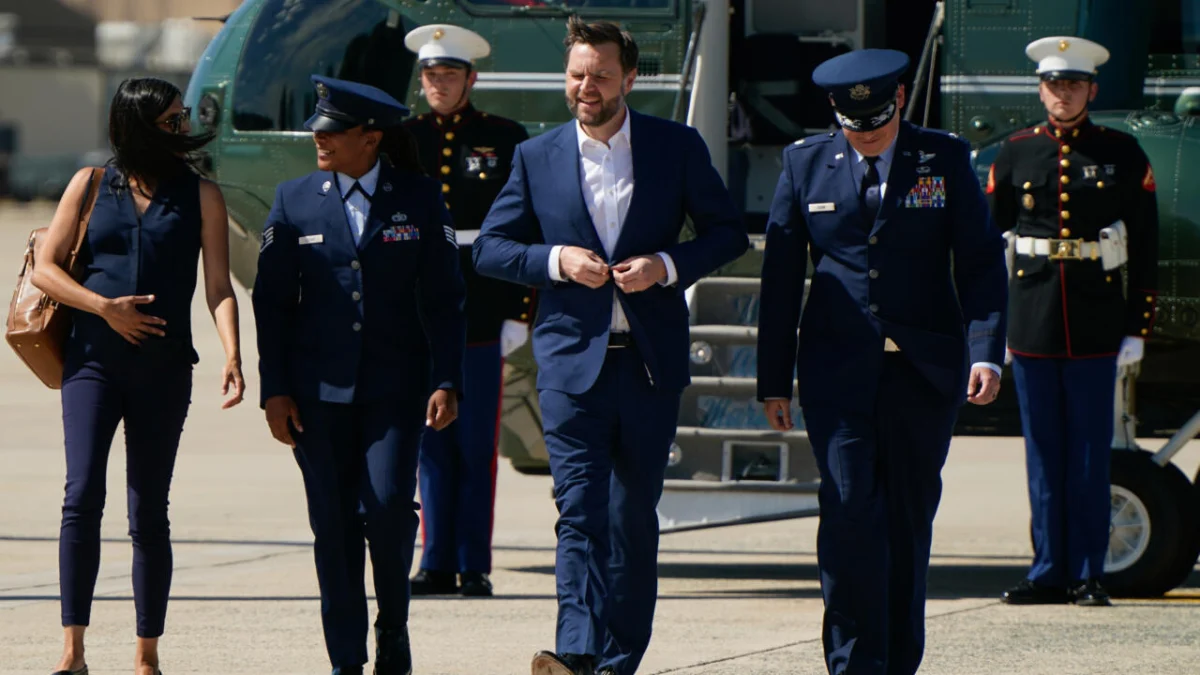
GENEVA — US Vice President JD Vance touched down in Switzerland on Sunday, marking the beginning of a frantic, high-pressure 60-day diplomatic window aimed at de-escalating the conflagration across the Middle East. His arrival comes at a precarious moment: even as the American delegation prepares to sit down with Iranian counterparts, Tehran has signaled a renewed hardening of its position, announcing the closure of the strategic Strait of Hormuz in retaliation for recent Israeli strikes in Lebanon.
The mission, which follows the signing of a preliminary framework agreement last week, represents the Biden-Vance administration’s most ambitious attempt yet to contain a regional war that threatens to engulf the global economy.
The Core Mandate: A 60-Day Sprint for Peace
The framework agreement, finalized in clandestine meetings just seven days ago, serves as the roadmap for these negotiations. However, the document is largely a statement of intent; the "technical details"—ranging from the specific mechanics of regional ceasefires to the protocols for de-escalating proxy conflicts—remain dangerously unresolved.
Diplomatic sources indicate that the next two months are critical. With the Strait of Hormuz, a global maritime chokepoint, now under threat of closure by Iranian forces, the negotiators are operating under the shadow of a potential energy crisis. The US delegation, led by Vice President Vance, is tasked with securing a deal that addresses Iran’s regional security concerns while ensuring the cessation of hostilities between Israeli forces and Iranian-backed groups in Lebanon.
Chronology of Escalation
To understand the gravity of the situation in Geneva, one must look at the rapid sequence of events that brought the parties to the table:
- June 14, 2026: Negotiators reach a preliminary framework agreement in a neutral venue, aiming to create a "deconfliction zone" across the Levant.
- June 17, 2026: Renewed Israeli airstrikes target logistics hubs in Southern Lebanon, which Israel claims are being used to facilitate Iranian weapon shipments.
- June 19, 2026: Confusion erupts as White House press officials initially state that Vice President Vance would not be traveling to Switzerland, leading to market volatility.
- June 20, 2026: Tehran officially announces the closure of the Strait of Hormuz to "hostile shipping," citing self-defense following the Lebanese strikes.
- June 21, 2026: Vice President Vance lands in Geneva, confirming that the diplomatic track remains open despite the closure of the waterway.
The Strategic Importance of the Strait of Hormuz
The closure of the Strait of Hormuz is not merely a regional provocation; it is an economic ultimatum. Approximately 20% of the world’s total petroleum consumption passes through this narrow maritime passage. By closing the strait, Tehran is leveraging its geographical advantage to force a shift in the status quo regarding the Israeli-Lebanese theater.
Analysts warn that if the standoff in Switzerland fails to yield a breakthrough within the first two weeks of the 60-day window, global energy markets could face unprecedented volatility. "This is a chess game played with oil tankers," says Dr. Elena Rossi, a geopolitical analyst at the Geneva Institute for Security Studies. "Tehran is showing they have a hand to play that directly impacts the American domestic economy, and the Vice President is there to ensure that the cost of that move is understood by both sides."
Official Responses and Diplomatic Posturing
The diplomatic environment surrounding the talks is fraught with skepticism.
The US Stance:
Vice President Vance, speaking briefly upon his arrival at Geneva International Airport, emphasized the administration’s commitment to a "durable, long-term stability" in the region. He avoided commenting directly on the Iranian blockade, focusing instead on the necessity of the framework agreement. "We are here to do the hard work of diplomacy," Vance stated. "The alternative to these talks is a trajectory that nobody in the international community wants to see."
The Iranian Perspective:
In Tehran, the rhetoric remains defiant. The Iranian Ministry of Foreign Affairs issued a statement early Sunday morning, characterizing the closure of the Strait of Hormuz as an "inevitable response to the systematic aggression against our allies in Lebanon." While Iranian negotiators have agreed to sit with the US delegation, they maintain that their security commitments are non-negotiable and that the "Western-backed encroachment" in the Levant must cease immediately for the waterway to be reopened.

The Israeli Reaction:
Jerusalem has remained relatively restrained in its public comments, though military spokespersons have noted that the IDF remains in a "state of high readiness." The Israeli government has consistently argued that any agreement that does not neutralize the threat posed by Hezbollah—which they describe as an Iranian proxy—will only serve to embolden Tehran in the long run.
Implications: The Global Stakes
The failure of these negotiations would have profound, ripple-effect consequences for the global order.
1. The Economic Fallout
Should the talks collapse, the combination of a prolonged regional war and a blocked Strait of Hormuz would likely trigger a global recession. Insurance premiums for maritime shipping in the Persian Gulf have already spiked by 400% in the last 48 hours.
2. The Shift in US Foreign Policy
The presence of Vice President Vance at these talks represents a significant evolution in the current administration’s approach to the Middle East. By positioning the Vice President as the lead negotiator, the White House is signaling that the resolution of this conflict is the absolute priority of the executive branch, overriding other domestic policy concerns for the foreseeable future.
3. The Future of Proxy Warfare
The success or failure of these talks will define the rules of engagement for the next decade. If the parties can move from a state of kinetic warfare to a managed diplomatic framework, it could signal a pivot away from the cycle of proxy attacks that have defined the Levant for years. However, if the talks are viewed as a "patchwork solution," experts fear that regional actors will simply use the 60-day window to re-arm and reorganize, leading to an even more violent eruption later this year.
Looking Ahead: The 60-Day Clock
As the delegation settles into the negotiation venue in Switzerland, the world watches with bated breath. The 60-day timeline is not arbitrary; it is the time frame negotiators believe is necessary to address the "technical details" of troop withdrawals, border monitoring, and arms embargoes.
If progress is not made within the first fortnight, there is a high probability that international intermediaries, including potential representatives from the European Union and the Gulf Cooperation Council, will be called in to broaden the scope of the talks.
For now, the focus remains on the closed-door meetings scheduled for Monday morning. Vice President Vance carries the weight of a precarious peace, and the world waits to see if the rhetoric of the last few days can be tempered by the cold, hard logic of negotiation.
Follow our liveblog for real-time updates as the delegations convene in Geneva.