By International News Desk
Updated: August 29, 2026 – 07:37 GMT
The Himalayan region is reeling under the weight of a monumental humanitarian crisis as rescue teams in Nepal and the Tibet Autonomous Region of China struggle to navigate the aftermath of unprecedented flash floods and landslides. Triggered by intense, unseasonal monsoon surges, the torrents of mud and water have obliterated entire villages, leaving a trail of destruction that stretches across the fragile high-altitude geography of the Himalayas.
As of Saturday, August 29, 2026, the official death toll has climbed to 633, with authorities confirming that nearly 3,000 individuals remain missing. The search-and-rescue operation, hindered by treacherous terrain, severed communication lines, and continued rainfall, is being described as one of the most challenging in the region’s history.
Main Facts: A Region Submerged
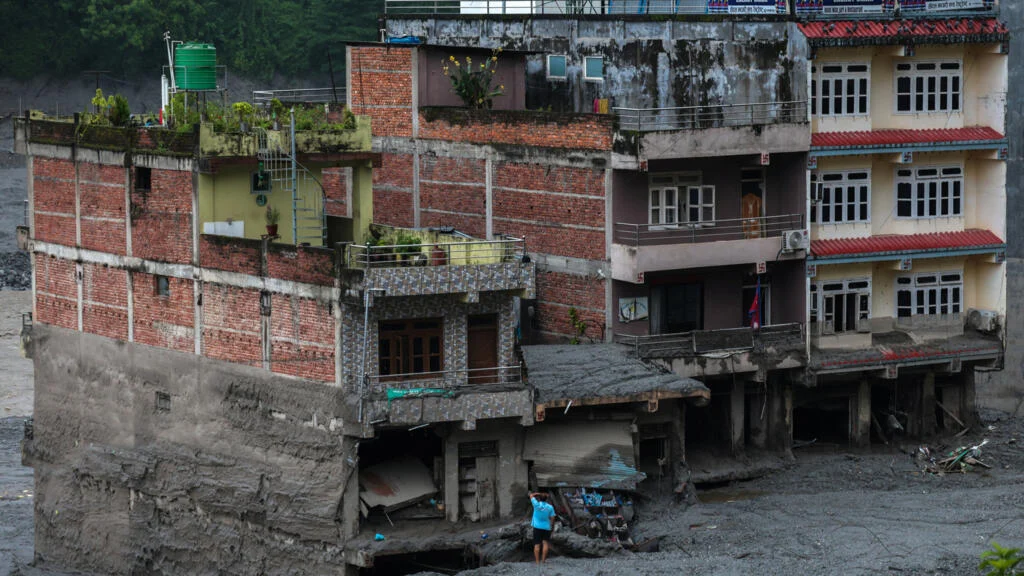
The disaster, which began earlier this week, has effectively paralyzed the infrastructure of the affected districts. In Nepal’s Nuwakot district—specifically in the Trishuli area—the landscape has been fundamentally altered. Buildings have been reduced to rubble, and vital road networks have been swallowed by the surging riverbeds.
The scale of the disaster is compounded by the geography of the Himalayas. Many of the missing are residents of remote, mountainous settlements accessible only by foot or helicopter. With low-hanging clouds and continued unstable weather, aerial rescue efforts have been intermittent, forcing ground crews to perform the grueling work of manual excavation in unstable, waterlogged soil.
Chronology of the Disaster
The Onset (August 26–27)
The catastrophe began following a series of cloudbursts that overwhelmed the local river systems. Meteorological departments in both Kathmandu and Lhasa had issued warnings, but the intensity of the downpours far exceeded predictive models. By the evening of August 26, local authorities reported that the Trishuli and surrounding mountain rivers had breached their banks, sending walls of debris-laden water into unsuspecting villages.
The Peak of the Crisis (August 28)
As the sun rose on August 28, the true extent of the damage became apparent. The number of missing persons, initially estimated in the hundreds, surged into the thousands as local village councils reported entire households wiped away during the night. By Friday evening, the recovery of bodies reached 633, marking a grim milestone in the disaster response.
The Ongoing Struggle (August 29)
Saturday morning has seen a mobilization of military and paramilitary units from both Nepal and China. The focus has shifted from mass evacuation to the delicate, dangerous process of digging through deep sediment to locate survivors and recover the deceased.
Supporting Data and Context
The severity of this event highlights the increasing vulnerability of Himalayan communities to climate-driven weather anomalies.
- Casualty Estimates: With 633 confirmed fatalities and nearly 3,000 missing, the final death toll is expected to rise significantly as rescuers reach the most isolated pockets of the region.
- Infrastructure Impact: Preliminary reports indicate that over 400 homes have been destroyed, with an additional 1,200 structures partially damaged. Key bridges connecting the Trishuli corridor to larger urban centers have collapsed, severing supply chains for food and medicine.
- Environmental Triggers: Experts point to a combination of rapid glacial melt and extreme precipitation. The Himalayan region has seen a 1.5°C increase in average temperatures over the last decade, leading to more aggressive monsoon cycles.
Official Responses and International Coordination
Nepal’s Government Strategy
The Nepalese government has declared a state of emergency in the worst-hit districts. Prime Minister and cabinet ministers have coordinated with the Nepal Army to deploy specialized disaster response teams. "Our priority is the preservation of life," a spokesperson for the Home Ministry stated. "We are coordinating with international partners to ensure we have the necessary thermal imaging equipment and specialized canine units to locate those trapped beneath the mud."

The View from Lhasa
In the Tibet Autonomous Region, Chinese authorities have launched a parallel effort. Beijing has deployed rescue helicopters and heavy earth-moving equipment to the border regions, acknowledging that the disaster is transboundary in nature. Cooperation between Kathmandu and Lhasa is currently focused on sharing satellite telemetry to identify high-risk areas where further mudslides are imminent.
International Aid
The United Nations and the Red Cross have begun mobilizing emergency supplies. Aid packages including tents, water purification tablets, and medical kits are being stockpiled in Kathmandu, waiting for windows of weather clearance to be transported into the mountains.
Implications: A New Era of Himalayan Risk
The events of August 2026 serve as a harrowing reminder of the risks posed by climate change to the "Third Pole." The implications of this disaster extend far beyond the immediate recovery effort:
1. Urban Planning and Geography
For decades, construction in the Himalayan foothills has ignored the natural flow of mountain watersheds. The total destruction of homes in the Trishuli valley raises difficult questions about zoning laws and the safety of settlements built on historical floodplains. Future reconstruction will likely require a complete reassessment of where and how people are permitted to reside in the high-altitude zones.
2. The Transboundary Governance Challenge
Because the Himalayan watershed spans multiple nations, the lack of a robust, unified flood-monitoring system has proven fatal. The failure to effectively communicate the severity of the incoming storm across borders allowed the water to claim thousands before they could flee to higher ground. There is a growing call among regional observers for a "Himalayan Meteorological Alliance" that would mandate real-time data sharing between Nepal, China, India, and Bhutan.
3. Economic Resilience
The local economy, which relies heavily on tourism and subsistence terrace farming, faces a multi-year recovery period. Agricultural land, the lifeblood of these villages, has been buried under feet of silt and rock. The economic displacement of thousands of families will likely trigger an internal migration crisis, with many residents forced to abandon their ancestral lands for safer, urban environments.
Conclusion: The Long Road Ahead
As the sun sets on August 29, the mood in the disaster zone remains somber. The sound of helicopters overhead and the distant rumble of moving rock define the atmosphere of a region in mourning.
The task facing rescuers in the coming days is Herculean. The window of opportunity to find survivors is closing, and the risk of secondary landslides remains high as the ground remains saturated. For the people of the Himalayas, this tragedy is not merely a natural disaster, but a signal that their way of life is increasingly under siege by a changing climate.
As the recovery continues, the world watches with bated breath, hoping that the brave efforts of the rescue teams will yield more survivors, even as the region prepares to bury its dead and reckon with the devastating reality of a new environmental order.
Stay tuned to our liveblog for continuous coverage of the rescue efforts, expert analysis on the climatic causes, and personal accounts from survivors in the affected districts.