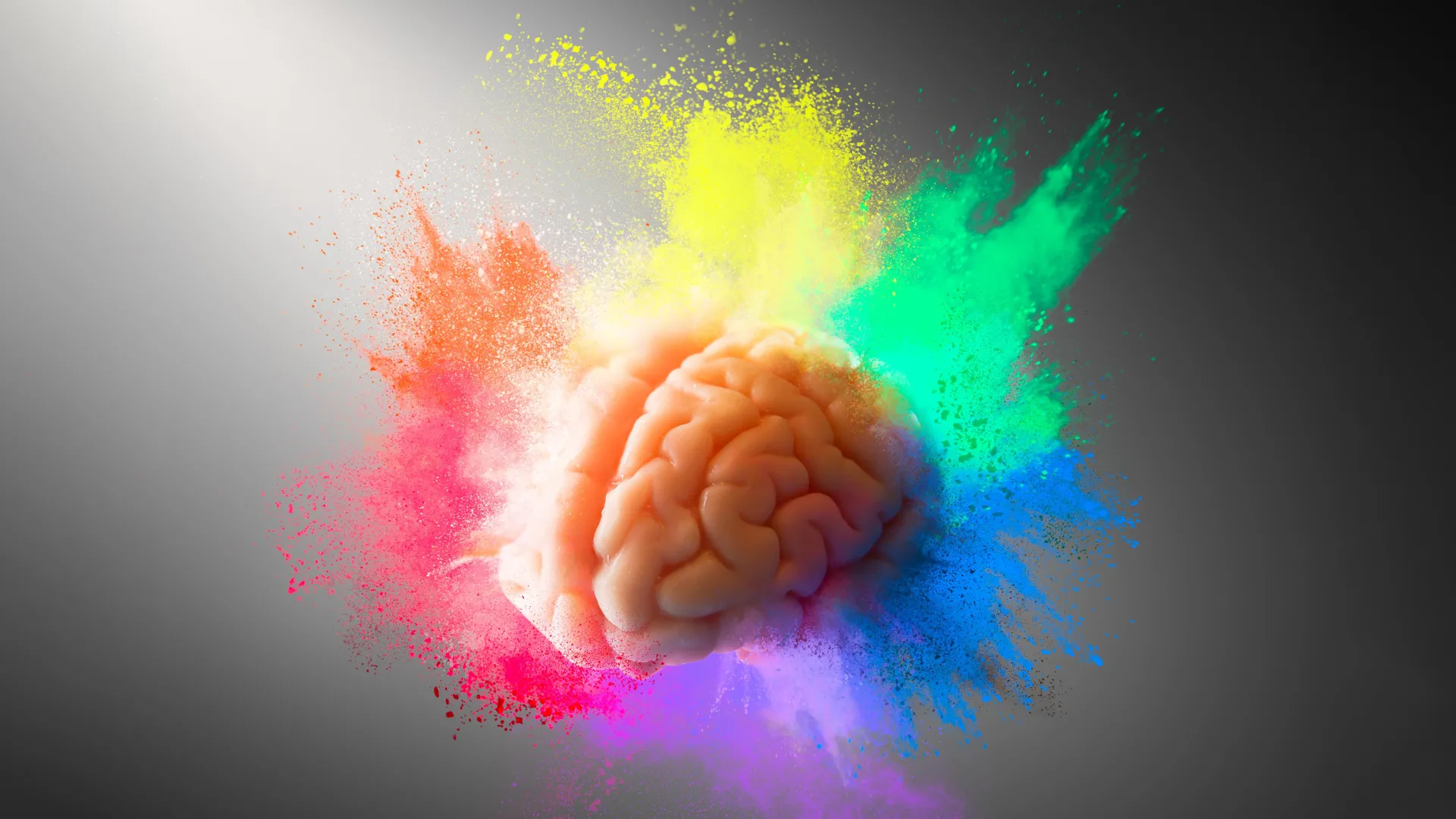
For decades, the clinical understanding of Attention Deficit Hyperactivity Disorder (ADHD) has been framed almost exclusively through the lens of deficit. Characterized by struggles with sustained focus, impulse control, and the management of executive functions, the diagnosis has long dictated a narrative of "fixing" what is perceived to be broken. However, a groundbreaking study published in the journal iScience is challenging this paradigm, suggesting that the neurological architecture underlying ADHD is not merely a collection of shortcomings, but a potential engine for extraordinary creative output.
Led by Dr. Radwa Khalil, a neuroscientist at Constructor University, the research—titled Attention Unleashed: Creative Therapy for Thoughtful Transformation—argues that the very mechanisms that lead to distractibility in classroom or office settings are the same ones that allow high-achieving individuals like Justin Timberlake and Simone Biles to innovate in their respective fields. By exploring the deep-seated neurological overlap between attention and creativity, this study proposes a future where art, music, and dance are not just hobbies, but essential, non-pharmacological interventions for the nearly 8% of children worldwide living with ADHD.
The Neurology of Divergence: Main Facts and Scientific Context
To understand the shift in perspective, one must first understand the "spotlight" metaphor utilized by Dr. Khalil and her team of co-authors from prestigious French research institutions. In a neurotypical brain, attention functions much like a focused beam—a narrow, high-intensity spotlight that illuminates a single task, effectively muting background noise to ensure the completion of mundane or repetitive goals.
In the ADHD brain, however, that spotlight is significantly wider. It takes in a panoramic view of the environment, absorbing peripheral information that others might ignore. While this "defocused attention" is undeniably disruptive when a person is asked to complete a rote data entry task or sit through a structured lecture, it serves as an immense advantage in creative endeavors. The ability to pull in disparate, seemingly unrelated pieces of information and synthesize them into new combinations is the bedrock of original thought.
The iScience study provides a framework for how these systems overlap. It identifies "free-associative thought"—the tendency for the mind to wander into unexpected, non-linear territory—as a core shared process. While this tendency is often pathologized as "mind-wandering" or "distractibility," the research suggests that when channeled correctly, this same process is the engine of creative insight. By mapping the neural networks involved in both creativity and attention, the researchers have begun to demonstrate that these functions are not opposites; they are two sides of the same cognitive coin.
Chronology: A Shift in the Scientific Narrative
The evolution of ADHD research has been marked by a gradual move away from pure behavioral observation toward a more nuanced, neurobiological understanding.
- Mid-20th Century to 1990s: The medical community largely defined ADHD (or its predecessors, such as "minimal brain dysfunction") as a behavioral failure of inhibition. Treatment was dominated by pharmacological interventions aimed at "narrowing the beam" of the spotlight.
- Early 2000s: Researchers began identifying the "creativity-ADHD link" anecdotally. High-profile figures in art, entrepreneurship, and athletics began discussing their diagnoses openly, noting that their "scattered" minds were often their greatest professional assets.
- 2010s: Neuroimaging began to reveal the complexity of the Default Mode Network (DMN) and its relationship to the Task Positive Network (TPN) in neurodivergent brains. Scientists started to hypothesize that the "friction" between these networks might be the source of both the disorder and the creative spark.
- 2024: The publication of Attention Unleashed marks a milestone in this timeline. It moves beyond the anecdotal, providing a formal, interdisciplinary framework that integrates clinical neuroscience with creative therapy, advocating for a holistic approach to ADHD management.
Supporting Data: Why "Defocus" is a Design Feature
The research posits that the neurodivergent brain is not malfunctioning, but rather operating on a different set of priorities. The data indicates that individuals with ADHD often struggle with "top-down" attentional control—the ability to focus on what they are told to focus on. However, they frequently excel in "bottom-up" attention, where the brain is drawn to novel, interesting, or highly stimulating information.
When an individual with ADHD engages in creative work, they are effectively engaging in a "brain workout." By choosing to focus on a piece of music, a painting, or a complex writing project, they are training the brain to regulate its own attentional flow. This is not about suppressing the "wider spotlight," but about learning to point it in directions that feel meaningful.
The study highlights that for the 8% of children struggling with the rigid demands of modern schooling, the pressure to "narrow the beam" can lead to anxiety, low self-esteem, and burnout. By contrast, activities that permit "defocused attention"—such as free-form dance, improvisational music, or creative writing—allow these children to utilize their cognitive architecture to solve problems, rather than constantly fighting against it.
Official Responses: Reconsidering the "Deficit" Model
Dr. Radwa Khalil’s commentary on the study has sparked a conversation about the ethics of how we label neurodivergence. "There’s a tendency to view attention-related conditions like ADHD purely through the lens of deficit: what is wrong, what is missing, or what needs to be fixed?" Khalil noted during the announcement of the findings.
The response from the broader scientific community has been one of cautious optimism. Clinical psychologists have long recognized that the stigma of the "ADHD label" can be as damaging as the symptoms themselves. By positioning ADHD as a difference in cognitive style rather than a pathology, this new research empowers clinicians to suggest treatments that are additive rather than subtractive.
"Neurodivergent attention patterns, then, are not merely problems," Khalil stated. "They can open pathways to powerful creative thinking when directed appropriately." This sentiment is gaining traction among educators who are beginning to advocate for "creativity-inclusive" classrooms. Instead of forcing all students into a singular, narrow-focused mold, these educators are looking for ways to integrate "brain breaks" that utilize divergent thinking, effectively validating the natural cognitive style of ADHD students.
Implications for Future Intervention
The implications of this research are profound, particularly for the development of new therapeutic modalities. If creativity can indeed serve as a non-pharmacological intervention, it could radically change how we manage ADHD in pediatric and adult populations alike.
1. From Correction to Cultivation
Current ADHD management is heavily reliant on stimulants, which serve to increase neurotransmitter availability to improve focus. While effective for many, these medications do not "teach" the brain how to navigate its own focus. Integrating creative therapy could provide a complementary approach, where patients are taught to harness their natural distractibility through structured creative tasks.
2. Neuroplasticity and Creative Expression
The researchers hypothesize that engaging in sustained creative work can strengthen the neural circuits responsible for attention control. By "getting lost in the moment"—a state often referred to as ‘flow’—individuals with ADHD are effectively exercising the very muscles they are told they lack. This is a form of neuroplasticity: by working with their cognitive style, they may be able to develop better executive function over the long term.
3. The Need for Interdisciplinary Collaboration
The study concludes with a call to action. Dr. Khalil argues that the siloed nature of current ADHD research—where neuroscientists, therapists, and educators rarely collaborate—is a barrier to progress. The path forward requires:
- Longitudinal Studies: Tracking the impact of creative-based therapies on ADHD symptoms over years, not just weeks.
- Methodological Innovation: Developing new ways to measure "creative focus" that go beyond standard testing metrics.
- Clinical Integration: Building a bridge between traditional psychiatry and the arts, ensuring that creative therapies are prescribed with the same rigor as cognitive-behavioral therapy or medication.
Conclusion: A New Paradigm for Neurodiversity
The work of Dr. Radwa Khalil and her team does not suggest that ADHD is an easy condition to live with, nor does it discount the real struggles faced by millions. However, it does provide a necessary counter-narrative. By examining the brain’s "wider spotlight," we move away from the idea that the ADHD mind is broken and toward the reality that it is simply designed for a different kind of task.
As we look toward the future of neurodiversity, the lessons from Attention Unleashed suggest that we must stop viewing the ADHD brain as a machine in need of repair. Instead, we should view it as a complex, high-bandwidth system that—when given the right creative environment—is capable of unique, innovative, and transformative contributions to our world. The challenge for the next decade of research will be to translate these findings into practical, accessible, and compassionate interventions that allow every individual to turn their "distraction" into their greatest strength.