In an era defined by deep-seated political polarization, where consensus on Capitol Hill is often viewed as a relic of a bygone age, a surprising new alliance is forming. It is not centered on tax codes or foreign policy, but on the existential tension between public safety and the right to privacy. At the heart of this storm is Flock Safety, an $8 billion technology startup that has, in less than a decade, blanketed American streets with a sophisticated, AI-powered "digital dragnet."
The tide, however, appears to be turning. In a remarkable 24-hour window, the political spectrum collapsed into a singular voice of caution. From the progressive enclaves of the desert Southwest to the highest chambers of the U.S. Senate, lawmakers are beginning to dismantle the infrastructure of automated mass surveillance.
Main Facts: A Unified Front Against the Digital Eye
The events of late August 2026 marked a watershed moment for the surveillance industry. Within the span of a single day, two geographically close but politically opposite Arizona municipalities—the blue-leaning city of Tempe and the red-leaning town of Cave Creek—independently decided to terminate their contracts with Flock Safety.
Tempe, a bustling university city where approximately 63% of voters lean Democratic, deactivated its automated license plate readers (ALPRs) on a Wednesday morning. Just three hours later, the affluent, Republican-leaning town of Cave Creek followed suit. This "split-screen" convergence in Arizona was mirrored almost instantly in Washington, D.C. Senator Josh Hawley, a staunch Missouri Republican, launched a formal investigation into Flock’s data practices, while Senator Bernie Sanders, the independent progressive from Vermont, pledged sweeping legislation to curb AI-driven mass surveillance.
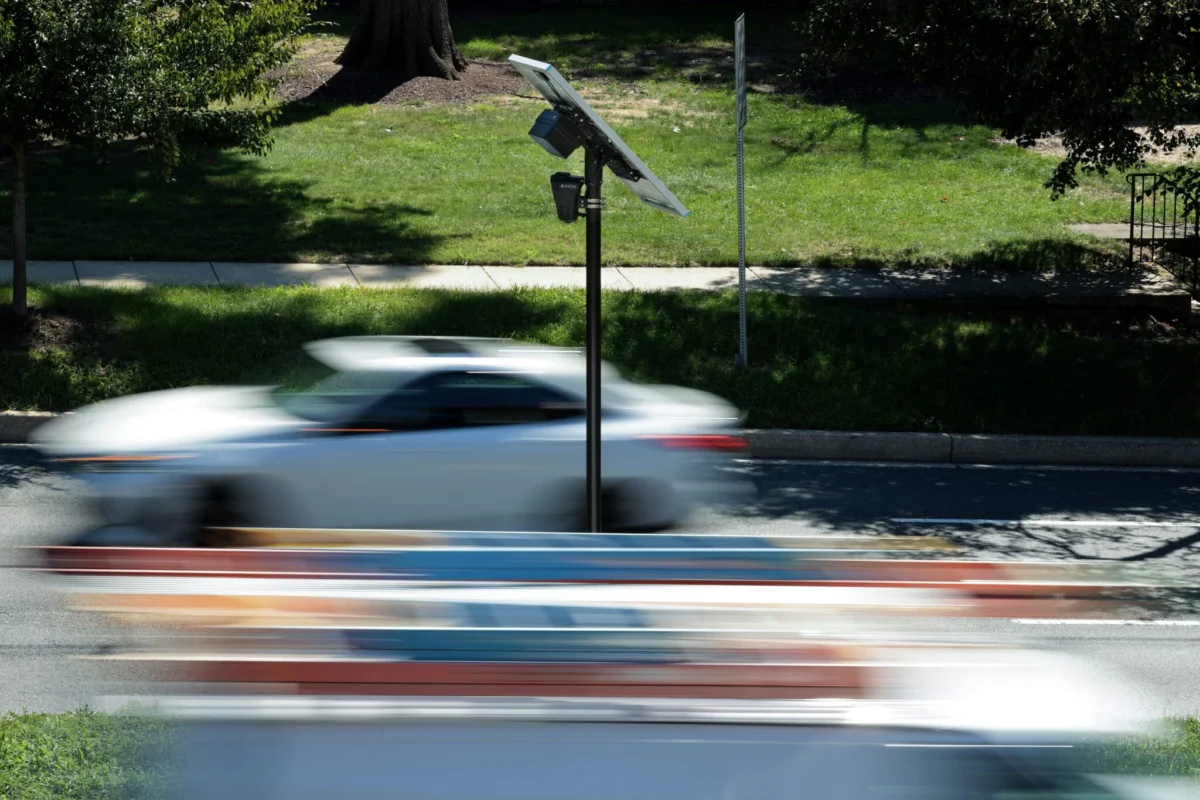
The core of the dispute lies in the sheer scale and capability of Flock’s network. The company operates more than 120,000 cameras across 49 states, capturing data on over 20 billion vehicle movements every month. While police departments credit the system with solving thousands of crimes, critics argue that the technology has outpaced the law, creating a national surveillance web that was never authorized by Congress or the public.
Chronology: The Day the Cameras Went Dark
The unraveling of Flock’s dominance in the Arizona market began at 9:00 AM on Wednesday in Tempe. Despite the local police department’s insistence that the cameras were a vital tool for solving violent crimes, the City Council and Mayor Corey Woods moved to unplug the system. The city’s contract, valued at $80,000, was not just paused; the city announced it would not seek any replacement for the ALPR technology.
By noon, the momentum shifted north to Cave Creek. Officials there cited a mixture of philosophical privacy concerns and practical security failures, including the physical theft of one of the town’s Flock cameras. The town manager and attorney moved to formalize the removal, signaling that even in "law and order" conservative strongholds, the risk of data misuse had become a political liability.
As the sun set over the East Coast, the focus moved to the Senate. Senator Josh Hawley, acting in his capacity as Chairman of the Senate Judiciary Subcommittee on Crime and Counterterrorism, dispatched a stern letter to Flock CEO Garrett Langley. Hawley’s letter demanded transparency regarding how the company disseminates data to various law enforcement agencies.
Hours later, Senator Bernie Sanders utilized social media to amplify the alarm, characterizing Flock’s expansion as a move toward "totalitarianism." Sanders’ statement was particularly focused on the newer iterations of Flock’s AI, which can purportedly link vehicle images to sensitive personal databases, including phone numbers and court records.
Supporting Data: The Rise and Risk of the National Dragnet
To understand the severity of the pushback, one must look at the data surrounding Flock’s rapid ascent. According to the company’s own promotional materials, its technology has been instrumental in closing nearly one million police investigations and locating 10,000 missing persons over the past year. In Tempe alone, monthly audits showed no specific instances of internal misuse by city employees.
However, a broader look at the industry reveals a darker trend. An investigation by The Washington Post in August 2026 found that more than 50 law enforcement officers nationwide had been accused or convicted of misusing ALPR systems. These abuses ranged from officers tracking former romantic partners to unauthorized surveillance of political activists.
The Arizona Exodus
The decisions by Tempe and Cave Creek are not isolated incidents. They represent the ninth and tenth Arizona municipalities to restrict or abandon Flock in the last 12 months. The list now includes:
- Chandler and Surprise: Large suburban hubs citing privacy overreach.
- Sedona and Flagstaff: Tourist-heavy cities concerned about the "surveillance state" aesthetic and data retention.
- Pinal County and Sierra Vista: Conservative-leaning jurisdictions wary of centralized data control.
Structural Vulnerabilities
The "network effect" is Flock’s greatest selling point and its greatest controversy. Unlike traditional closed-circuit television (CCTV), Flock’s cameras are networked. Data collected in a small town like Cave Creek can, in theory, be accessed by an agency in another state. Cave Creek officials specifically noted that they could not guarantee the privacy of their residents once their data entered this "cloud-based" national database.
Official Responses: The Clash of Safety and Liberty
The rhetoric surrounding these cancellations highlights a fundamental disagreement on the definition of "public safety."
The City of Tempe:
Mayor Corey Woods provided a nuanced defense of the city’s decision. "These cameras have helped our police officers do their jobs, and we don’t discount that," Woods said. "But the risk of misuse is too great. We have to be able to provide public safety in a way that maintains the trust of our community." Councilmember Bobby Nichols added a legal dimension, stating that any tool used by the government must be a "narrowly tailored solution to a compelling government interest."
Flock Safety:
The company’s response has been one of stark warning. A spokesperson for Flock argued that removing these tools makes the public less safe. "When a tool that is actively helping solve violent crimes… is removed, public safety moves backward," the spokesperson said. They emphasized that "organized retail theft crews will operate with fewer obstacles" and warned that missing children—the subject of Amber Alerts—might not be found in time.
The Senate Investigation:
Senator Josh Hawley’s inquiry is focused on the lack of federal oversight. "Congress never authorized the network your industry has built," Hawley wrote to CEO Garrett Langley. His investigation seeks to uncover the extent to which private companies are building "unprecedented national surveillance networks" without legislative mandates.
The Legislative Threat:
Senator Bernie Sanders took the critique a step further, targeting the integration of Artificial Intelligence. Sanders argued that the ability to match vehicle movements with phone numbers and relatives creates a profile of every citizen’s life. "We must come together to stop Flock and AI mass surveillance," Sanders wrote, promising to introduce legislation to strictly regulate or ban such systems.
Implications: A New Era of Privacy Advocacy
The simultaneous rejection of Flock Safety by both the "Bernie Sanders left" and the "Josh Hawley right" suggests that privacy is becoming the new "purple" issue in American politics. The implications of this shift are three-fold:
1. The End of the "Blank Check" for Police Tech
For the past two decades, law enforcement agencies have enjoyed a period of rapid technological adoption with little public resistance, often funded by federal grants. The Arizona cancellations suggest that local city councils are no longer willing to take "efficiency" at face value. They are now weighing the utility of a tool against the long-term civil liberty costs.
2. Legal Challenges to the "Third-Party Doctrine"
The legal battleground will likely center on the "third-party doctrine"—the legal principle that individuals have no "reasonable expectation of privacy" in information they voluntarily provide to third parties (like a license plate visible on a public road). However, as Hawley and Sanders suggest, the aggregation of this data into a 20-billion-scan-per-month database may violate the spirit, if not the letter, of the Fourth Amendment.
3. Corporate Accountability and "Compromise"
Flock Safety’s CEO, Garrett Langley, has recently called for a "national compromise" on privacy. The company has already begun shortening data retention periods from 30 days to seven. However, for many municipalities, the issue isn’t how long the data is kept, but that it is collected and networked at all.
As Tempe’s cameras remain physically mounted but electronically dark, they serve as a silent monument to a growing national realization: the price of total security may be a cost that the American public, regardless of political affiliation, is no longer willing to pay. The coming months of Senate investigations and local council meetings will determine if Flock Safety remains a staple of modern policing or becomes a cautionary tale of technological overreach.