For millennia, the narrative of human-wildlife interaction has been defined by the physical scars we leave upon the Earth. We have clear-cut forests for agriculture, paved vast highways that bisect migration corridors, and erected sprawling urban centers that replace wild meadows with concrete. For decades, conservationists have operated under the assumption that if we understand how an animal interacts with these physical modifications, we understand the impact of humanity on that species.
However, a groundbreaking study published in the journal Science suggests that we have been missing half of the equation. According to new research conducted by a consortium from UC Santa Barbara, the Smithsonian’s National Zoo and Conservation Biology Institute, and Yale University, wildlife are not merely reacting to the infrastructure we build; they are acutely sensitive to the simple, fleeting presence of human beings themselves. By cross-referencing GPS tracking data from 37 animal species with granular cellphone location data, scientists have uncovered a complex, nuanced relationship between human movement and animal behavior that could fundamentally alter how we approach global conservation.
The "Anthropause": A Rare Global Experiment
The catalyst for this revelation was the COVID-19 pandemic—a period of unprecedented global upheaval that researchers have dubbed the "anthropause." As governments implemented strict lockdown policies in 2020, the typical rhythm of human movement ground to a halt. Roads that were once choked with commuters fell silent; tourist hubs emptied; and the daily migration of billions of people into office parks and recreational areas ceased.
For ecologists, this represented a once-in-a-lifetime natural experiment. It provided a unique window to decouple the two primary drivers of human-wildlife conflict: the permanent modification of the landscape (the "built" environment) and the temporary, dynamic presence of humans (the "social" environment).
To capitalize on this, the research team analyzed weekly GPS records from 4,581 individual mammals and birds across the continental United States, comparing activity levels during matching periods in 2019 and 2020. While measuring animal movement via satellite tracking is a standard practice in modern ecology, pinning down the exact location of human populations has historically been a massive hurdle. Traditionally, scientists have relied on crude proxies—such as housing density, agricultural zoning, or simple "lockdown" status—to guess where humans might be. These methods, while helpful, lack the resolution to show how, when, and where people are actually moving on a day-to-day basis.
Data Innovation: Using Cellphones as a Scientific Lens
To overcome the limitations of traditional observational data, the researchers secured access to anonymized, neighborhood-level cellphone geolocation data. This represents a significant technological milestone in the field of ecology.
"The cell phone data we used was made available to researchers during the pandemic to help reveal the impacts of COVID-19 shutdowns," explained co-lead author Scott Yanco, a research ecologist at the Smithsonian’s National Zoo. "Typically, private companies hold onto these, which made this a rare opportunity for us to quantify how human presence impacts wildlife, and to demonstrate that there is more to consider than just land modification to create robust conservation plans."
By layering this high-resolution human movement data over the GPS tracks of thousands of animals, the team was able to create a dynamic map of interaction. This allows for a far more precise analysis of how wildlife adjust their behavior in real-time as human activity fluctuates—not just as cities expand, but as people move through existing landscapes.
Supporting Data: The Interconnected Nature of Human Impact
The study’s findings suggest that for the vast majority of species, land modification and human presence act as an interconnected web rather than isolated stressors. The team examined how human activity influenced both the physical territory an animal occupies and its "environmental niche"—the specific combination of resources, habitats, and environmental conditions a species requires to survive.
The data reveals the following critical insights:
- Pervasive Influence: For 57% of all species studied, human impact could not be fully explained by landscape modification alone. The mere presence of people accounted for significant behavioral changes.
- Widespread Sensitivity: Human presence was directly associated with changes in the amount of territory used or the size of the environmental niche for 67% of mammal species and 68% of bird species.
- The "Double Whammy": About 67% of mammal species and 41% of bird species responded to the combination of human presence and landscape alteration by shrinking the amount of habitat they felt comfortable utilizing.
- The Paradox of Protected Areas: Interestingly, sensitivity to human presence was most acute in relatively undeveloped areas, such as national parks. In these zones, where animals are accustomed to a degree of tranquility, the intrusion of human visitors acts as a powerful stressor, forcing wildlife to retreat or abandon prime foraging grounds.
Case Studies: Wolves, Deer, and Cranes
Perhaps the most compelling aspect of the research is the realization that there is no "one-size-fits-all" reaction to humanity. Each species navigates the human-dominated world through its own evolutionary lens and historical context.
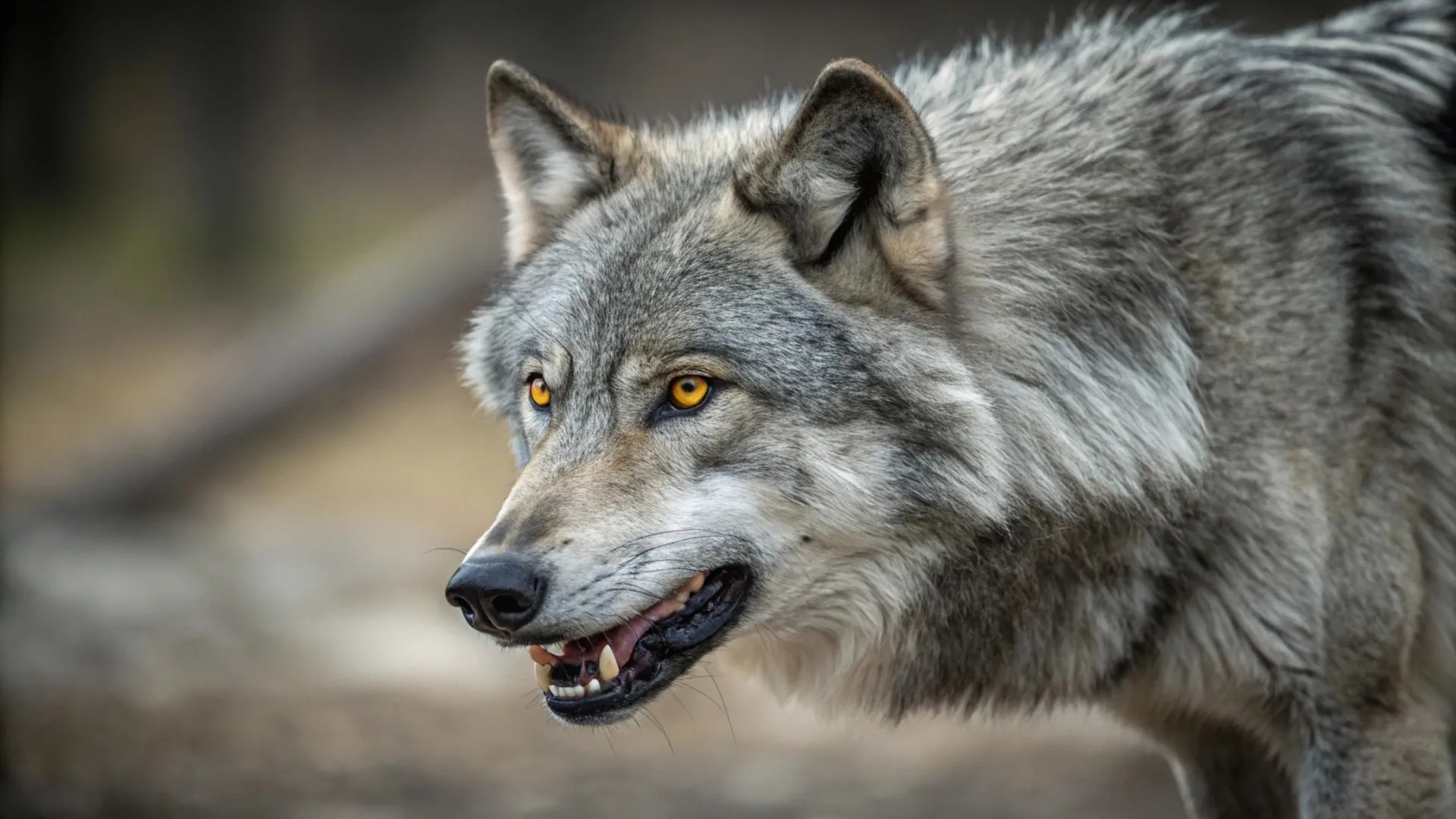
The grey wolf serves as a primary example of this divergence. Unlike many other species that retreat from human activity, wolves showed an expansion in their habitat use when humans were nearby. Researchers hypothesize that this may be a defensive or adaptive strategy; having lived in a state of conflict with humans for centuries, wolves may be intentionally spreading out or moving into new areas to avoid the direct impact of human hubs, essentially "hiding" in the broader landscape to maintain distance.
Conversely, the white-tailed deer and the sandhill crane exhibited inverse reactions. White-tailed deer saw their environmental niches expand as landscapes became more heavily modified, yet their activity contracted as the density of human presence increased. Sandhill cranes, meanwhile, showed the exact opposite trend. These distinct patterns underscore the complexity of wildlife management; a policy designed to protect one species by limiting human access might, if applied to another, yield entirely unexpected and potentially detrimental results.
Official Responses and Expert Perspective
Ruth Oliver, an assistant professor in the UCSB Bren School of Environmental Science & Management and co-lead author of the study, emphasizes that these findings demand a shift in conservation policy.
"Humans have complicated effects on wildlife—from our physical presence to how we reshape habitats—but we can’t understand our full impact without information on both," Oliver noted. "Every species has different habitat requirements, has its own particular behavioral tendencies, and faces unique threats. Effective conservation requires that we understand the particular challenges that each species faces."
The research is part of the broader COVID-19 Bio-Logging Initiative, an ambitious, global effort involving 600 partners and over 1 billion location records from 13,000 animals. This initiative has already reshaped our understanding of the "Anthropocene," revealing how marine traffic affects ocean dwellers and how terrestrial mammals adapt their daily routines to human schedules. The integration of this new study into the initiative’s findings marks a pivotal step toward data-driven, rather than assumption-driven, environmental policy.
Implications: The Future of Coexistence
As the study concludes, the researchers are pivoting to a more pressing question: Are these behavioral shifts a sign of successful adaptation, or a symptom of chronic stress?
While it is clear that animals are actively moving and changing their habits to accommodate our presence, it remains to be seen whether these changes affect long-term survival rates. Is the energy expended by a deer to avoid a hiker on a trail leading to lower reproductive success? Is the expansion of a wolf’s territory helping it thrive, or is it pushing it into less optimal, food-scarce regions?
Oliver and her team are now working to determine if animals that significantly alter their behavior in response to human pressure face a higher risk of mortality. The answers to these questions will be the next frontier in conservation biology.
Ultimately, the study offers a message of cautious optimism. For too long, conservation has been reactive, focusing on land-use regulations after a habitat has already been fragmented. By acknowledging that human presence is a dynamic variable that can be managed—through seasonal trail closures, timed access, or the creation of "no-go" buffer zones—policymakers have a new toolkit for coexistence.
"Our results give me some optimism that we can achieve wildlife-coexistence through more nuanced policies that more smartly consider where and when we need to give animals space," says Oliver.
As we continue to share the planet with an ever-growing human population, the path forward is not necessarily to retreat, but to be more intentional. By understanding the invisible boundaries we create just by existing, we can learn to move through the world in a way that allows nature to breathe, adapt, and ultimately, endure alongside us.