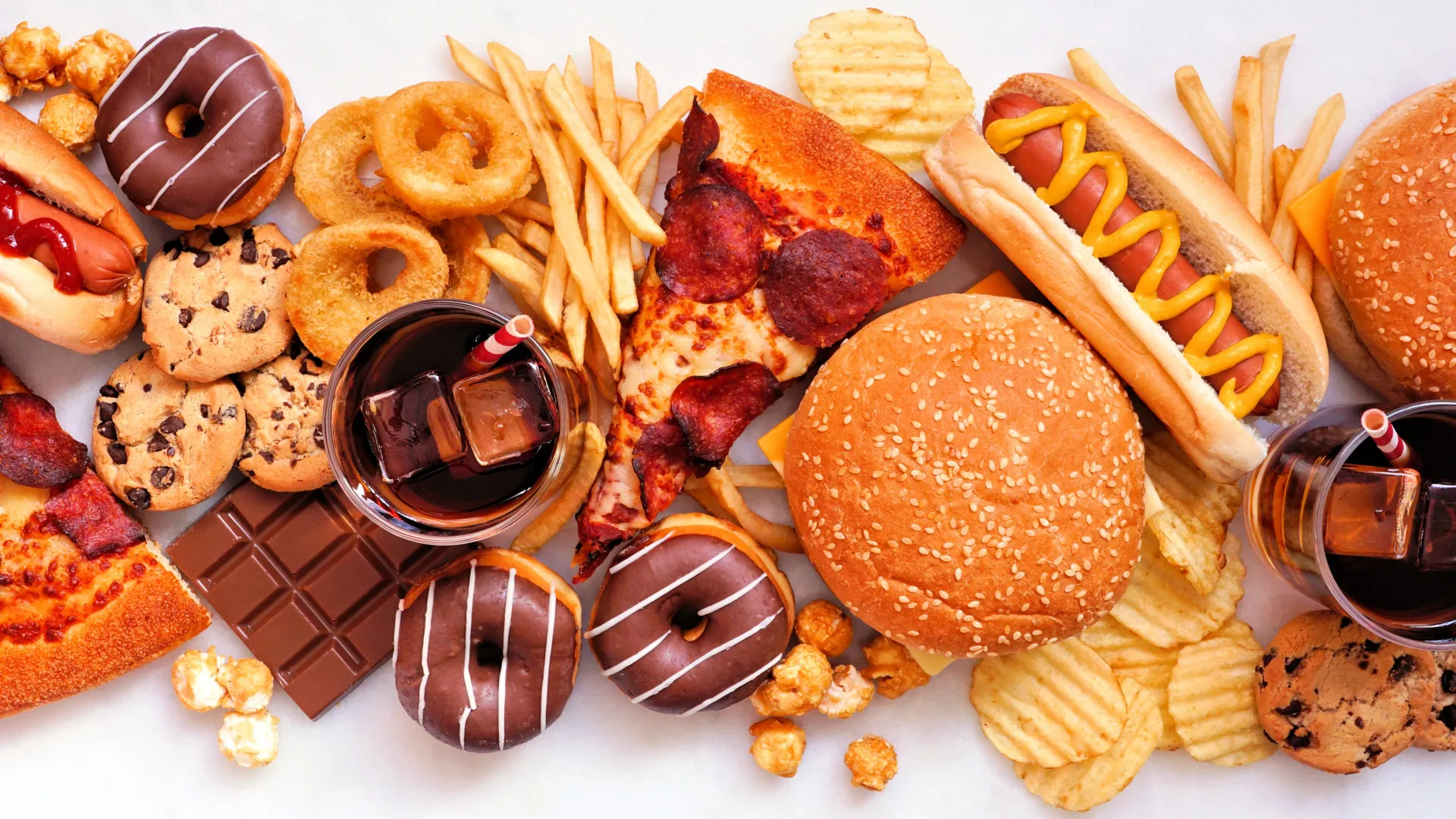
In the modern American diet, the line between food and industrial product has become increasingly blurred. Ultra-processed foods (UPFs)—a category encompassing everything from sweetened breakfast cereals and frozen pizzas to carbonated soft drinks and reconstituted meat products—now constitute a staggering portion of the average adult’s caloric intake. According to recent data, these products supply nearly 60% of calories consumed by adults and approximately 70% of those consumed by children in the United States.
While these foods are engineered for shelf stability, sensory appeal, and affordability, a growing body of evidence suggests that their dominance in the Western diet is exacting a heavy toll on public health. A new study from Florida Atlantic University’s (FAU) Charles E. Schmidt College of Medicine has provided a concerning update to this narrative: men who consume higher amounts of ultra-processed foods may face a significantly elevated risk of developing prostate cancer, the most commonly diagnosed cancer among men in the U.S.
The Anatomy of Ultra-Processed Foods
To understand the gravity of the findings, one must first define the enemy. UPFs are not merely "processed" in the traditional sense of canning or freezing; they are industrially formulated. Using a combination of refined fats, oils, sugars, starches, and protein isolates, manufacturers create "food-like" substances that are often stripped of fiber and essential micronutrients. These products are frequently laden with artificial colors, emulsifiers, flavor enhancers, and preservatives designed to mimic the taste and texture of whole foods.
The NOVA classification system, the gold standard for categorizing food based on the extent of industrial processing, labels these items as the most degraded form of nourishment. Because they are often cheaper and more convenient than fresh produce or lean proteins, they have become the default fuel for a busy, time-poor population. However, researchers suggest that this convenience comes at a biological cost. Mechanisms such as chronic inflammation, oxidative stress, metabolic disruption, and systemic changes to the gut microbiome have all been proposed as pathways through which these additives may catalyze carcinogenesis.
A Chronology of Discovery: Tracking the UPF Connection
The journey toward understanding the relationship between diet and prostate cancer has been long and multifaceted. For decades, scientists have observed correlations between the "Western diet"—characterized by high sugar and fat intake—and various chronic diseases, including obesity, cardiovascular disease, and type 2 diabetes.
However, the specific link between UPFs and prostate cancer had remained largely anecdotal or under-researched until recently. The study published in The American Journal of Medicine sought to fill this evidentiary gap by examining two decades of data from the National Health and Nutrition Examination Survey (NHANES). By analyzing dietary recalls from 17,024 U.S. men aged 18 and older between 2003 and 2023, the research team, led by Dr. Charles H. Hennekens, created a longitudinal snapshot of the American diet.
The researchers divided participants into four distinct quartiles based on their UPF intake, ranging from those who derived less than 20% of their daily calories from UPFs to those who relied on them for more than 44% of their energy needs. By tracking these groups, the study was able to establish a temporal link between dietary patterns and cancer outcomes, providing a robust framework for assessing long-term health risks.
Supporting Data: The Magnitude of Risk
The statistical findings are difficult to ignore. When compared to the men in the lowest consumption quartile, those in the three higher intake groups showed a 29% greater risk of developing prostate cancer. Even more concerning, men in the top tiers of consumption faced a 30% increase in risk.
To ensure the validity of these findings, the research team performed rigorous statistical adjustments. They controlled for variables that typically confound health data, including age, race and ethnicity, smoking status, and socioeconomic factors like poverty. Even after accounting for these critical variables, the increased risk remained statistically significant, hovering between 24% and 31%.
While the study noted that the single highest intake group showed a potential 34% increase in risk, the researchers were careful to acknowledge that this specific figure did not reach full statistical significance, likely due to a smaller sample size of prostate cancer cases within that specific cohort. Nevertheless, the trajectory of the data is clear: as the percentage of calories derived from ultra-processed sources climbs, so does the risk of malignancy in the prostate gland.
Official Responses and Expert Perspective
The senior author of the study, Dr. Charles H. Hennekens—who holds the prestigious title of the First Sir Richard Doll Professor of Medicine and Preventive Medicine at FAU—emphasized that these findings are a wake-up call for both the medical community and the public.
"Among adult men in this nationally representative U.S. population, those who consumed higher amounts of UPFs had significantly higher risks of the subsequent development of prostate cancer," Dr. Hennekens stated. He further noted that the research serves as a critical addition to the emerging evidence regarding the adverse health effects of industrial food production. He argues that the medical community must now prioritize large-scale observational studies and randomized clinical trials to move from correlation to a definitive, causal understanding.
Co-author Dr. Timothy De Ver Dye, professor and chair of FAU’s Department of Population Health, highlighted the structural challenges inherent in these findings. He pointed out that reducing UPF consumption is not merely a matter of "willpower" or "individual choice." For many Americans, ultra-processed foods are the most accessible, affordable, and heavily marketed options available.
"Healthcare providers should recognize that many patients face barriers to accessing and affording healthier food options," Dr. Dye remarked. "Addressing these challenges will require efforts that extend beyond individual choices to support greater access to nutritious, minimally processed foods."
Implications: A Looming Public Health Crisis
The implications of this study are profound, particularly when placed against the backdrop of the global cancer burden. The American Cancer Society projects that by 2026, over 333,000 American men will be diagnosed with prostate cancer, with more than 36,000 succumbing to the disease. Globally, the numbers are even more sobering: nearly 1.5 million men were diagnosed in 2022, with nearly 400,000 fatalities recorded that same year.
The study authors drew a provocative comparison between the current state of the food industry and the tobacco industry of the mid-20th century. Just as it took decades for the scientific evidence regarding cigarette-induced cancer to gain enough weight to trigger meaningful policy changes, the researchers believe the public health narrative regarding UPFs is at a similar tipping point. They argue that the priorities of large-scale food manufacturers—often focused on profitability, shelf-life, and hyper-palatability—are fundamentally in conflict with the nutritional needs of the population.
Moving Forward: Recommendations for Patients and Policy
What can be done in the interim, while public policy catches up to the science? Dr. Hennekens advises that healthcare professionals must take a proactive role in dietary counseling.
- Integrated Care: Physicians should integrate dietary assessment into routine check-ups, specifically inquiring about the frequency and volume of ultra-processed food consumption.
- Patient Education: Patients should be encouraged to transition toward whole-food diets, emphasizing fresh vegetables, fruits, legumes, and lean proteins, while gradually reducing reliance on packaged, shelf-stable, and "ready-to-eat" industrial meals.
- Evidence-Based Lifestyle: Lifestyle practices—including exercise, weight management, and the reduction of inflammatory triggers—should be viewed as primary therapies alongside clinical interventions.
Ultimately, the FAU study is a critical piece of a much larger puzzle. As more evidence mounts, the conversation around nutrition is shifting from a focus on individual caloric counting to a systemic examination of food quality. For men, the data is increasingly clear: the path to reducing prostate cancer risk may start in the grocery aisle, by prioritizing the integrity of the food on the plate over the convenience of the packaging. As the scientific community continues to unravel the complex biological pathways involved, the call for systemic, policy-driven change to protect the food supply has never been more urgent.