By International News Desk
Updated: August 27, 2026 – 08:03 GMT
A catastrophic environmental disaster has unfolded across the high-altitude landscapes of the Himalayas, as a massive glacial collapse triggered a series of devastating landslides and flash floods along the border region between Nepal and the Tibet Autonomous Region of China. As of the early hours of Thursday morning, authorities have confirmed at least 165 fatalities, with a staggering 1,500 individuals currently listed as missing.
The disaster, which began on Wednesday, August 26, 2026, has decimated infrastructure, wiped out remote mountain villages, and severed vital transportation arteries, leaving thousands of residents isolated and vulnerable. Rescue operations are currently underway in treacherous conditions as emergency services race against time to locate survivors amidst the debris.
The Anatomy of a Disaster: Main Facts
The tragedy was precipitated by a sudden, large-scale glacial collapse in the upper reaches of the Himalayan range. The resulting debris flow—a lethal mixture of ice, sediment, and glacial lake water—surged down river valleys with little warning.
The Trishuli River and surrounding basins in Nepal’s Nuwakot district have borne the brunt of the deluge. Witnesses described a “wall of mud and boulders” that swept through the valley floor, obliterating everything in its path. Entire homes were ripped from their foundations, and critical infrastructure, including main roads and bridges connecting mountain communities to urban centers, have been rendered impassable.
The sheer scale of the event has left regional authorities overwhelmed. With 1,500 people still unaccounted for, the government of Nepal has issued a national state of emergency, requesting international assistance to bolster search and rescue efforts. In Tibet, Chinese authorities have also mobilized local military units to manage the destruction in high-altitude zones, though communication remains hampered by the loss of cellular towers and fiber-optic cables.
Chronology of the Crisis
Wednesday, August 26, 2026
- 04:30 AM: Early seismic sensors in the Himalayas detect unusual activity consistent with a large-scale mass movement, potentially a glacial lake outburst flood (GLOF).
- 06:00 AM: The first waves of debris hit lowland settlements in the Nuwakot district of Nepal. Initial reports of houses being swept away reach regional emergency centers.
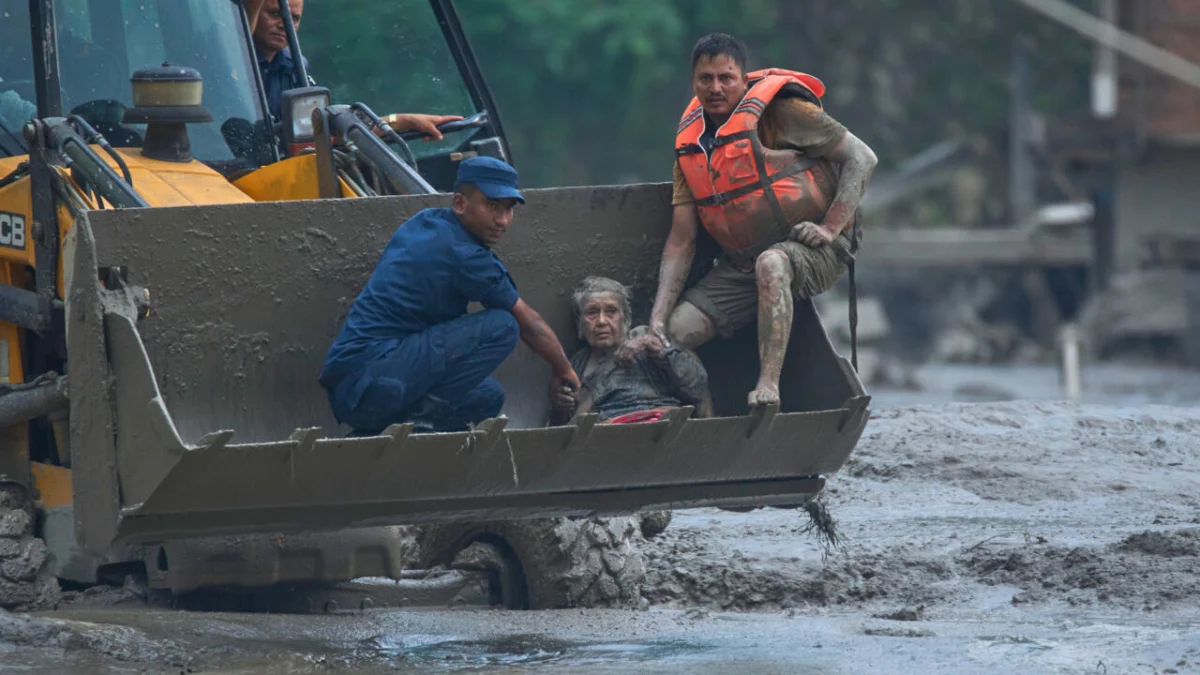
- 09:00 AM: As day breaks, the true extent of the damage becomes apparent. Local police and rescuers launch preliminary search efforts using heavy earthmoving equipment.
- 02:00 PM: The death toll is officially revised upward to 50, with hundreds reported missing. Prime Minister’s office confirms the mobilization of the Nepal Army.
- 07:00 PM: International agencies begin offering technical support and specialized search-and-rescue teams. The death toll reaches 120.
Thursday, August 27, 2026
- 02:00 AM: Search efforts continue under floodlights. Rescue operations are hampered by persistent rainfall and the risk of secondary landslides.
- 06:00 AM: The confirmed death toll rises to 165. The list of the missing remains near 1,500, as communication lines remain severed in the most isolated villages.
Supporting Data and Environmental Context
The Himalayas are home to the "Third Pole," the largest repository of freshwater outside the polar regions. Scientists have long warned that the rapid warming of the planet is accelerating glacial retreat, creating massive, unstable glacial lakes.
When these lakes become over-pressured, they can burst their natural dams of ice and rock, sending millions of cubic meters of water downstream in minutes. While the exact trigger for this week’s collapse is still under forensic analysis by geologists, experts point to a combination of unprecedented summer heatwaves and high-altitude monsoon saturation as primary stressors.
Data from the regional meteorological office suggests that the area experienced temperatures 3.5°C above the seasonal average in the weeks leading up to the collapse. This thermal stress, combined with excessive rainfall, effectively destabilized the glacial shelf, leading to the catastrophic failure seen this week.
Official Responses and Diplomatic Cooperation
The governments of Nepal and China have pledged to cooperate closely on the rescue and recovery efforts.
"Our priority is the preservation of life," stated the Prime Minister of Nepal during a press briefing in Kathmandu. "We are coordinating with our neighbors to ensure that search teams can move across the border freely to reach those trapped in the high-altitude zones. This is a moment of profound national sorrow."

In Beijing, a spokesperson for the Ministry of Foreign Affairs expressed deep condolences, noting that Chinese rescue teams are working in tandem with local authorities in the Tibet Autonomous Region to clear roads and establish air bridges for the transport of medical supplies and food to the affected areas.
International humanitarian organizations, including the Red Cross and various UN agencies, are currently mobilizing supplies. However, logistics remain the primary hurdle; the destruction of key bridges means that relief aid must be dropped by helicopter, a task that is currently being complicated by heavy cloud cover and intermittent rain.
Implications: A New Era of Climate Risk
The disaster serves as a stark reminder of the escalating risks posed by climate change to mountain communities. The implications for the region are threefold:
1. The Crisis of Infrastructure
Decades of development in the Himalayas have often proceeded without adequate assessment of glacial flood risks. The destruction of roads and bridges in this instance suggests a need for a total redesign of infrastructure in high-risk river valleys. Engineers argue that traditional road-building practices are no longer sufficient to withstand the force of modern glacial flood events.
2. Early Warning Systems
The tragedy has reignited the debate over early warning systems. While remote sensors exist, they are often insufficient to provide timely alerts to rural populations living at the base of these glaciers. Investment in localized, community-based warning networks, which can relay information via satellite or radio, is now being viewed as an urgent necessity rather than a long-term goal.
3. The Future of Himalayan Settlements
Perhaps the most difficult conversation facing policymakers is the future of human habitation in these valleys. As glacial retreat continues, the frequency of such "black swan" events is expected to rise. Governments may eventually face the difficult task of managing the forced relocation of communities that are no longer safe from the unpredictable nature of an unstable, warming cryosphere.
The Human Cost: A Community in Mourning
Behind the statistics of 165 dead and 1,500 missing are the families of the Nuwakot district and across the border in Tibet. For many, this is a multi-generational loss. The physical landscape of the region has been permanently altered; the once-clear waters of the Trishuli are now thick with sediment, and the verdant slopes have been stripped bare by the mudslides.
As the sun sets on the second day of the crisis, the sound of earthmovers and the rotor blades of military helicopters dominate the silence of the mountains. For the thousands of families waiting for news, the hope for survivors remains thin, but the resolve to recover the missing is absolute.
The disaster has not only claimed lives but has severed the connection between the people and their ancestral lands. In the coming weeks, as the waters recede and the search efforts transition into recovery, the world will be watching to see how the region rebuilds—and whether it can adapt to the new, volatile reality of a changing climate.
Follow our live blog for real-time updates as rescue teams continue to navigate the debris-strewn valleys in search of survivors.