In the United States, an estimated 50 million adults grapple with some form of hearing loss. Yet, despite the profound impact that auditory decline has on quality of life, cognitive health, and social connectivity, only approximately 20% of those diagnosed seek professional treatment. This massive "treatment gap" has long been attributed to a combination of prohibitive costs, social stigma, and the physical discomfort associated with traditional, medicalized hearing aids.
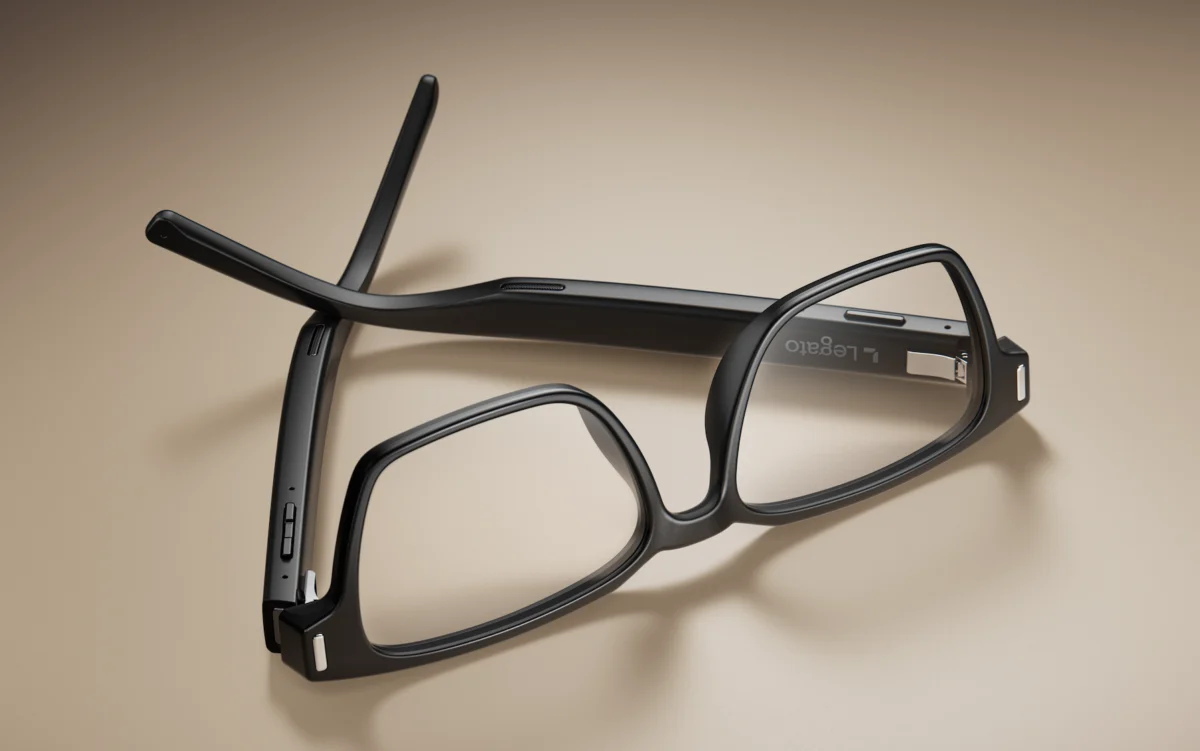
Enter Legato, a burgeoning health-tech startup that is officially emerging from stealth mode today with $12 million in fresh funding. The company aims to dismantle the barriers to entry by blending cutting-edge artificial intelligence with a familiar, non-stigmatizing form factor: high-end, smart eyewear. By integrating proprietary hearing-assistance technology directly into the arms of glasses, Legato is betting that the future of auditory health lies in the convenience of vision care.
The Genesis of Legato: A Meeting of Industry Minds
The founding of Legato is the result of a strategic convergence of talent from the upper echelons of the wearable and audio-engineering sectors. Co-founders Mehul Trivedi and Steve Romine bring a deep reservoir of expertise to the table, having cut their teeth at companies that defined the modern wearable landscape.
Trivedi, whose resume includes a pivotal role at Bose, led the development of the iconic Bose Frames. He later transitioned to EssilorLuxottica, where he spearheaded smart eyewear initiatives, including collaborative efforts on the Meta Ray-Bans. Romine’s pedigree is equally impressive; he previously managed the hearing aids division at Bose before serving as the Chief Operating Officer of the hearing care firm Audicus.
The pair’s paths converged in late 2024, following a period of reflection for Trivedi. During his time away from corporate life, Trivedi began exploring the intersection of smart optics and hearing augmentation. Recognizing that the technological components required for both fields were rapidly shrinking—and that the consumer appetite for "invisible" tech was growing—he reached out to Romine. Together, they founded Legato, envisioning a future where hearing assistance is as natural and accessible as choosing a pair of prescription spectacles.

Bridging the Gap: The Technology Under the Hood
The flagship product, Legato Frames, is designed to target the largest segment of the hearing-impaired population: those with mild to moderate hearing loss. Unlike traditional hearing aids, which often rely on basic directional microphones that struggle to isolate speech in chaotic, high-noise environments like restaurants or bustling city streets, Legato employs a sophisticated AI-powered processing stack.
The company’s proprietary system is built to differentiate between ambient environmental noise and human speech, dynamically amplifying only the latter. This computational approach is designed to alleviate the "cognitive load" that typically leads to listener fatigue. By cleaning up the audio signal in real-time, the frames aim to make conversations clearer and more natural, allowing users to engage in social settings without the taxing effort often required by legacy devices.
Mechanical Innovation and Privacy
One of the most significant challenges in building an open-ear audio device is preventing sound leakage. Legato has tackled this with a dual-speaker architecture that directs high-fidelity sound toward the wearer’s ear canal while simultaneously employing a cancellation mechanism that suppresses 99% of sound escaping to the immediate environment. This ensures that the user’s phone calls, media, or hearing assistance remains entirely private, effectively mimicking the discretion of traditional glasses.
The Vision: Making Hearing Ubiquitous
In an exclusive interview with TechCrunch, Trivedi articulated a philosophy centered on normalization. "Our goal is to make hearing as ubiquitous as vision," he stated. "It’s a no-brainer that you go to an eye exam, you get your glasses, you wear them, and you’re happy. You do that for the rest of your life. The idea of your vision getting blurry and just stopping, or feeling embarrassed to wear glasses, is not a consideration. We want to do the same for hearing: make it something that people address and then almost forget about."
This "forget-about-it" factor is central to Legato’s design language. The frames are built to be lightweight, aesthetically neutral, and functionally effortless. They require no complex configuration or constant manual adjustments, aiming instead to operate seamlessly as an extension of the user’s daily routine.

Supporting Data: The Urgent Need for Innovation
The statistics surrounding hearing loss in America are, by any measure, a public health concern. The "tsunami" of age-related hearing loss, as described by Stanford medical researchers, is expected to grow as the population ages. Beyond the immediate frustration of poor communication, untreated hearing loss is linked to a cascade of secondary health issues.
Clinical studies have increasingly highlighted a correlation between hearing impairment and an accelerated risk of cognitive decline, including dementia, as well as a higher incidence of social isolation and clinical depression. Legato frames are not just a convenience product; the founders position them as a proactive health intervention. By wearing these devices for up to 16 hours a day, users aren’t just "hearing the TV better"—they are maintaining the vital neural stimulation required for healthy cognitive aging.
Official Responses and Market Strategy
Legato’s $12 million funding round, supported by venture capital firms Neotribe Ventures, Listen, and Village Global, has been largely earmarked for accelerated product development and marketing. The startup is taking a calculated approach to distribution, eschewing the traditional direct-to-consumer-only model.
Instead, when the frames launch later this fall, they will be available through a network of select eye-care providers across the United States. This strategy serves two purposes:
- Credibility: By partnering with optometrists and ophthalmologists, Legato embeds itself within the existing, trusted vision-care ecosystem.
- Affordability: The company aims to price the frames at a "fraction" of the cost of premium traditional hearing aids. Furthermore, because these are being sold through eye-care clinics, there is potential for them to be covered by vision insurance plans, further reducing the financial burden on the consumer.
Future Implications: The Convergence of Wearables
The emergence of Legato signals a broader trend in the wearable tech industry: the dissolution of the "medical device" silo. For decades, hearing aids have been sold as clinical, stigmatized products often costing thousands of dollars. Legato is part of a new wave of companies—alongside entities like Apple and Bose—that are prioritizing consumer design and AI-driven performance to solve chronic health issues.

If Legato succeeds, the implications for the healthcare market are significant. By shifting the point of care from an audiologist’s office to an eye-care professional’s clinic, the company is effectively changing the "point of sale" for hearing health. This could lower the barrier to entry for millions of Americans who currently avoid addressing their hearing loss due to the high costs and perceived social stigma associated with the current hearing aid industry.
As the company prepares for its autumn launch, the tech world will be watching closely to see if Legato can truly make the "hearing-as-vision" dream a reality. In a world where we are increasingly connected by digital interfaces, ensuring that we remain connected through the simple act of hearing may well be the most important innovation of all.