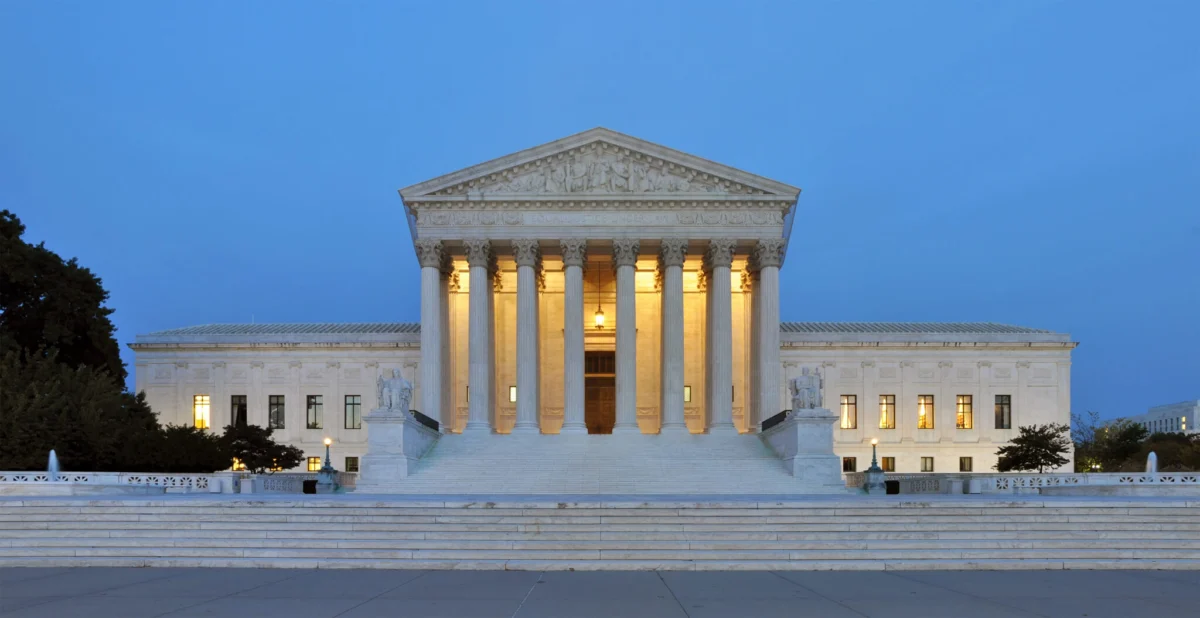
WASHINGTON, D.C. — In a consequential decision issued this Monday, the United States Supreme Court has stayed a district court injunction that previously blocked President Donald Trump’s sweeping executive order aimed at restructuring mail-in voting procedures. The high court’s per curiam opinion, delivered just months before the critical November midterm elections, concludes that the coalition of states challenging the order failed to demonstrate an injury sufficiently "concrete and imminent" to establish legal standing at the time the lawsuit was filed.
While the ruling does not offer a final determination on the constitutional validity of the administration’s directives, it allows the government to proceed with its controversial election integrity measures for the time being. The decision marks a significant victory for the Trump administration, which has prioritized the overhaul of mail-in ballot security as a cornerstone of its current domestic policy agenda.
The Core of the Dispute: Executive Order No. 14399
At the heart of the legal battle is Executive Order No. 14399, issued in March of this year. The order outlines a three-pronged approach to federalizing elements of election administration, which has historically remained the primary domain of state and local governments.
- The "Citizenship List": The order directs the Department of Homeland Security (DHS) to compile a state-by-state database of voters, intended to isolate individuals identified as ineligible based on citizenship status.
- Prosecutorial Prioritization: The Department of Justice (DOJ) is instructed to prioritize the investigation and prosecution of election officials who issue ballots to individuals deemed ineligible.
- Postal Service Barcoding: The order mandated that the United States Postal Service (USPS) implement a new rule-making process for mail-in ballot envelopes, specifically requiring the inclusion of standardized barcodes to track and verify the provenance of each ballot.
The administration has framed these measures as essential to "ensuring citizenship verification and integrity in federal elections." Critics, however, argue that the order represents an unprecedented federal intrusion into state-run electoral systems, designed to complicate the voting process and potentially suppress participation in demographics that rely heavily on mail-in ballots.
Chronology of a High-Stakes Legal Battle
The journey of this case from a Massachusetts courtroom to the Supreme Court chambers reflects the heightened tensions surrounding election law in the 2026 cycle.
- March 2026: President Trump signs Executive Order No. 14399, immediately drawing criticism from voting rights advocates and Democratic-led states.
- April 2026: A coalition of 23 states and the District of Columbia files suit in the U.S. District Court for the District of Massachusetts, arguing the order is unconstitutional and exceeds executive authority.
- Early July 2026: Judge Indira Talwani enters a final judgment, granting a nationwide injunction that blocks the government from enforcing the executive order through the midterms.
- Late July 2026: The U.S. Court of Appeals for the First Circuit denies the administration’s request to stay Judge Talwani’s injunction, citing the potential for "irreparable harm" to the electoral process.
- August 2, 2026: The Trump administration petitions the Supreme Court to intervene, arguing that the lower court’s injunction prevents the executive branch from exercising its constitutional duty to protect the integrity of federal elections.
- August 21, 2026: The USPS finalizes its rule-making process regarding barcode requirements on mail-in envelopes.
- August 24, 2026: The Supreme Court issues its per curiam opinion, staying the lower court’s injunction and allowing the executive order to move forward.
Analysis: The Question of Justiciability
The Supreme Court’s decision rested primarily on a technical, yet pivotal, question of standing. The majority reasoned that when the states initially filed their lawsuit, the harms they alleged were largely speculative. The Court noted that the executive order functioned as an "internal directive from the President to his subordinates" and that, at the time of the initial filing, the specific regulations—such as the USPS barcode requirement—had not yet been codified.
"The order neither requires nor forbids anything of anyone outside the Executive Branch," the Court wrote. By measuring the states’ injury at the point of the initial filing, the justices found that the potential for constitutional harm had not yet materialized into a "concrete and imminent" injury.
This procedural hurdle has become a recurring theme in federal litigation, where the timing of an executive action versus the timing of a legal challenge often dictates the outcome. The Court’s reliance on the state of affairs in April, rather than the finalized rules of August, underscores the high bar for plaintiffs seeking to preemptively block federal directives.
Official Responses and Dissenting Voices
The ruling has sparked immediate and intense reactions from legal scholars, state officials, and the members of the Supreme Court themselves. The depth of the divide within the Court was made evident by three separate dissents from Justices Sonia Sotomayor, Elena Kagan, and Ketanji Brown Jackson.
The Sotomayor Dissent
Justice Sotomayor argued that the majority relied on a willfully narrow interpretation of the executive order. "A common sense reading of the order, together with the government’s own admissions, shows the states face a concrete threat of enforcement," she wrote, suggesting that the administration’s stated goals for the order were clear from the start, regardless of the bureaucratic timeline.
The Jackson Dissent
Justice Jackson went further, characterizing the majority’s assessment of the Postal Service’s rule-making as a "stunning misinterpretation of the factual record." Jackson pointedly noted that the government has yet to defend the substantive lawfulness of the order itself. "The District Court held that the President’s Order is unlawful," she wrote. "The Government does not defend the lawfulness of the Order before this Court, and no judge or Justice has held… that the Order comports with the Constitution."
Government Stance
The Department of Justice, represented by the Solicitor General, has maintained that the order is a lawful exercise of presidential authority intended to safeguard federal elections. By staying the injunction, the administration has secured the ability to implement its vision of election security just as the midterm campaign season enters its final, most intense phase.
Implications for the 2026 Midterm Elections
The immediate effect of the Supreme Court’s stay is that the USPS is now authorized to require barcodes on mail-in ballots, and the DHS may proceed with its citizenship verification lists—subject to the caveat that these efforts must be "consistent with applicable law."
For Election Administrators
For state and local election officials, the uncertainty is profound. Many states have already printed ballots or established procedures that may now conflict with the federal requirements. The "Citizenship List" mandate, in particular, creates a logistical challenge: how to reconcile federal databases with state-maintained voter rolls without triggering further litigation or disenfranchising eligible voters.
For Voters
The implications for voters remain the most volatile aspect of the ruling. If the barcode requirement causes mail-in ballots to be rejected due to technical non-compliance, it could lead to a wave of challenges in November. Furthermore, the threat of prosecution for officials who process ballots for those on the "Citizenship List" may lead to a "chilling effect," where officials become overly cautious, potentially slowing down the counting process or causing unnecessary delays in ballot processing.
Long-term Legal Precedent
While the Court emphasized that "time will tell" regarding the actual legality of the executive order, the stay serves as a temporary shield. The case will now return to the First Circuit for further consideration of the merits. Should the Supreme Court decide to grant certiorari—a formal review of the case—the stay will remain in effect until a final judgment is reached.
The ruling underscores the ongoing struggle to balance federal oversight with state sovereignty. As the 2026 midterms approach, this decision ensures that the methods by which citizens cast their votes will remain a central—and highly contentious—feature of the national political landscape. For the administration, the path is cleared for now; for the states and voting rights groups, the fight has merely transitioned into a more urgent, and perhaps more difficult, phase.