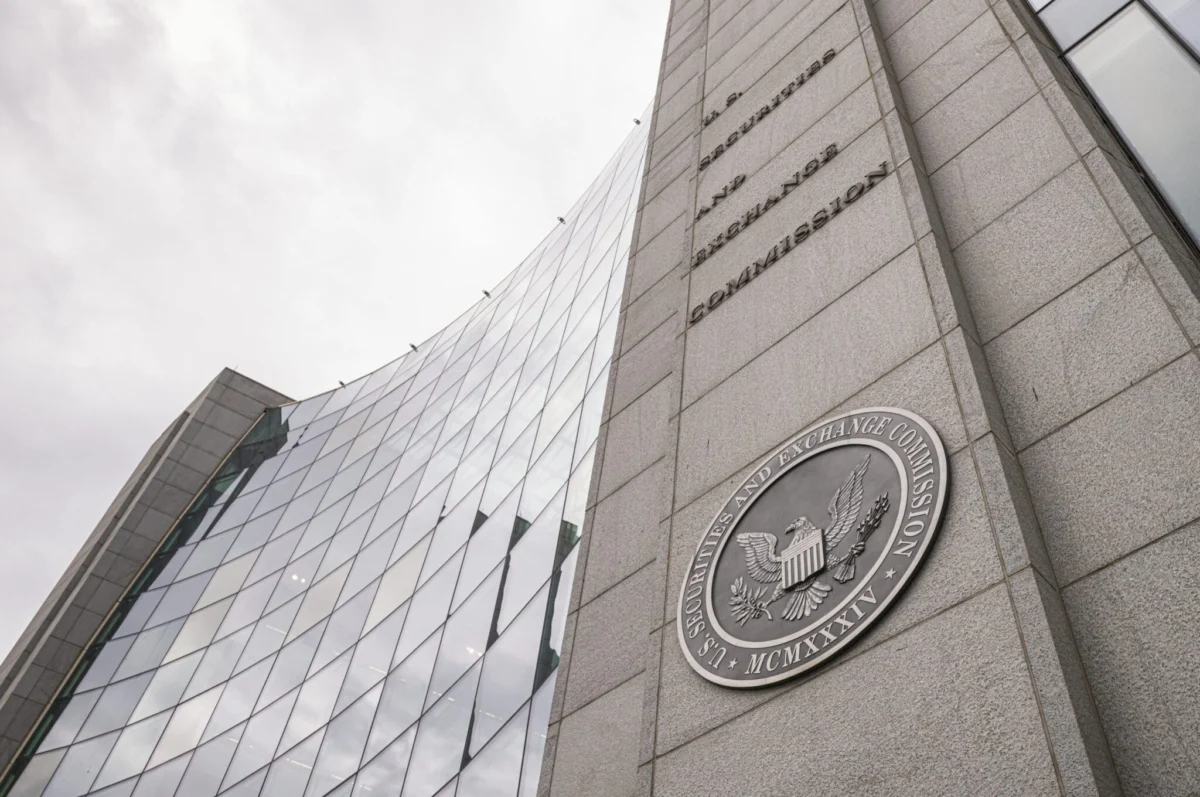
NEW YORK — The U.S. Securities and Exchange Commission (SEC) has initiated a sweeping inquiry into the collapse and subsequent liquidation of the high-profile hedge fund, Situational Awareness. According to sources familiar with the matter, the federal regulator has issued a series of subpoenas to several of Wall Street’s largest investment banks, seeking granular data regarding the fund’s trading activities, margin requirements, and the final hours leading up to its forced exit from the market.
The investigation follows a period of intense turbulence in the technology sector, specifically targeting the "AI-first" investment strategies that have dominated capital markets over the last eighteen months. Situational Awareness, a fund that became synonymous with aggressive, leveraged bets on artificial intelligence infrastructure, found itself at the epicenter of a market-wide correction that ultimately triggered a cascade of margin calls and a desperate race for liquidity.
The Scope of the SEC Subpoenas
The SEC’s request for information is directed at the prime brokerage divisions of major financial institutions that served as the primary lenders and clearinghouses for Situational Awareness. While the specific banks have not been publicly named, the list typically includes the "bulge bracket" firms that dominate the hedge fund services space.
The subpoenas are reportedly focused on several key areas:
- Trading Patterns: The timing and execution of large-scale trades in AI-related equities and derivatives.
- Risk Management and Collateral: How the banks assessed the risk of Situational Awareness’s highly concentrated portfolio and the specific terms of the margin loans provided to the fund.
- Communication Logs: Internal and external communications regarding the fund’s stability during the height of the market rout.
- Liquidation Procedures: The process by which the fund’s positions were unwound and whether any preferential treatment or market manipulation occurred during the fire sale.
An SEC spokesperson declined to comment on the existence of the subpoenas, maintaining the agency’s standard policy regarding ongoing investigations. It is important to note that a subpoena or a formal inquiry does not necessarily indicate that the SEC has uncovered evidence of wrongdoing. However, the scale of the request suggests that regulators are concerned about the systemic implications of the fund’s rapid deleveraging.
Chronology of a Collapse: From AI Darling to Liquidation
The downfall of Situational Awareness was as rapid as its ascent. To understand the SEC’s interest, one must look at the timeline of the "AI Rout" that reshaped the market landscape over the preceding weeks.
The Ascent
Situational Awareness rose to prominence by positioning itself not just as a technology fund, but as a specialized vehicle for the "Intelligence Age." With heavy concentrations in semiconductor giants, cloud infrastructure providers, and proprietary AI software developers, the fund posted returns that significantly outpaced the S&P 500 during the early part of the year. Investors were drawn to the fund’s conviction that AI was an undervalued generational shift.
The Correction
Last month, the narrative shifted. A combination of higher-than-expected inflation data and a series of underwhelming earnings reports from secondary AI players sparked a reassessment of valuations. The "AI Premium" began to erode, leading to a sharp sell-off in the very stocks that formed the core of Situational Awareness’s portfolio.
The 24-Hour Crisis
As asset values plummeted, the fund’s leverage—which had amplified its gains on the way up—became a liability. Prime brokers issued a barrage of margin calls, requiring the fund to deposit more collateral to cover its borrowing. By the time the fund reached its internal risk limits, the market for its core holdings had become increasingly illiquid.
What followed was described by insiders as a "24-hour race to salvage" the firm. Situational Awareness was forced to begin liquidating its public equity positions to satisfy its lenders. The speed of the liquidation threatened to create a feedback loop, where the fund’s own selling further depressed the prices of the stocks it held, leading to even more margin calls.
The Citadel Intervention
In a move that stabilized the immediate crisis but signaled the end of Situational Awareness as an independent force, Ken Griffin’s Citadel stepped in. The multi-strategy giant purchased the bulk of Situational Awareness’s public stock bets in a private transaction, providing the liquidity necessary to prevent a chaotic, open-market dump of shares that could have triggered a broader systemic contagion.
Supporting Data: The Mechanics of the AI Rout
The volatility that claimed Situational Awareness was not an isolated incident. Market data from the period shows a significant spike in the VIX (Volatility Index) specifically within the technology sector.
- Concentration Risk: At its peak, Situational Awareness reportedly held over 60% of its Assets Under Management (AUM) in just five tickers. This level of concentration is significantly higher than the industry average for diversified hedge funds, which typically cap single-sector exposure at 20-25%.
- Leverage Ratios: While the exact leverage used by the fund remains confidential, industry analysts estimate that Situational Awareness may have been operating at a 3:1 or 4:1 leverage ratio on its core AI positions. In a market that dropped 15% in a week, such leverage can wipe out a fund’s equity nearly instantly.
- The "Crowded Trade" Effect: Data from prime brokerage units suggests that "AI Longs" were among the most crowded trades on Wall Street. When Situational Awareness began its forced exit, it was competing for liquidity with dozens of other funds attempting to trim similar exposures.
Official Responses and Defensive Posture
In a statement released on Monday, Situational Awareness sought to frame the SEC inquiry as a routine consequence of its high-profile status.
"It is to be expected that regulators would closely examine any funds that are high profile, produce significant returns, or have particularly dramatic drawdowns," the firm stated. "We are a highly-regulated business and will cooperate to the fullest extent with any regulatory request. Our focus remains on our fiduciary duties and navigating the current market environment with transparency."
The banks receiving the subpoenas have largely remained silent, citing client confidentiality and the sensitive nature of regulatory inquiries. However, internal sources at two major firms suggest that legal teams are currently auditing "Know Your Customer" (KYC) and "Anti-Money Laundering" (AML) filings, as well as the risk-weighting models used to approve Situational Awareness’s credit lines.
Broader Implications for the Financial Sector
The SEC’s investigation into Situational Awareness is likely the opening salvo in a broader regulatory push to understand the risks associated with AI-driven investment strategies and the "shadow banking" system of hedge fund leverage.
1. Increased Scrutiny of Prime Brokerage Practices
The SEC is expected to use the data gathered from these subpoenas to evaluate whether prime brokers are being too aggressive in their lending. If the investigation finds that banks allowed Situational Awareness to take on excessive risk without adequate collateral, it could lead to new capital requirement rules or stricter oversight of how banks manage their exposure to high-growth, high-volatility sectors.
2. The "AI Bubble" Narrative
For the broader market, the Situational Awareness saga serves as a cautionary tale. It validates the concerns of skeptics who have argued that the AI boom is characterized by "irrational exuberance." If one of the most sophisticated players in the space could be toppled by a single month of volatility, it raises questions about the stability of other AI-focused portfolios.
3. Transparency and Disclosure
The SEC has been vocal about its desire for more transparency in the private fund space. Chairman Gary Gensler has previously emphasized that the interconnectedness of hedge funds and the traditional banking system means that a failure in one can quickly become a problem for the other. This inquiry may provide the ammunition needed to push for more frequent and detailed reporting of hedge fund positions and leverage levels.
4. The Role of "Liquidity Providers of Last Resort"
The intervention by Citadel highlights a growing trend where massive, well-capitalized firms act as a backstop for the market. While Citadel’s move prevented a total meltdown, it also concentrates more power and assets within a handful of "mega-funds." Regulators may look at whether this concentration of "rescue power" creates its own set of systemic risks.
Conclusion
The investigation into Situational Awareness is more than just an autopsy of a failed fund; it is a test case for how regulators will handle the next generation of market volatility. As AI continues to reshape the global economy, the financial structures built around it will remain under the microscope. For now, Wall Street waits to see if the SEC’s subpoenas are the precursor to a broader crackdown or simply a standard procedure following a high-stakes market drama.
The fallout from Situational Awareness will likely resonate through the halls of Congress and the boardrooms of Manhattan for months to come, serving as a stark reminder that in the world of high-finance, "Situational Awareness" is not just a name—it is a requirement for survival.