In an era defined by hyper-connected social media feeds and the commodification of "wanderlust," modern travel has often devolved into a series of performative snapshots. We arrive in a new city, tick off the prescribed list of landmarks, dine at the restaurants recommended by algorithms, and retreat to our hotels. It is an extractive model of tourism—one where the traveler takes the photo and the experience, but leaves the destination unchanged and, more importantly, remains unchanged themselves.
For decades, the "digital nomad" has been the aspirational archetype of long-term travel: working remotely from a beachside café, earning in a strong currency, and living a life of perpetual transition. However, this lifestyle is exclusive, requiring a specific career trajectory, high-income stability, and a remote-ready profession. For most, this remains a distant fantasy.
A quiet revolution is brewing in the travel sector. A growing demographic of travelers is pivoting away from the "nomad" ideal toward a more grounded, integrated approach: the Working Holiday. By embedding themselves into local economies and contributing to the communities they visit, these travelers are discovering that the most profound travel experiences are not found in sightseeing, but in staying.
The Anatomy of Extractive Tourism vs. Deep Immersion
Most travel is inherently passive. Whether you are a weekend tourist or a self-proclaimed "slow traveler," if you are merely passing through, you are often operating in a bubble. Local populations, for the most part, do not integrate with transients. This creates a wall between the observer and the observed.
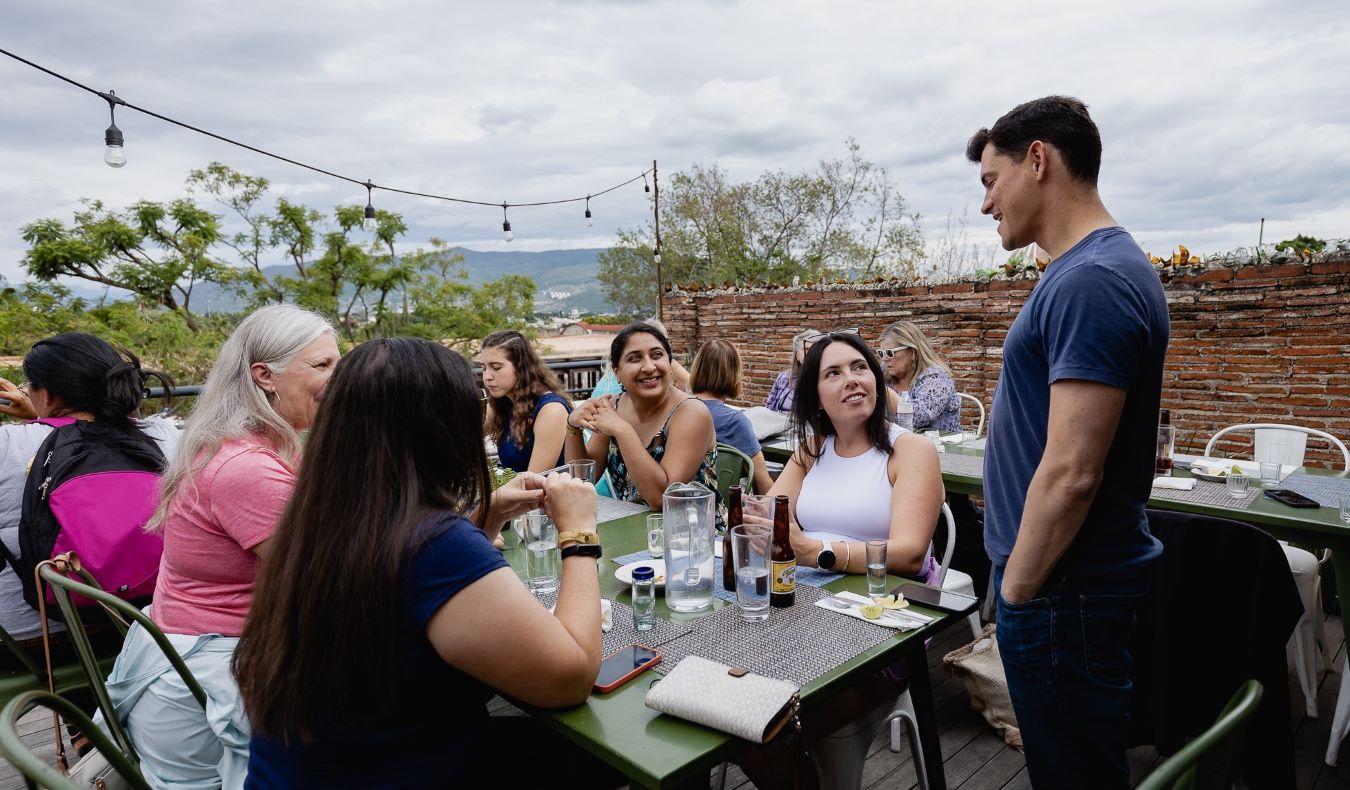
True transformation, however, requires a different architecture. It requires the traveler to move from the role of a consumer to that of a participant. When you commit to staying—whether through a work placement, an internship, or a structured volunteer program—you stop being a guest and start becoming a neighbor. You gain access to the rhythms of local life: the commute, the workplace culture, the local grocery stores, and the genuine, non-transactional relationships that can only be built over months, not days.
The Rise of the Working Holiday: A New Paradigm
If the digital nomad represents the "floating" traveler, the working holiday maker represents the "rooted" traveler. This movement is gaining significant traction because it solves the two primary pain points of long-term travel: financial sustainability and social isolation.
By securing a job upon arrival—whether in hospitality, agriculture, conservation, or administration—travelers integrate into the local workforce. This provides more than just a paycheck; it provides a community. You are not meeting people in the sterile, transient atmosphere of a hostel; you are meeting them in the office, the warehouse, or the field. You have a schedule, a sense of purpose, and a reason to stay in one place long enough to see the seasons change.
The Scaffolding of Modern Travel: Global Work & Travel
The primary barrier to this lifestyle has always been logistics. Navigating foreign labor laws, visa quotas, accommodation scouting, and job interviews in a foreign language is a daunting prospect that discourages many from taking the leap.
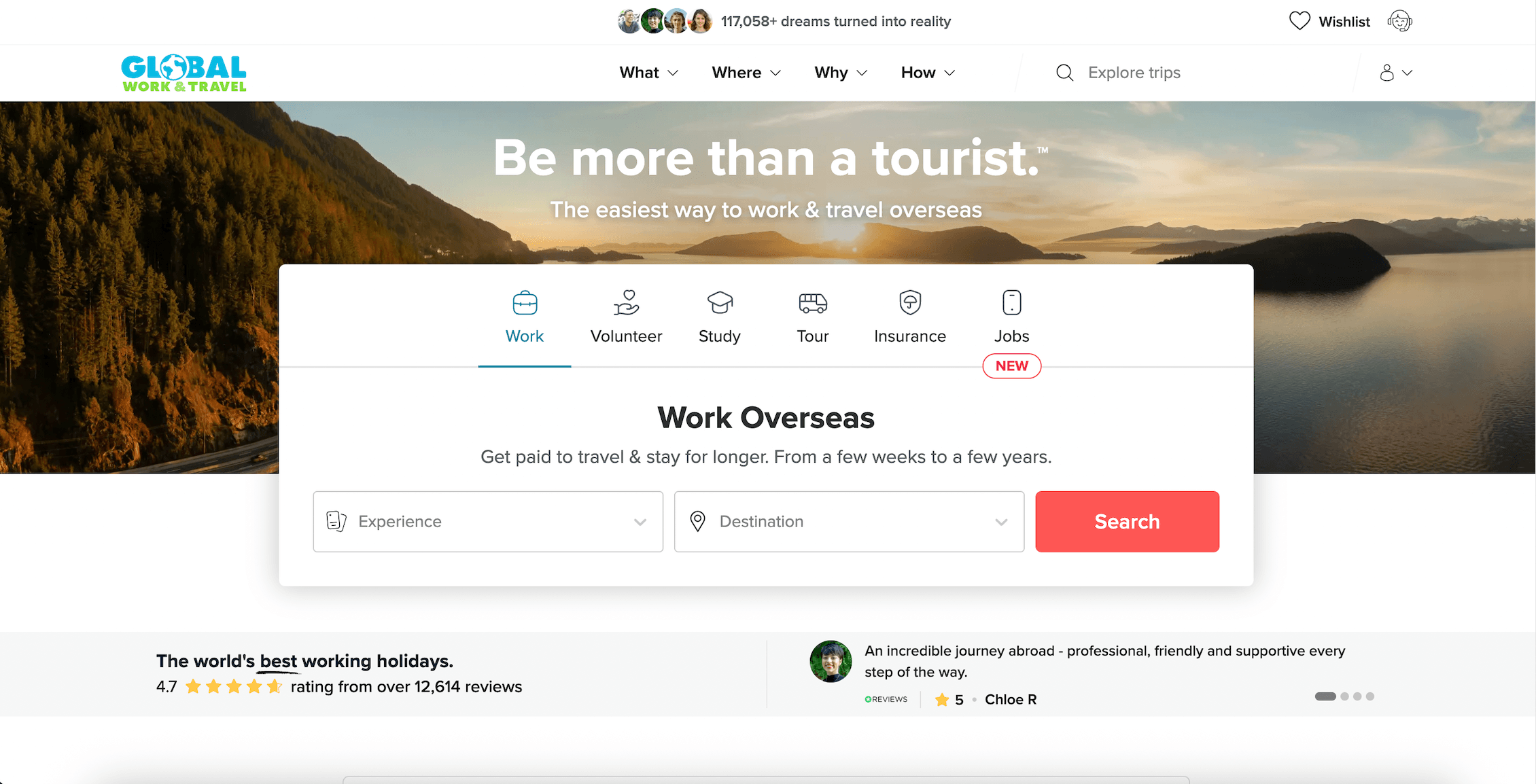
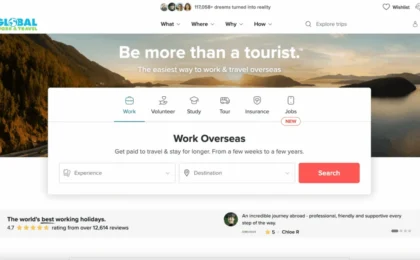
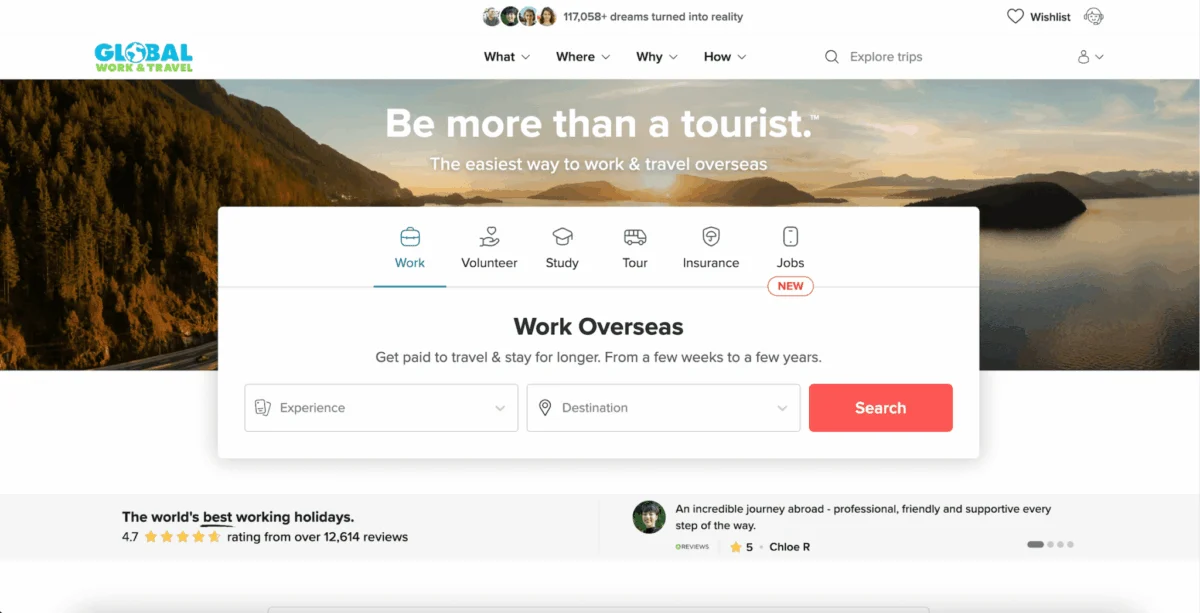
Companies like Global Work & Travel have emerged to provide the necessary scaffolding for this transition. With nearly two decades of experience, the organization has facilitated placements for over 116,000 individuals across the Americas, Europe, Asia, Africa, and the Pacific.
Their model is built on "pre-departure support." Instead of leaving travelers to navigate the bureaucratic labyrinth alone, the company provides:
- Visa Guidance: Navigating the complex, often shifting landscape of international work visas.
- Job Matching: Vetting and connecting travelers with legitimate local employers.
- The gWorld Portal: A centralized digital hub that serves as a personal trip management app, keeping all documentation, placement details, and support contact information in one location.
This infrastructure is not just a convenience; for many, it is the deciding factor between perpetual deliberation and actual departure.
Ethical Volunteering: Beyond the "Feel-Good" Narrative
Volunteering abroad has faced significant scrutiny in recent years, and for good reason. The rise of "voluntourism"—often profit-driven, short-term, and potentially disruptive to local infrastructure—has tainted the reputation of international service.
However, when structured correctly, volunteering serves as a vital bridge between global awareness and local action. The key is prioritizing local agency. Legitimate programs are designed based on the needs identified by the local communities themselves, not by the desires of the volunteers.
In locations like Zanzibar, Tanzania, or wildlife conservation sites in South Africa and Thailand, the impact of ethical volunteering is tangible. When a traveler works on a conservation project or supports a community development initiative, they are not just "helping"; they are learning. They are confronted with the systemic realities of the region, the intricacies of the local environment, and the specific challenges faced by the population. This experience shifts one’s worldview in a way that no guidebook ever could.
The integration of initiatives like the Global Animal Welfare Fund—which channels resources directly into the maintenance and improvement of conservation sites—ensures that the program’s footprint is net-positive.
Chronology of a Shift: From Nomad to Resident
The transition toward long-term, work-based travel has followed a clear trajectory over the last fifteen years:
- 2010–2015: The "Backpacker Era." Travel is dominated by short-term hostel-hopping and the goal of "seeing everything" in the shortest amount of time.
- 2015–2020: The "Digital Nomad Rise." The emergence of reliable high-speed internet and coworking spaces allows for a hybrid lifestyle. Remote work becomes the gold standard for long-term travel.
- 2020–2024: The "Realignment." Post-pandemic, many travelers recognize the limitations of the nomadic lifestyle. There is a newfound appreciation for community, stability, and genuine, face-to-face social interaction.
- 2025 and Beyond: The "Integration Phase." Travel is increasingly viewed as an opportunity to build a temporary life, earn local currency, and contribute to local projects. The focus shifts from "where can I go" to "how can I live there."
Implications for the Global Economy and Individual Growth
The implications of this shift are profound. For the individual, it offers a career-advancing opportunity. International work experience, cross-cultural communication skills, and the ability to adapt to new environments are highly valued in the modern global labor market. It transforms a "gap year" from a potential resume liability into a significant asset.
For the host destination, this model encourages a more sustainable form of tourism. Working holiday makers spend money locally, participate in the tax base, and are more likely to support local businesses rather than global chains. Furthermore, the relationships formed between international workers and locals foster long-term cultural exchange that persists long after the traveler has returned home.
Frequently Asked Questions
Do I need prior experience to work abroad?
For the majority of placements, extensive prior experience is not required. Many programs are designed for entry-level workers. Teaching programs often include comprehensive TEFL (Teaching English as a Foreign Language) training, and volunteer programs typically provide on-site orientation and training for all participants.
What is the age range for these programs?
While working holiday visas are typically capped at age 35 due to government regulations, many volunteer and teaching programs have no such cap, welcoming participants from age 18 to 80.
How does the logistical timeline work?
For those seeking a seamless transition, planning 6 to 12 months in advance is recommended. This allows sufficient time for visa processing, medical checks, and job matching. It is possible to initiate the process with a minimal deposit, ensuring the traveler can lock in their plans without significant upfront capital.
Is the "Nomadic" lifestyle truly disappearing?
Not necessarily, but it is evolving. The "Digital Nomad" will always exist for those with high-level remote skills. However, the aspirational model of the future is shifting toward the "Working Holiday Maker"—someone who prioritizes depth of experience over the convenience of a location-independent laptop lifestyle.
Conclusion: The Value of "Doing"
Travel has always been at its best when it transcends the transactional. The memories that endure—the ones we share years later—are rarely the ones involving a queue for a famous landmark or a standard hotel breakfast. They are the moments when we felt connected, when we were challenged, and when we were active participants in a place.
As we look toward the future of global travel, the emphasis must shift from where we go to how we participate. Whether through a working holiday that allows for deep integration into a local economy or a vetted volunteer program that addresses real-world needs, the opportunity to go deeper is more accessible than ever. By choosing to work and live abroad, we move beyond the superficial and into the transformative, ensuring that our travel leaves us, and the world, a little bit better than we found it.