By Editorial Staff
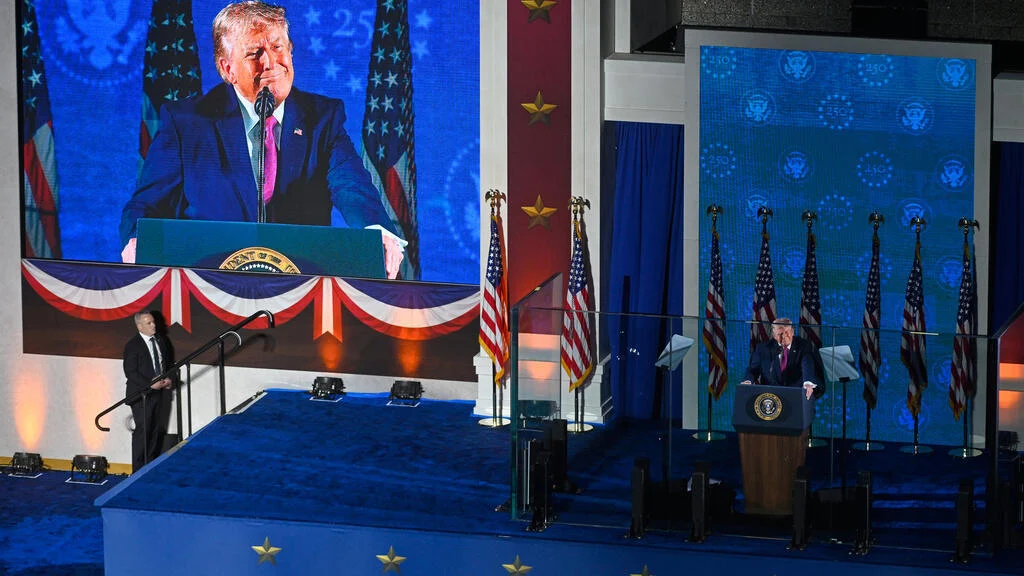
On the eve of the United States’ 250th Independence Day, President Donald Trump stood against the backdrop of the towering granite faces of Mount Rushmore, delivering a speech that effectively served as the opening salvo for the midterm election season. With the nation’s founding ideals as his touchstone, the President painted a stark, binary portrait of American politics, framing the upcoming congressional battles not as a mere policy disagreement, but as a crusade against a burgeoning "communist menace."
The event, held in the cool, crisp air of South Dakota, stood in sharp contrast to the sweltering heat waves gripping the rest of the nation. Yet, the temperature of the political discourse was burning hot. As the President called on citizens to defend the freedoms established two and a half centuries ago, he simultaneously issued a clarion call to purge the American political landscape of what he termed "totalitarian ideologies."
The Core Message: A Call to Arms
Addressing a crowd beneath the carved visages of Washington, Jefferson, Roosevelt, and Lincoln, President Trump framed his administration’s agenda as a direct, existential defense of the American dream. "We stand beneath the monument of these heroes, a true group of unbelievable people," Trump declared. "We rededicate ourselves to being a nation as big, bold, noble, and as great as these American giants."
However, the tone quickly shifted from patriotic reflection to urgent confrontation. The President argued that the current Democratic Party has been hijacked by radical elements, specifically pointing to the rise of democratic socialists. He characterized this shift as a "resurgence of the communist menace," claiming that these ideologies are "totally opposed to our way of life and our great success."
The President’s rhetoric explicitly targeted two fronts: the internal rise of progressive Democratic candidates and the influence of "newcomers" to the country. By conflating ideological shifts with immigration policy, Trump resurrected themes that have defined his political brand since his initial 2016 campaign, suggesting that the "threat" to the American way of life is coming from both within and without.
Chronology of the Escalation
The Mount Rushmore address was not an isolated incident but the culmination of a week-long escalation in the President’s rhetoric.
- Mid-June: The President begins to shift his focus toward the electoral successes of left-wing candidates in various Democratic primaries, labeling their platform as the "greatest threat to our country since its founding."
- Late June: A string of progressive victories occurs across the United States. In New York City and Colorado, democratic socialist candidates secure competitive primary wins. Similar successes are noted in Kentucky, New Jersey, Ohio, Pennsylvania, and Texas.
- July 1: Republican lawmakers, increasingly anxious about losing control of at least one chamber of Congress in the upcoming midterms, lean into the President’s framing of the "socialist threat."
- July 3: President Trump travels to South Dakota, using the Mount Rushmore backdrop to consolidate his narrative ahead of the Fourth of July celebrations.
- July 4: The President is scheduled to appear on the National Mall in Washington, D.C., for a massive Independence Day fireworks display, despite a national heatwave complicating event logistics.
Supporting Data: The Progressive Surge
The President’s alarmist rhetoric is rooted in a tangible shift within the Democratic Party’s grassroots infrastructure. While the Democratic establishment has historically favored centrist candidates, the last several primary cycles have seen a significant "leftward" shift.
In New York City, three democratic socialists secured pivotal wins in local primaries, signaling a shift in the party’s urban base. These victories are not localized; data from across the country—including primary wins in Ohio and Texas—suggest that the progressive wing is becoming increasingly organized and capable of mobilizing younger voters and disenfranchised working-class demographics.
For the Republican Party, these victories represent a strategic opportunity. By characterizing the entire Democratic Party as a vessel for "communist" ideology, the GOP aims to alienate moderate suburban voters who might otherwise be disillusioned by the current state of the economy. The political climate is currently dominated by high inflation and rising gas prices, exacerbated by the ongoing US-Israeli conflict with Iran. This economic anxiety, combined with the culture war rhetoric deployed by the President, forms the central pillar of the Republican midterm strategy.
Official Responses and Political Implications
The President’s speech has triggered a polarized reaction from across the political spectrum.
The Republican Stance
Republican strategists have largely embraced the President’s framing. Facing a difficult map in the November midterms, the party is betting that an emphasis on "cultural defense" will turn out their base. "We can only lose the midterms if we allow ourselves to lose the midterms," the President told the crowd, emphasizing that the primary driver of electoral success will be the rejection of the "radical left."
The Democratic Rebuttal
Democratic leaders have criticized the rhetoric as a dangerous distraction. Critics argue that the use of the term "communist" to describe social democratic policies—such as universal healthcare or wealth redistribution—is a cynical manipulation of history. Many have compared the President’s tactics to the Red Scare of the 1950s, a period marked by the McCarthyist persecution of perceived dissidents.
"This is not about protecting the nation’s founders; it is about protecting the President’s political future," said one Democratic strategist. "By creating a caricature of his opponents as communists, he is attempting to bypass real debate on inflation, foreign policy, and the economy."
Historical Context: The Red Scare Reborn
The President’s choice of language is historically freighted. By calling for the expulsion of those who embrace "communist" ideas, Trump invoked the spirit of the Cold War. In the 1950s, the "Red Scare" resulted in the blacklisting of thousands of Americans in academia, government, and the entertainment industry.
The President’s assertion that "we will send them quickly away" regarding "newcomers" serves to link modern-day anti-immigration sentiments with historical anti-communist paranoia. This fusion of ideologies creates a powerful, albeit controversial, narrative that paints the United States as a besieged fortress.
The Economic Backdrop
It is impossible to ignore the economic context of this speech. The United States is currently navigating the ripples of the US-Israeli conflict with Iran, which has sent energy prices soaring and kept inflation at levels not seen in decades.
The President’s pivot to ideological warfare serves as a diversionary tactic. By framing the election as a choice between "American greatness" and "communist decay," the administration hopes to insulate itself from criticism regarding the management of the economy. However, as Americans continue to struggle with the cost of living, it remains to be seen whether this culture-focused strategy will suffice to secure a legislative majority.
Conclusion: A Nation at a Crossroads
As the nation celebrates 250 years of existence, the political atmosphere is more fractured than it has been in decades. The President’s speech at Mount Rushmore signifies a deepening of the ideological divide. With the midterm elections on the horizon, the rhetoric is likely to become more, not less, vitriolic.
Whether the American public will respond to the warning of a "communist menace" or whether they will demand a more grounded approach to the economic and social realities of the present day will be the defining question of the next four months. As the fireworks light up the sky over the National Mall, the true test of the nation’s resilience—and its ability to endure political polarization—is only just beginning.