For any prospect, the road to the major leagues is rarely a paved highway. It is a treacherous, non-linear path defined by the fragility of arms and the volatility of development. For young pitchers, this reality is magnified. The transition from minor league dominance to MLB success is often interrupted by the grim inevitability of injuries, the loss of command, or the sudden, inexplicable erosion of once-lethal secondary pitches.
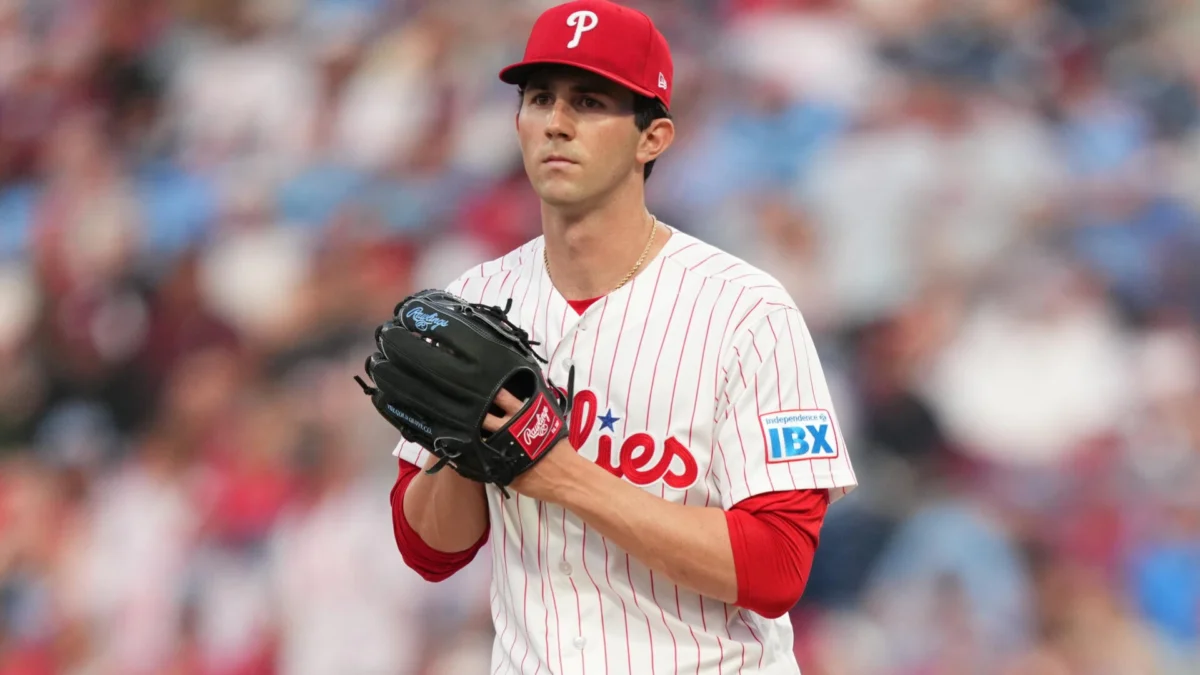
In the case of Philadelphia Phillies phenom Andrew Painter, the narrative had become one of "all-of-the-above" adversity. Once heralded as the crown jewel of pitching prospects, Painter’s momentum was violently halted by a season-ending elbow injury just as he stood on the precipice of his MLB debut. Following two lost seasons and the arduous rehabilitation process of Tommy John surgery, Painter’s 2025 return was underwhelming. He emerged not as the dominant force scouts had projected, but as a pitcher struggling to find the zone, suffering through a 5.26 ERA in Triple-A.
The Turning Point: A Return to Form
The struggles persisted into the current season. After breaking camp with the Phillies, Painter’s fastball—once his calling card—lacked the bite and velocity that had defined his rise. By mid-June, the team had no choice but to demote him to Triple-A, where he labored with a 7.06 ERA. For months, he looked like a shell of his former self.
However, a remarkable shift has occurred in his most recent outings. The "pre-injury" version of Painter—the one scouts whispered could be the best arm in the game—appears to have re-emerged.
The Mechanics of Success
The definitive proof came this past Saturday against the St. Louis Cardinals. Painter was nothing short of surgical, carving through the lineup for eight strikeouts while surrendering only one hit over seven innings of work. The metrics behind the performance are the most encouraging aspect of this resurgence. Painter’s fastball, which had been a liability for the better part of two years, sat at an average of 97.3 mph. Crucially, the pitch displayed two additional inches of induced vertical break compared to his season average.
This mechanical correction transformed the fastball from a hittable offering into a weapon capable of generating five swinging strikes on just 15 swings. When paired with his newly refined changeup—which he adopted after shelving his splitter—Painter generated a total of 20 swinging strikes. While a few starts do not erase years of frustration, the sudden spike in movement and command suggests that the physical hurdles of his recovery may finally be behind him.
Implications for Fantasy Managers
For fantasy baseball managers, the question is whether Painter is a "must-add." Given his pedigree and the current trend, he represents the highest-upside play on the waiver wire heading into Week 23. While caution is warranted—he lacks a sustained track record at the highest level—his ability to maximize his physical tools makes him an essential target for teams needing a late-season spark.
Week 23 Waiver Wire: Comprehensive Analysis
As we enter the final stretch of the fantasy season, the waiver wire becomes the battleground for league championships. Below are the key targets across all positions.
Catcher: The Reliability of Tyler Stephenson
Tyler Stephenson (Reds, 47% owned) has surged since the All-Star break, hitting .253/.333/.527 with a home run pace exceeding 30 per season. With an expected wOBA of .371, his production is supported by strong underlying metrics. He is a reliable floor-builder in a position that has seen significant depth growth in 2026.
- Deep League Pivot: Rafael Flores (Pirates, 21% owned). Despite high swing-and-miss rates, Flores is mashing the ball with an average exit velocity of 91.4 mph. He is a high-upside play for those struggling at the catcher position.
First Base: The Platoon Power of Abimelec Ortiz
Abimelec Ortiz (Nationals, 41% owned) is currently limited by a strict platoon role, but his production against right-handed pitching is elite. Hitting .250/.291/.577 with five homers in just 55 plate appearances against righties, he is a perfect corner-infield add.
- Deep League Stash: Ralphy Velazquez (Guardians, 17% owned). With 14 homers in 16 August games in Triple-A, Velazquez is forcing the Guardians’ hand. A September call-up is highly probable for a team desperate for offensive output.
Second Base: Versatility and Contact
Angel Genao (Guardians, 35% owned) has been a revelation, hitting .315/.373/.426 in his first 15 MLB games. His positional flexibility (2B, 3B, SS) makes him an invaluable bench piece for the stretch run.
- Deep League Option: Pedro Ramirez (Cubs, 13% owned). Despite a current slump, he is poised for full-time duty in a high-octane offense. His dual-eligibility at the weakest positions makes him a high-reward flier.
Third Base: The Resurgence of Alec Bohm
Alec Bohm (Phillies, 66% owned) has been a model of consistency since the All-Star break, batting .336 with 28 RBI in his last 32 games. His underlying metrics have remained stable, suggesting his current hot streak is sustainable.
- Deep League Play: Jordan Lawlar (Diamondbacks, 35% owned). Playing center field regularly, Lawlar is on a 20/40 pace. In Roto formats, his speed and power profile are worth immediate acquisition.
Shortstop: Rookie Upside
Kaelen Culpepper (Twins, 32% owned) has shown flashes of brilliance, hitting .286/.340/.452 with a 90.9 mph exit velocity. While the strikeout rate (28%) is a concern, his power-contact profile is encouraging for a rookie.
- Deep League Wildcard: Trevor Story (Red Sox, 37% owned). Approaching a return from hernia surgery, Story remains a high-risk, high-reward gamble. If he can recapture even a fraction of his 2025 form (25 HR, 31 SB), he could single-handedly win leagues for owners with a spare roster spot.
Outfield: The Prospect Wave
Walker Jenkins (Twins, 35% owned) is likely the next big prospect to arrive. With an August line of .298/.396/.496 and a surge in extra-base hits, he is ready for the majors. His advanced approach makes him a potential league-winner.
- Other Notables:
- Cam Smith (Astros, 45% owned): A beneficiary of improved swing mechanics (41% flyball rate in August).
- Griffin Conine (Marlins, 36% owned): Increasing exposure to lefties makes his raw power more playable.
- Luis Robert (Mets, 64% owned): The power is real, though the OBP remains a liability in points leagues.
Starting Pitcher: The "Funk" and the Velocity
Jacob Lopez (Athletics, 40% owned) has been a revelation, posting a 2.76 ERA with 37 strikeouts in his last five starts. His success relies on deception rather than raw velocity, making him a reliable arm for the stretch run.
- High-Interest Arms:
- George Klassen (Angels, 20% owned): Legit fastball/slider combo, though command remains a risk.
- Grayson Rodriguez (Angels, 26% owned): Has seen significant improvement in his changeup-fastball pairing.
- Tyler Mahle (Braves, 68% owned): Riding a massive spike in strikeout rate due to increased splitter usage.
- Joe Musgrove (Padres, 43% owned): Approaching a return with career-high fastball velocity on his rehab stint.
Relief Pitcher: Closing the Door
Kodai Senga (Mets, 39% owned) has struggled with the transition to consecutive-day appearances, but his underlying stuff remains elite. He is a priority add for save opportunities.
- Deep League Speculation: Nate Pearson (Royals, 3% owned) is currently sharing closing duties. If he can maintain his command, he is the most talented arm in the Kansas City bullpen and could seize the full-time role.