In a damning assessment of the deteriorating human rights landscape in the occupied West Bank, Human Rights Watch (HRW) issued a stark warning this week, asserting that the surge in settler violence is not a series of isolated incidents, but rather a deliberate instrument of state-sanctioned displacement. According to the organization’s latest findings, the convergence of aggressive settler expansion and systemic violence against Palestinian communities is being actively enabled, funded, and protected by Israeli authorities.
The report, which draws on intensive investigations conducted between April and May 2026, paints a harrowing picture of life for Palestinians in rural and vulnerable communities. From the destruction of vital infrastructure to the direct targeting of women and children, the violence has reached a level that international observers characterize as a policy of forced displacement—a practice strictly prohibited under international humanitarian law.
The Anatomy of the Crisis: Main Facts and Investigative Findings
The HRW investigation focused on seven specific Palestinian communities within the West Bank, uncovering a consistent pattern of abuse. The period between March and April 2026 marked a particularly volatile spike in lethality, with multiple reports of killings—including those of minors—alongside a pervasive climate of fear defined by sexual violence, arbitrary detention, arson, and the wholesale destruction of property.
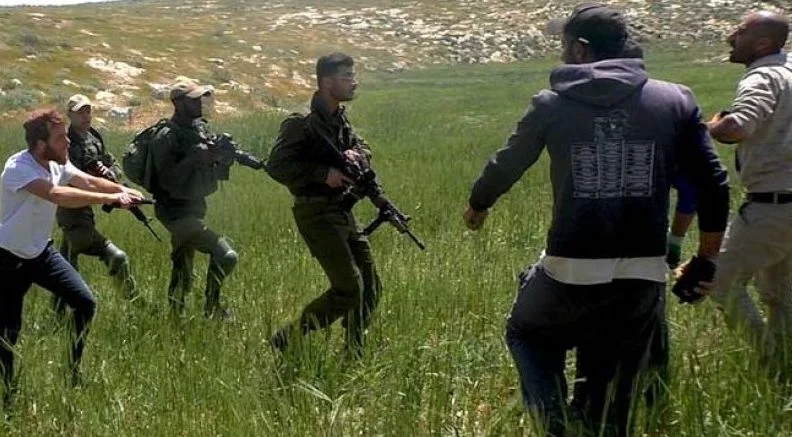
Perhaps most significant is the report’s documentation of the complicity of the Israeli military. The investigation found that armed settlers frequently operate in tandem with state security forces. In several instances, Israeli army units were present at the scene of violent acts, standing by as observers rather than intervening to protect Palestinian civilians. This lack of intervention, according to HRW, serves as a "green light" for extremists, reinforcing the perception that settlers enjoy total impunity.
The economic warfare against these communities is equally systematic. Settlers are actively destroying livestock, torching crops, and sabotaging water infrastructure, effectively strangling the ability of Palestinians to sustain their livelihoods or remain on their ancestral lands. By restricting access to essential grazing lands and water sources, the strategy aims to make life untenable for the local population, thereby facilitating the "maximum land, minimum Palestinians" agenda identified by researchers.
Chronology of Escalation (2026)
The escalation of violence throughout the first half of 2026 serves as a clear trajectory of the current crisis:
- March 2026: A UN report highlights an "unprecedented" acceleration in settlement expansion, noting that 84 new illegal outposts were established in a single reporting period. This expansion set the stage for increased friction and territorial displacement.
- March – April 2026: A sharp spike in violence is recorded, characterized by HRW as a surge in "assaults, sexual violence, physical and mental abuse, and property destruction." The killings of Palestinian children during this window draw international condemnation.
- April – May 2026: HRW conducts on-the-ground investigations across seven Palestinian communities, documenting the systemic nature of the violence and the failure of the Israeli military to enforce law and order.
- June 2026: The UN releases findings regarding systemic human rights abuses. Simultaneously, Amnesty International publishes an executive summary detailing acts of "ethnic cleansing" in communities like Zenuta, where residents were subjected to beatings with rifles and the contamination of their farmland with sewage.
- August 2026: Human Rights Watch officially issues its warning, calling for urgent international intervention, including sanctions and the suspension of arms transfers to Israel, citing the blatant disregard for international legal standards.
Supporting Data: The Institutionalization of Settlement Expansion
The violence occurring on the ground is mirrored by a dramatic shift in Israeli state policy. Financial and legal support for the settlement movement has surged under the current administration.
Amnesty International’s research highlights a 122 percent budget increase for the Ministry of Settlement and National Missions. Furthermore, the government has authorized a 50 million shekel (approximately $16 million USD) injection into "illegal settlement outposts"—structures that are technically unauthorized even under Israeli domestic law, yet are receiving state-sanctioned financial backing.
The UN’s March 2026 report serves as the statistical backbone for these claims, documenting the establishment of 84 new outposts. This rapid expansion creates "facts on the ground" that effectively bifurcate the West Bank, preventing any contiguous Palestinian development and creating a state of permanent volatility.
Official Responses and Expert Analysis
Sarah Sanbar, Acting Israel and Palestine researcher at HRW, has been unequivocal in her criticism of the Israeli government. Sanbar argues that the violence is not a byproduct of rogue actors but the result of a state-led strategy.
"The Israeli government and the settlers share the same goal of maximum land and minimum Palestinians," Sanbar stated. She emphasizes that the authorities are not merely passive onlookers; they are active facilitators, providing weapons, funding, and the necessary "legal cover" for settlers to operate without fear of prosecution.
The Amnesty International report provides further corroboration, asserting that while international media often portrays settler violence as "exceptional" or "fringe," the reality is that such violence is deeply embedded within state policy. From the systematic emptying of water tanks to the burning of classrooms, the organization argues these acts constitute a coherent, state-supported effort to ethnically cleanse areas of the West Bank.
Implications: International Law and the Call for Sanctions
The forced displacement of civilians is not a gray area in international law. Rule 129 of customary international law explicitly prohibits parties to a non-international armed conflict from ordering the displacement of the civilian population. Furthermore, the 1974 UN Declaration on the Protection of Women and Children in Emergency and Armed Conflict classifies the forcible eviction of civilians as a criminal offense.
The failure of the international community to act in the face of these violations is becoming a central point of contention. HRW has issued a series of urgent recommendations, calling on global powers to move beyond diplomatic rhetoric:
- Targeted Sanctions: Impose financial and travel-related sanctions on individuals and entities complicit in the funding and perpetration of settler violence.
- Suspension of Arms Transfers: Halt the flow of military equipment to Israel, given its documented role in facilitating or failing to prevent human rights abuses.
- Trade Restrictions: Implement a total ban on trade with illegal settlements, ensuring that international economic activity does not subsidize the expansion of illegal outposts.
- Review of Agreements: Re-evaluate and potentially suspend preferential trade agreements with Israel until it demonstrates compliance with international humanitarian standards.
A Humanitarian Tipping Point
The situation in the West Bank is not merely a regional security issue; it is a profound human rights catastrophe. As families are driven from their homes and the physical landscape of the West Bank is permanently altered by state-supported expansion, the window for a peaceful, rights-based resolution continues to close.
The international community now faces a critical juncture. The reports from Human Rights Watch, Amnesty International, and the United Nations provide an undeniable record of systemic abuse. Whether these findings lead to tangible policy shifts—or are met with continued indifference—will determine the survival of Palestinian communities in the West Bank and the future of the rule of law in the region. As the death toll rises and the displacement spreads, the call for international accountability has moved from a request to an urgent, legal necessity.