For decades, the standard medical approach to alcohol use disorder (AUD) has centered on a singular, clear-cut objective: abstinence. From the philosophy of "Dry January" to the rigorous requirements of long-term recovery programs, the cessation of alcohol intake is widely regarded as the cornerstone of health improvement. However, a growing body of research from addiction scientists suggests that this path is far more treacherous than previously understood.
New experimental findings indicate that the very process of forced abstinence may trigger profound biological adaptations in the brain, inadvertently increasing a person’s susceptibility to relapse. This discovery provides a potential biological explanation for why so many individuals struggling with alcohol dependency find themselves trapped in a cycle of quitting and returning to use, despite their best efforts to remain sober.
The Biological Paradox: Why Abstinence Can Be Dangerous
At the heart of this research is a counterintuitive discovery regarding "aversion-resistant alcohol intake." In a series of controlled experiments involving mice, researchers provided subjects with long-term voluntary access to alcohol, followed by a period of forced abstinence. The goal was to simulate the conditions of a person attempting to quit drinking after a period of heavy use.
Following the abstinence period, researchers introduced quinine—a substance known for its intense bitterness—into the alcohol. In a typical scenario, a mammal would reject a bitter substance. However, a significant subset of the abstinent mice displayed a behavior researchers labeled "aversion-resistant intake": they continued to consume the alcohol regardless of the repulsive taste.
Even more alarming, these mice consumed significantly larger quantities of the bitter alcohol than those who had never experienced forced abstinence. These results suggest that the physical and neurological challenges associated with withdrawal do not merely cause discomfort; they fundamentally alter the brain’s decision-making architecture, pushing the subject toward compulsive consumption even when the alcohol is no longer pleasurable or "tasty."
The BNST: The Brain’s Command Center for Relapse
To understand the mechanics behind this behavior, researchers turned their attention to the bed nucleus of the stria terminalis (BNST), a small but critical structure located deep within the brain. The BNST has long been implicated in the emotional volatility associated with AUD, specifically in the regulation of anxiety and depression—two major drivers of relapse.
The research team monitored neural activity in the BNST as mice were reintroduced to the environments where they previously had access to alcohol. Even when the spouts contained only water, the abstinent mice showed clear behavioral patterns of seeking out the alcohol. Crucially, this behavior was linked to a surge in activity within the BNST.
The findings were stark: mice that had developed the taste for bitter, aversion-resistant alcohol exhibited more than double the neural activity in the BNST compared to their non-abstinent counterparts. Perhaps most significantly, this hyper-activity was observed before the mice were even given access to the alcohol, suggesting that the brain had entered a "primed" state of anticipation. This suggests that the BNST may act as a biological alarm system, triggering an intense, involuntary craving before a person even encounters the substance they are trying to avoid.
A Public Health Crisis in Plain Sight
The significance of these findings cannot be overstated. Alcohol misuse remains one of the most pressing, yet often ignored, public health crises in the United States. While society frequently focuses on the dangers of illicit substances, the lethality of alcohol is staggering. In 2024 alone, deaths associated with alcohol use were 4.5 times higher than those attributed to the opioid epidemic, yet the public perception of alcohol’s risks remains muted.
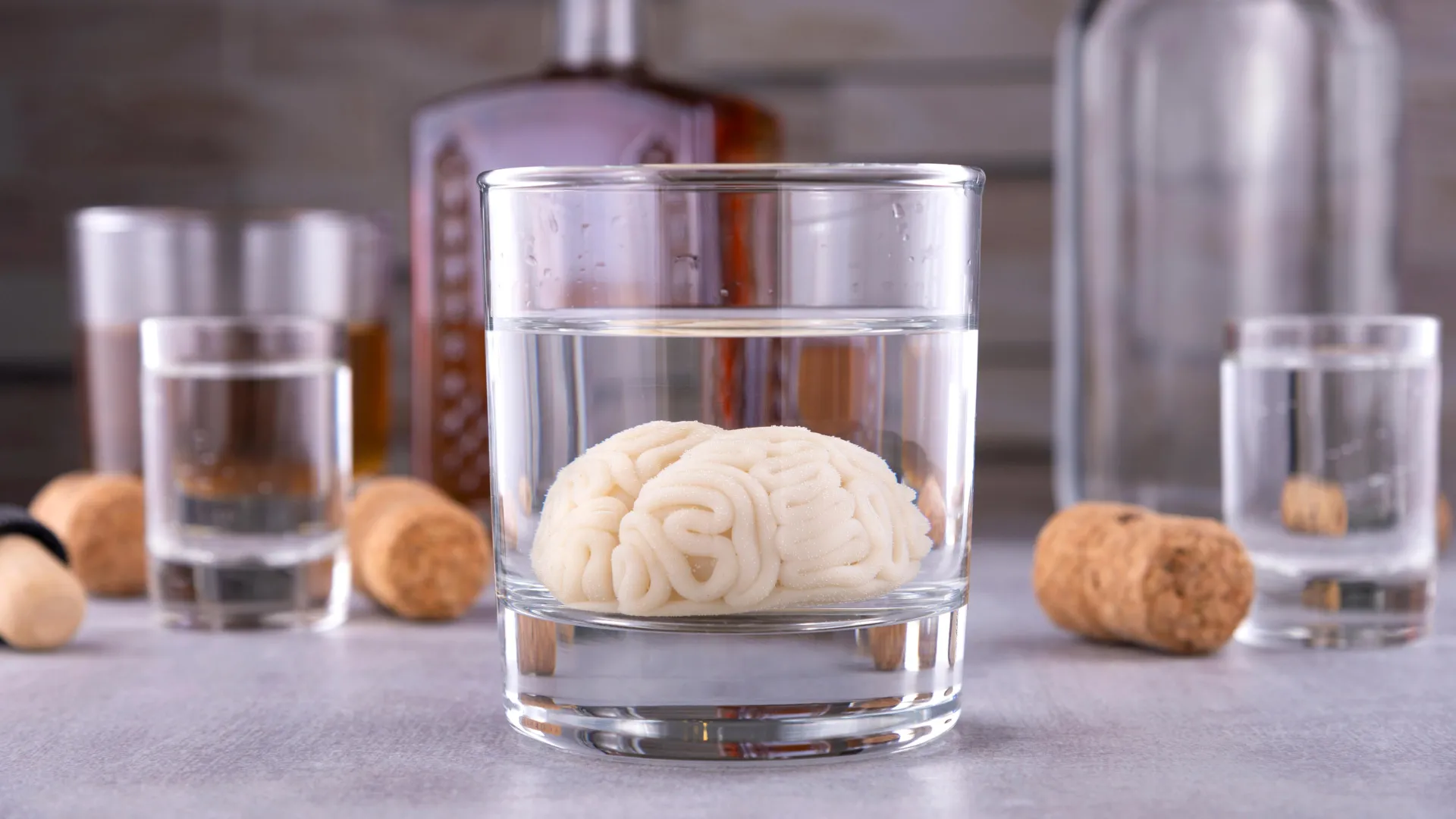
Despite the fact that over 80% of Americans over the age of 12 consume alcohol at some point in their lives, and approximately 10%—roughly 30 million people—will develop an alcohol use disorder, the medical community remains ill-equipped to predict individual outcomes. The number of people diagnosed with AUD in the United States has effectively doubled since 1999, highlighting a widening gap between the prevalence of the disease and our ability to treat it effectively.
Chronology of the Research
- Late 20th Century: The medical community largely adopts abstinence-based models as the gold standard for AUD treatment.
- 1999–2024: The incidence of alcohol use disorder in the U.S. doubles, prompting researchers to look beyond traditional behavioral therapy and into neurobiological mechanisms.
- 2025: Initial studies on "Dry January" highlight both the health benefits of abstinence and the emerging theory that the brain may undergo compensatory changes during this period.
- 2026: Researchers publish findings in Neuron and Molecular Psychiatry demonstrating that forced abstinence in mouse models induces aversion-resistant drinking and specific BNST neural signatures.
Supporting Data and the Limitations of Current Treatment
The current reliance on abstinence as a primary treatment strategy is increasingly being questioned by proponents of "harm reduction." While harm reduction is a well-established and accepted component of treating opioid use disorder, its application to alcohol is still in its infancy.
Clinical trials and treatment programs often struggle because they lack predictive tools. Currently, when a patient presents for treatment, clinicians have few ways to determine who is at the highest risk of immediate relapse. By identifying the BNST as a potential "biological biomarker," researchers hope to create a diagnostic tool. If, as the mouse models suggest, heightened BNST activity is a predictor of relapse, clinicians might one day be able to screen patients and intervene with more aggressive or specialized therapies for those at the highest neurological risk.
Official Responses and Clinical Implications
The academic community has received these findings with both excitement and caution. Dr. Jennifer Blackford, a leading researcher in the field, is currently spearheading investigations into whether the BNST activity observed in mice is mirrored in the human brain. If her team confirms that individuals in early abstinence show similar patterns of BNST hyper-activity, it could fundamentally change the diagnostic criteria for AUD.
"If we can identify the neural signature of vulnerability, we can change the way we approach recovery," one researcher noted. Instead of a one-size-fits-all approach to sobriety, clinicians could theoretically provide pharmacological or neurological interventions to quiet the BNST during the most vulnerable periods of early abstinence, potentially lowering the barrier to sustained recovery.
What Lies Ahead: The Path Toward New Treatments
Despite the progress, significant questions remain. Scientists are still working to determine the precise role of the BNST in the broader spectrum of addiction behaviors. It is currently unclear what specifically drives this increase in neural activity or which specific sub-populations of cells within the BNST are responsible for encoding the "craving" signal.
Furthermore, the transition from mouse models to human clinical trials is fraught with complexity. Human behavior is influenced by social, environmental, and psychological factors that cannot be perfectly replicated in a laboratory setting. However, the use of advanced neuroscientific tools to manipulate specific neurons in real-time offers a promising path forward.
Summary of Implications
- Diagnostic Potential: BNST activity could serve as a screening tool for clinicians to identify high-risk patients.
- Targeted Therapy: Future treatments may focus on modulating BNST activity to reduce the "priming" effect that leads to relapse.
- Reframing Recovery: The research validates the physiological struggle of abstinence, potentially reducing the stigma associated with relapse by framing it as a biological failure of the brain’s regulatory systems rather than a moral failing of the individual.
As we look toward the future of addiction medicine, the integration of neuroscience into clinical practice appears inevitable. By understanding the brain’s "relapse signature," we move closer to a reality where treatment is not just a hope-based effort, but a data-driven process designed to work with the biology of the patient, rather than against it. The road to recovery is long, but for the millions struggling with AUD, these new insights offer a beacon of hope for more effective, personalized care.