By Tech Insights Bureau
August 22, 2026
As the landscape of higher education undergoes a seismic shift in the mid-2020s, Harvard Business School (HBS) has taken a bold, controversial step toward the future of pedagogy. In an effort to democratize access to elite entrepreneurial training while maintaining the rigor of a Harvard curriculum, the institution has integrated high-fidelity AI avatars into its "Foundry" bootcamp. This experiment, which marks a significant departure from traditional, human-only instruction, signals a broader institutional move toward leveraging generative AI not just as a research tool, but as a direct proxy for faculty expertise.
The Core of the Experiment: HBS Foundry
The HBS Foundry is an eight-week, $699 intensive program designed to provide aspiring entrepreneurs with the foundational skills necessary to launch and scale startups. While the price point is intentionally accessible compared to traditional executive education, the logistical challenge of providing personalized feedback to a massive cohort of students is significant.
To solve this, HBS has partnered with HeyGen, a leading AI video generation startup, to create digital "twins" of its esteemed faculty and industry experts. These avatars are not simple, text-based chatbots. They are visual simulations capable of delivering nuanced, personalized feedback based on the specific parameters of a student’s project. Throughout the eight-week program, students participate in live, synchronous sessions with human instructors, but the heavy lifting of iterative practice—such as refining elevator pitches or simulating high-stakes board meetings—is now conducted in the digital presence of these AI entities.
Chronology of Development: From Chatbot to Digital Twin
The evolution of the AI integration at HBS reflects a broader shift in user expectations regarding educational technology. According to Katharina Rings, the project director for the initiative, the initial vision for the AI component was far more rudimentary.
- Phase 1 (Concept): The team initially explored the implementation of standard, text-based large language model (LLM) interfaces. The goal was to provide students with a "virtual coach" that could analyze business plans and offer feedback via text logs.
- Phase 2 (The Trial): During a preliminary trial, student feedback was lukewarm. Participants noted that while the information provided by the AI was accurate, the experience felt detached and impersonal, failing to replicate the "Harvard classroom experience" that students pay for.
- Phase 3 (The Pivot): Recognizing the demand for a more immersive and guided experience, the Foundry team pivoted to the HeyGen platform. By utilizing the likenesses of real-world venture capitalists and professors, the program sought to bridge the gap between digital efficiency and human connection.
- Phase 4 (Launch): By late 2026, the current iteration of the Foundry program was fully deployed, featuring interactive avatars that could listen to pitches, analyze business viability, and respond with the mannerisms and expertise of the original subjects.
Supporting Data: The "Uber for Bananas" Test
The efficacy of these avatars has become a focal point of recent media investigation. New York Times reporter Sarah Kessler recently enrolled in the program to test the limits of the technology, pitching a satirical, absurd business plan—"Uber for Bananas"—to a digital replica of Jeff Bussgang, the co-founder of Flybridge Capital.
The experiment yielded fascinating results. Both the human Bussgang and his digital twin were notably unimpressed with the pitch, indicating that the AI is successfully trained on the high standards of the original expert. However, the experience highlighted the "uncanny valley" that persists in modern AI. Kessler noted that while the content of the feedback was sharp and on-brand, the avatar displayed a "noticeably frozen smile," a hallmark of the current limitations in generative video technology.
Despite these aesthetic shortcomings, the utility of the system is backed by early engagement metrics. Student cohorts have reported that the ability to pitch to a "board member" at 2:00 AM without requiring the availability of a real-world partner has significantly accelerated their learning curve.
Official Responses and Perspectives
The reception of the AI avatars has been a study in contrasts. On one hand, there is the lingering skepticism regarding the use of AI in higher education. As documented in previous academic discourse throughout 2026, many students have expressed apprehension, fearing that AI-driven instruction might lead to a devaluation of the human element in mentorship.

However, the response within the HBS Foundry has been surprisingly positive. Students reported that the avatars provide a "safe space" for failure. Practicing a high-stakes pitch in front of a real, intimidating venture capitalist can be paralyzing; practicing the same pitch in front of an AI avatar—which can be reset and replayed infinitely—builds confidence.
Jeff Bussgang himself addressed the "creepy" nature of his digital clone with characteristic pragmatism. "My digital copy is a little uncanny, I admit," Bussgang remarked in an interview. "But the students love it. It allows them to get the specific kind of tough, analytical feedback that we are known for, at a scale that would be physically impossible for me to deliver to every single student."
Implications for the Future of Education
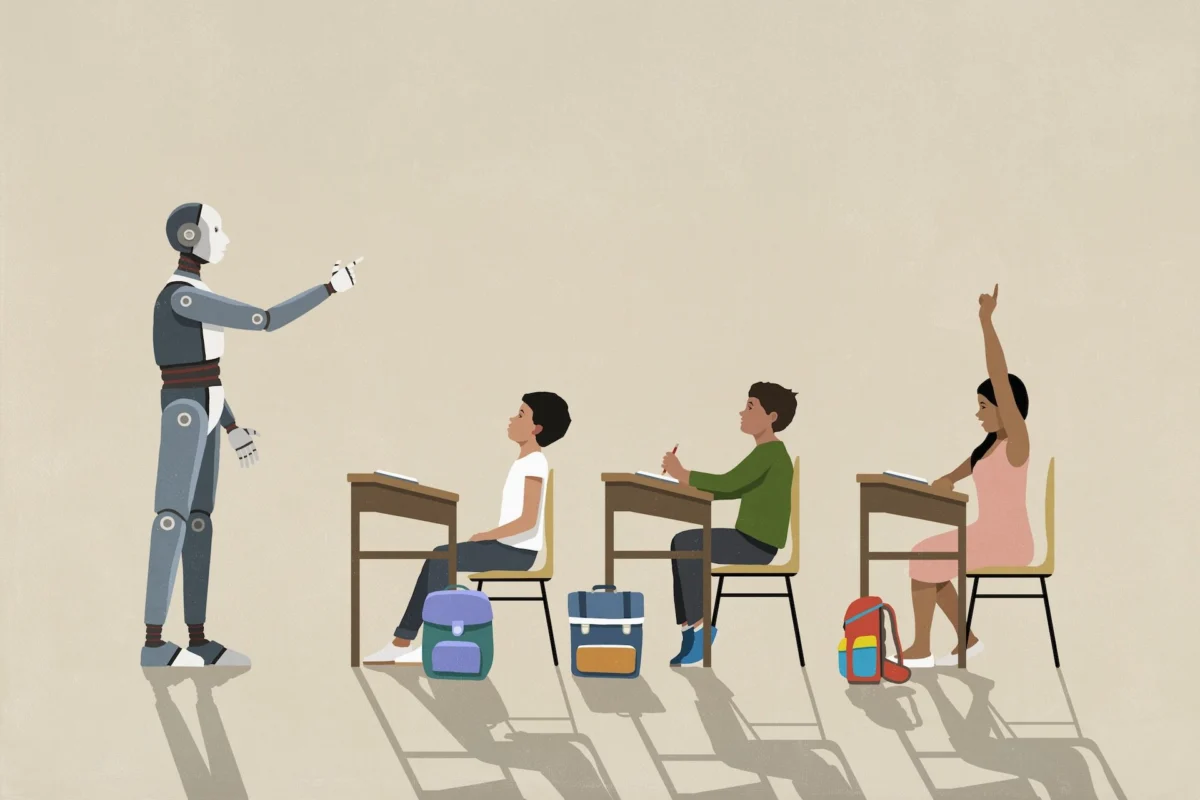
The implications of Harvard’s move are vast. If a premier institution like HBS can successfully integrate AI avatars into its curriculum, it sets a precedent that will likely ripple through the entire higher education sector.
1. The Democratization of Elite Education
The primary promise of this technology is the decoupling of high-quality mentorship from the constraints of human time and geography. By cloning the feedback styles of top-tier professors, HBS is essentially creating an "infinite faculty" that can scale to meet the needs of global learners.
2. The Shift in Pedagogical Role
If the AI handles the iterative feedback loops—the "reps" of practice—what happens to the role of the human professor? Educators in the near future may shift from being primary information providers to becoming "curators of digital experience." Their job will be to design the prompts, curate the data sets that inform the avatars, and step in only when the AI reaches its limitations.
3. Ethical and Psychological Considerations
The psychological impact of learning from a machine that looks and speaks like a mentor cannot be ignored. While students currently report high satisfaction, there are long-term questions about the quality of the "emotional" relationship between student and avatar. Can an AI truly mentor a student, or is it merely a sophisticated mirror for their own thoughts?
4. Market Disruption
The success of the $699 Foundry bootcamp poses a challenge to traditional, high-cost MBA programs. If a student can receive a comparable level of iterative feedback from an AI-driven program for a fraction of the cost, the value proposition of the traditional $100,000+ degree may face intense scrutiny from market forces.
Conclusion: A New Frontier
As the summer of 2026 draws to a close, the HBS Foundry experiment stands as a landmark in the integration of AI into academia. While the technology is not yet perfect—the "frozen smile" of the avatar serving as a reminder of the machine’s artifice—the pedagogical value is becoming increasingly clear.
Harvard is not merely replacing faculty; it is attempting to amplify them. Whether this leads to a new golden age of accessible, high-quality education or a sterile, machine-mediated experience remains to be seen. What is certain is that the classroom of the future is no longer defined by four walls, but by the bandwidth of the connection between the student and the digital mind of their mentor. As we move forward, the question will no longer be whether we should use AI in education, but how we can ensure that these digital avatars preserve the humanity that sits at the heart of learning.