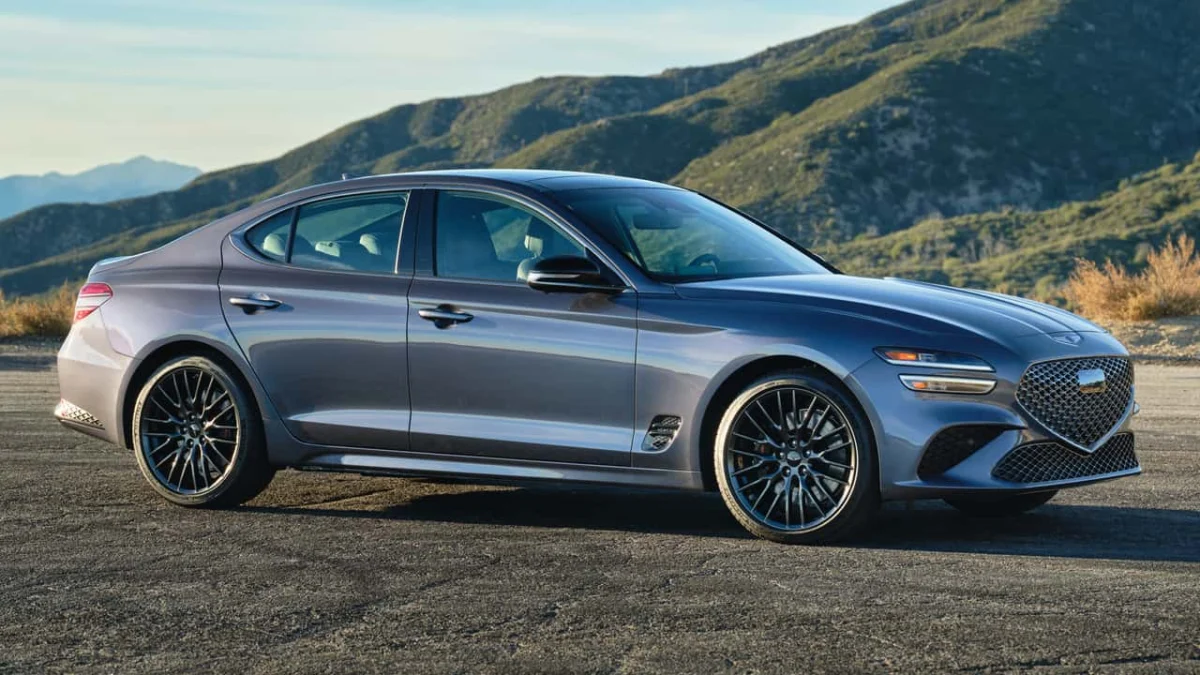
The automotive landscape is shifting at a breakneck pace, and it appears another enthusiast-favorite powertrain is facing the chopping block. For the past several years, the Genesis G70 has stood as a compelling, high-value alternative to the German compact luxury sedan establishment, largely thanks to its punchy, character-filled 3.3-liter twin-turbocharged V6 engine. However, recent data from the United States government’s fuel economy portal suggests that the "fun" chapter of the G70’s life may be drawing to a premature close.
As we look toward the 2027 model year, the V6-powered iteration of the Genesis G70 is conspicuously absent from official fuel economy listings. For a car that built its reputation on being a driver’s machine—a direct competitor to the BMW 3 Series and Audi A4—this omission signals a significant pivot in strategy for the Korean luxury automaker.
The Heart of the Machine: A Brief History
When the Genesis G70 first arrived on the North American scene for the 2019 model year, it made an immediate splash. Sharing a platform with the Kia Stinger, the G70 was engineered with a chassis-first philosophy. While the entry-level four-cylinder models were perfectly adequate, the true crown jewel was the optional 3.3-liter twin-turbocharged V6.
Capable of producing 365 horsepower and 376 pound-feet of torque, the engine was mated to an eight-speed automatic transmission and offered in both rear-wheel-drive and all-wheel-drive configurations. It transformed the G70 from a stylish luxury commuter into a legitimate sport sedan, capable of pinning passengers to their seats and carving through winding canyon roads with a level of agility that took many automotive journalists by surprise.
Throughout its lifecycle, the V6 variant remained the enthusiast’s choice. It offered a level of linear power delivery and a visceral exhaust note that the smaller displacement four-cylinder engines simply could not replicate.
Chronology: From Launch to Sunset
To understand the significance of this potential change, one must look at the trajectory of the G70:
- 2019: The Genesis G70 makes its North American debut, immediately garnering praise for its driving dynamics and premium interior.
- 2022: Genesis introduces a significant mid-cycle refresh. The styling is sharpened to match the "Athletic Elegance" design language seen on the flagship G90 and GV80, further cementing the car’s visual appeal.
- 2024: Rumors begin to circulate that the G70’s days are numbered, with reports suggesting that Genesis has no immediate plans for a direct, combustion-powered successor.
- 2025: Speculation mounts regarding a potential "second facelift" to keep the model relevant in the face of aging architecture.
- 2026/2027: Official US government fuel economy websites list only the 2.5-liter four-cylinder powertrain for the 2027 model year, marking the effective disappearance of the 3.3-liter V6 from the consumer catalog.
The Supporting Data: What Does the 2027 Lineup Look Like?
If the current federal filings hold true, the 2027 Genesis G70 will be simplified to a single engine choice: the turbocharged 2.5-liter four-cylinder. This engine is no slouch, delivering a respectable 300 horsepower and 311 pound-feet of torque, paired with the same eight-speed automatic transmission that has served the G70 well.
While the 2.5-liter engine is modern, efficient, and sufficient for daily driving, it represents a departure from the "performance-first" branding that defined the G70’s peak. Enthusiasts will note the loss of 65 horsepower and, more importantly, the loss of the dual-turbo setup that provided the G70 with its unique personality. This transition mirrors a broader industry trend where manufacturers are aggressively downsizing displacement to meet stricter emissions standards and improve fleet-wide fuel efficiency ratings.
Silence from the Source: The Official Stance
In light of these findings, Motor1 reached out to Genesis representatives for an official comment regarding the status of the 3.3-liter twin-turbo V6. At the time of this publication, the automaker has yet to confirm the discontinuation of the engine.
In the past, when rumors of the G70’s demise began to swirl, Genesis was quick to push back, maintaining that the model remained a vital part of its lineup. However, silence regarding specific powertrain availability is often a precursor to a quiet, phased-out transition. Automakers rarely make public announcements about the discontinuation of specific engine options, preferring instead to let the order banks reflect the changes as the new model year approaches.
The Implications: Why It Matters
The potential removal of the V6 from the G70 lineup carries significant weight for several stakeholders:
1. The Enthusiast Market
For the driving enthusiast, the death of the V6 G70 represents one fewer option in a shrinking segment. With the Kia Stinger already defunct and many European rivals moving toward hybrid-assisted four-cylinders or pure electric powertrains, the traditional "small sedan, big engine" formula is becoming an endangered species. The loss of this specific powertrain removes a unique flavor from the market.
2. The Brand Strategy
Genesis is currently in a state of rapid evolution. With the launch of its first hybrid systems and the massive expansion of its SUV lineup—including the flagship GV90—the brand is clearly prioritizing electrification and luxury utility over traditional sports sedans. The G70, while an excellent vehicle, is an aging platform. Focusing the brand’s resources on new, high-margin SUVs and advanced EV platforms is a logical, if disappointing, business decision.
3. Future Resale and Collector Value
As the V6 G70 becomes a "discontinued" item, it is likely to see a shift in its resale profile. Well-maintained, low-mileage V6 models may eventually become sought-after commodities for those who appreciate the last generation of non-electrified, performance-oriented Genesis engineering.
What Lies Ahead?
While the future of the G70 remains somewhat mysterious, there is still hope for those who crave performance from the Korean luxury brand. Rumors persist that Genesis may be planning a second facelift for the G70, which could potentially see the sedan soldier on through the end of the decade.
Furthermore, the brand’s "Magma" performance sub-brand suggests that Genesis is not giving up on high-performance vehicles; they are simply changing the medium through which they deliver that performance. Whether that means a high-output electric G70 successor or a more powerful hybrid setup remains to be seen.
The Motor1 team remains optimistic that even if the 3.3-liter V6 is retired, Genesis will eventually fill the void with an engine option that captures the same spirit. The brand has proven time and again that it can punch above its weight class, and it is unlikely to abandon the segment entirely without a competitive answer.
As we wait for official confirmation on the 2027 model year specifications, one thing is certain: the era of the V6 G70 is coming to a close. For those who have always wanted to put one in their driveway, the window of opportunity is rapidly closing. The G70 has been a standout performer in a crowded field, and regardless of what engine sits under the hood in 2027, its contribution to the Genesis brand’s rise to prominence will not be forgotten.
Editor’s Note: This article will be updated as soon as official information regarding the 2027 model year powertrain availability is provided by Genesis. Stay tuned to Motor1 for the latest news on this evolving story.