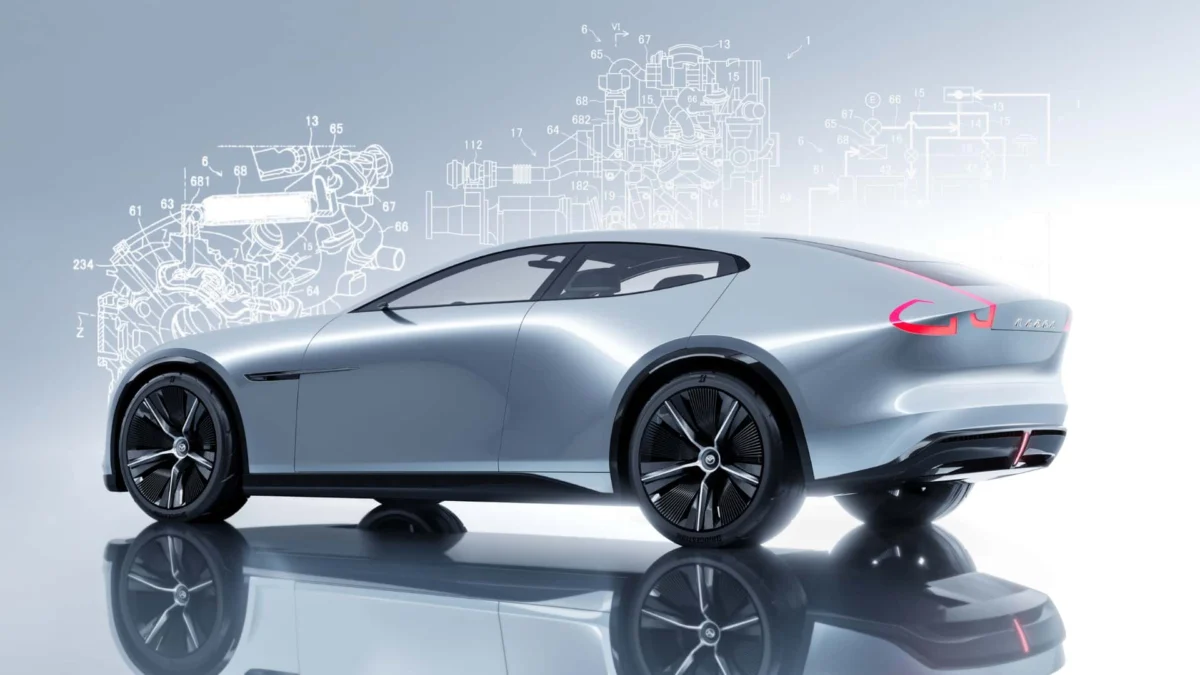
For decades, the automotive world has treated the rotary engine as a relic—a fascinating, high-revving artifact of 20th-century engineering that simply couldn’t survive the tightening grip of global emissions standards. Yet, Mazda, the only automaker to ever truly master the Wankel engine, has refused to let the dream die. In a bold move that combines decades of heritage with cutting-edge thermodynamic research, the Japanese manufacturer has unveiled a new patent for an advanced Exhaust Gas Recirculation (EGR) system, proving that the rotary engine still has a place in a greener future.
The Core Innovation: Solving the Rotary’s "Hot" Problem
The rotary engine—famed for its compact size, lack of reciprocating mass, and incredible power-to-weight ratio—has always suffered from a fundamental flaw: thermal management and emissions control. Because the combustion chambers move through the housing, they are notoriously difficult to cool and seal effectively, often requiring a "fuel-rich" mixture to lower internal temperatures and prevent premature detonation or component failure.
This fuel-rich approach is the rotary’s Achilles’ heel. It leads to poor fuel economy and high hydrocarbon emissions. To address this, Mazda’s latest patent, recently uncovered by industry analysts, details a sophisticated dual-port exhaust gas recirculation system.
By strategically pumping cooled exhaust gases back into the engine’s intake, the system lowers the peak combustion temperatures. This prevents the need for an excessively rich fuel mixture, allowing the engine to operate closer to a "stoichiometric" air-fuel ratio—the ideal balance for complete combustion and reduced emissions.
How the System Works: A Masterclass in Space Efficiency
The technical brilliance of this new patent lies in its integration. In a traditional piston engine, adding an EGR system is a matter of plumbing and valve management. In a rotary engine, where space is at an absolute premium, external piping is often an impossibility.
Mazda’s design utilizes a dual-port exhaust architecture:
- The Side Port: This port opens early in the combustion cycle to route high-temperature exhaust gases directly to the turbocharger, ensuring quick spooling and responsive performance.
- The Peripheral Port: This port opens later in the cycle, capturing cooler gases. These gases are routed through a passage cast directly into the engine’s side structural housing.
By running this passage adjacent to the engine’s internal cooling circuit, the exhaust gas is cooled further by the engine’s own coolant before it even reaches the intake. This ingenious "in-housing" design allows the engine to utilize a much smaller external cooler, solving the packaging issues that have plagued rotary designs for years.
A Chronology of the Rotary: From Cosmo to the Modern Era
Mazda’s obsession with the rotary engine is not a recent development; it is the cornerstone of the company’s corporate identity.
- 1961: Mazda, then known as Toyo Kogyo, signs a licensing agreement with NSU/Wankel to develop the rotary engine. A dedicated research department is formed, famously staffed by engineers who would eventually be known as the "47 Samurai."
- 1967: The launch of the Cosmo Sport 110S. It was the world’s first mass-produced car with a twin-rotor engine, solidifying Mazda’s reputation for defying conventional engineering wisdom.
- 1970s–1990s: The "Golden Age" of the rotary. The RX-2, RX-3, and the legendary RX-7 series cemented the rotary’s status in both motorsport and the tuner community, dominated by the silky-smooth delivery of the 13B engine.
- 2003–2012: The RX-8 era. While the Renesis engine was an engineering triumph, it struggled to meet tightening global emissions regulations, eventually leading to its discontinuation.
- 2023–Present: The Range-Extender Era. Mazda surprised the world by using a single-rotor engine as a generator in the MX-30 R-EV. This vehicle serves as a testing ground for modern rotary technology, proving that the engine can be used to meet modern efficiency mandates.
Implications for Future Performance Vehicles
What does this mean for the enthusiast? For years, rumors have swirled regarding a successor to the RX-8—a "Spirit of Le Mans" sports car that could finally bring the rotary back to the showroom floor.
If Mazda can maintain a stoichiometric air-fuel ratio under high-load conditions using this new EGR system, the implications are massive. A cleaner, more efficient rotary engine is not only easier to certify for emissions in markets like Europe and North America, but it also allows for higher power output without the penalty of catastrophic fuel consumption.
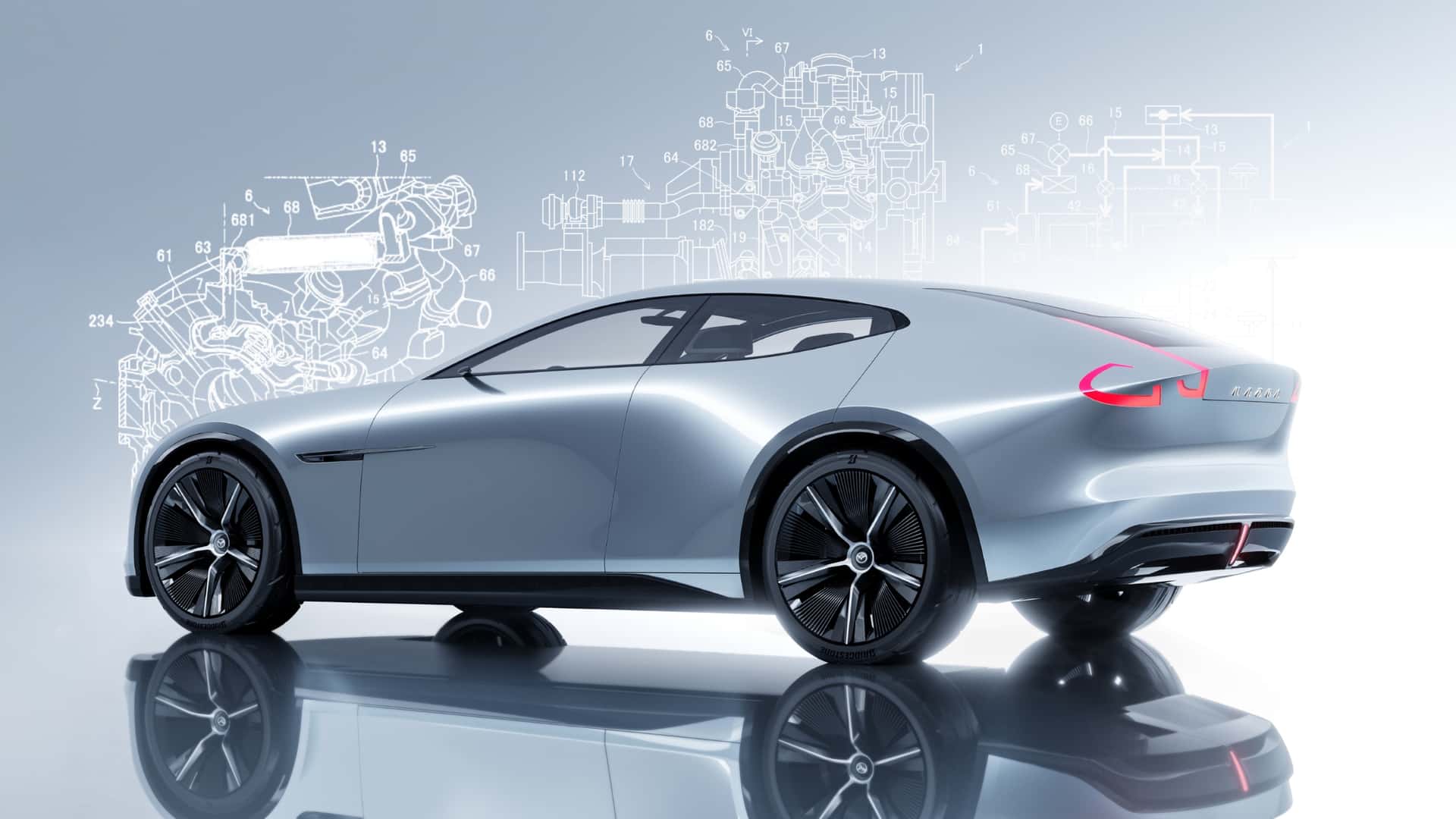
Furthermore, by integrating the EGR system into the engine housing, Mazda is reducing weight and complexity. This aligns with the company’s "gram strategy," where every ounce of weight saved contributes to the vehicle’s driving dynamics. If this technology is successfully implemented, we could see a new generation of high-revving, lightweight sports cars that offer the unique driving experience only a rotary can provide, all while adhering to the strict environmental standards of the 2020s.
Official Responses and Strategic Direction
While Mazda remains tight-lipped about a specific production vehicle utilizing this patent, their actions speak louder than their press releases. In various interviews, Mazda executives have repeatedly stated that the rotary engine is a "symbol of the company" and that they are "continuously researching" ways to evolve the technology.
The inclusion of an EGR system in the MX-30 R-EV was the first sign that Mazda was serious about "modernizing" the rotary. This latest patent serves as the next logical step. It confirms that the company is not looking for a "quick fix" but is instead investing in the deep, foundational engineering required to make the rotary viable for the long term.
Industry analysts suggest that this technology is likely aimed at future hybrid-rotary powertrains. By pairing an electric motor’s low-end torque with a high-revving, emissions-compliant rotary engine, Mazda could create a hybrid system that is both engaging for the driver and environmentally responsible.
The Road Ahead: Why the Rotary Still Matters
The automotive industry is currently in the midst of a massive transition toward electrification. In this landscape, why would a major automaker spend millions of dollars on a technology that many consider obsolete?
The answer lies in the rotary’s unique characteristics. It is smaller, lighter, and has fewer moving parts than a traditional piston engine. In a hybrid setup, the rotary is the perfect "range extender" or power generator because it can operate at a constant, efficient RPM—the ideal scenario for the Wankel cycle.
Furthermore, there is the "emotional" factor. Mazda’s brand identity is built on the joy of driving. The rotary engine provides a driving experience—the smooth power delivery, the high-pitched exhaust note, and the feeling of a motor that begs to be revved—that traditional four-cylinder engines struggle to replicate.
Conclusion: A Step Toward the Future
Mazda’s new EGR patent is more than just a document filed with a government office; it is a declaration of intent. It proves that the "47 Samurai" spirit of innovation is alive and well in Hiroshima. By tackling the rotary engine’s biggest weakness—its thermal inefficiency—with such a clever, integrated solution, Mazda is proving that it is possible to balance heritage with the demands of the modern world.
As we look toward the mid-2020s, the prospect of a high-performance, emissions-compliant rotary engine seems less like a pipe dream and more like an impending reality. Whether this tech makes its way into a dedicated sports car or a range of advanced hybrids, one thing is clear: Mazda is not ready to turn the page on the rotary engine just yet. They are writing a new chapter, one that proves that some of the best ideas in history are worth the effort to save.
For the millions of fans who have waited years for a true RX-successor, this patent is the most promising sign yet that the next great Mazda sports car will be powered by the technology that made the brand a legend in the first place. The rotary is not dead; it is evolving. And in the world of high-performance automotive engineering, that is a very exciting prospect indeed.