For fifteen years, from 1980 to 1995, the American newspaper landscape was irrevocably altered by a single-panel comic that defied every convention of the medium. While contemporaries like Charles Schulz’s Peanuts or Jim Davis’s Garfield relied on a stable ensemble of recurring characters to build long-term narrative arcs, Gary Larson’s The Far Side operated on a philosophy of radical impermanence. Every morning, readers were dropped into a fresh, often surreal, and invariably dark scenario that rarely saw the same protagonist twice.
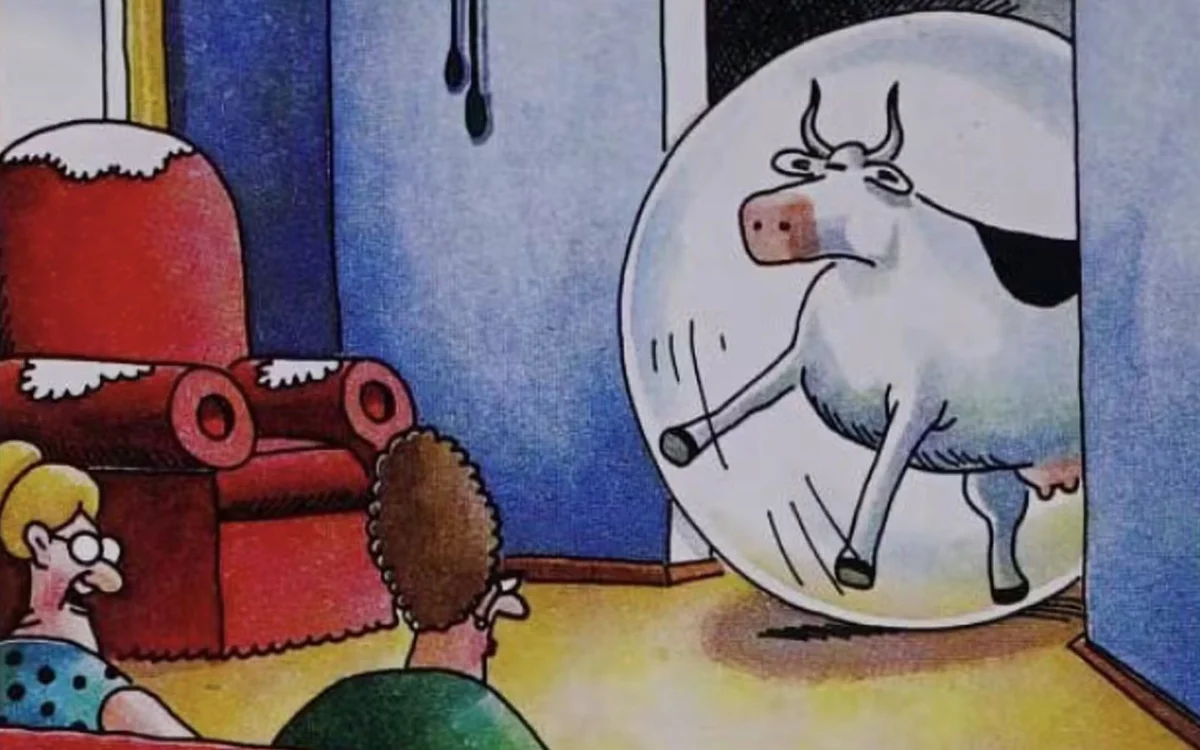
Yet, amidst the chaos of aliens, cavemen, and suburbanites, one creature emerged as a consistent, albeit unlikely, protagonist: the cow. Over the course of 4,337 published strips, Larson returned to the bovine form with a persistence that bordered on obsession. To understand The Far Side is to understand the cow—a figure Larson once described as a "tragic" presence capable of bridging the gap between profound absurdity and human-like folly.
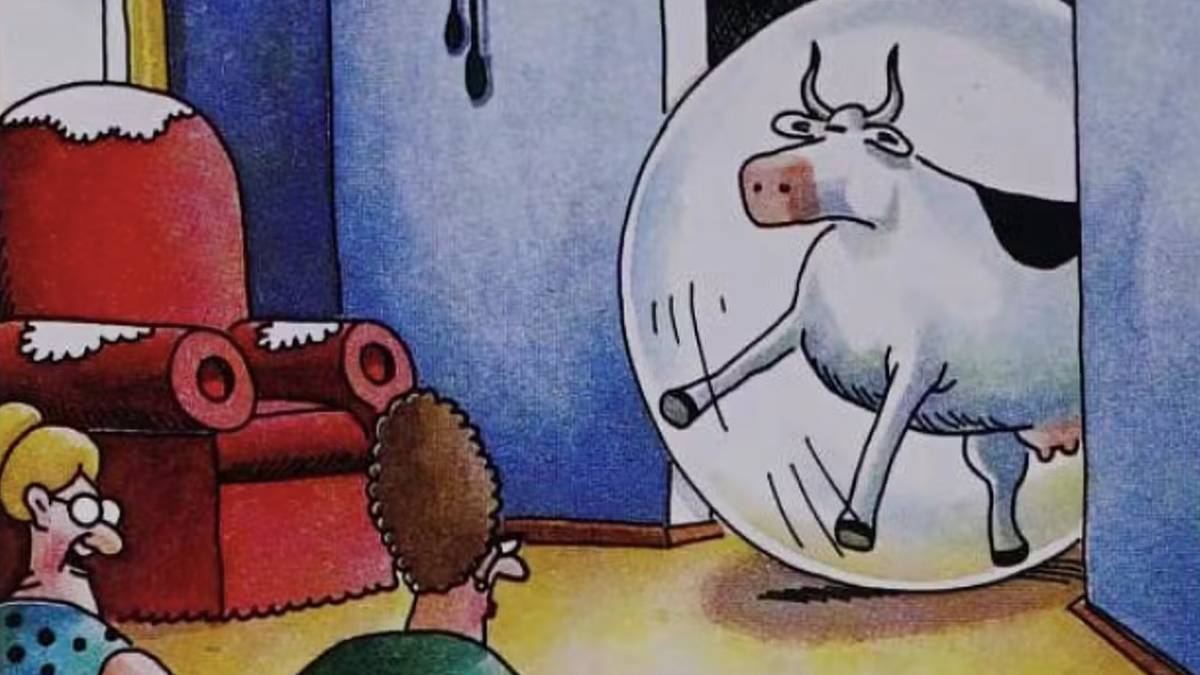
The Evolution of a Comic Icon
The genius of The Far Side lay in its ability to toggle between high-concept intellectualism and the kind of "stupid-funny" gags that transcended age gaps. Larson’s work was rarely aimed at children, yet its visual language was so potent that it captivated an entire generation.
Larson’s fascination with cows was not merely an aesthetic choice; it was a conceptual one. As he noted in a 1998 interview with The New York Times, there is an inherent, inexplicable humor in the word "cow." Beyond the linguistic quirk, Larson viewed them as conduits for exploring the mundane aspects of life. By placing cows in human situations—attending social functions, working in offices, or engaging in secret, villainous plots—he forced readers to confront the absurdity of their own daily existence.

A Chronology of the Bovine Lens
Larson’s career was marked by a constant output of high-quality, singular-panel gags. His portrayal of cows shifted over time, moving from simple observational humor to complex, dark, and often macabre commentary.
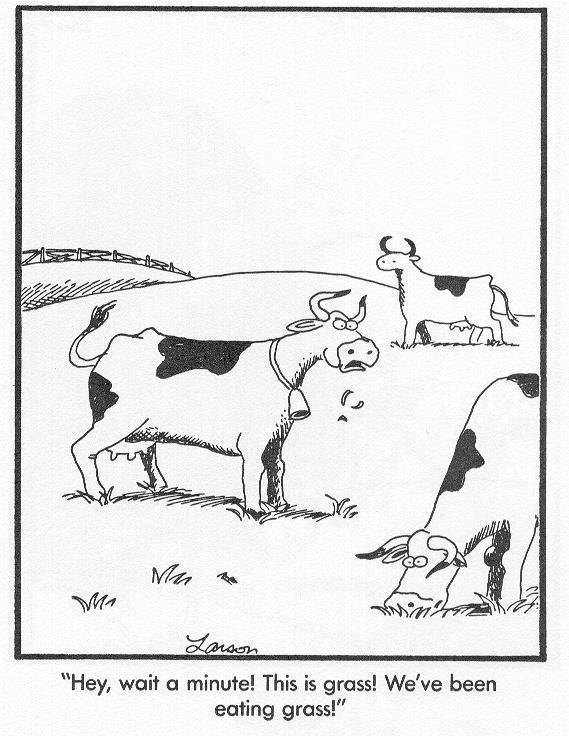
- 1981: The Simple Realization. In October 1981, Larson published a piece that perfectly encapsulated the "basic" humor of his strip: a cow having a sudden, existential realization about its diet of grass. It was a bridge between the animal world and the human capacity for regret.
- 1982: The "Cow Tools" Controversy. Perhaps the most famous, and misunderstood, moment in the history of the strip occurred on October 28, 1982. The panel, titled "Cow Tools," depicted a table of misshapen, crude, and non-functional instruments. The public backlash was immediate. Readers were bewildered, searching for deep scientific or historical metaphors that simply weren’t there. It remains the definitive example of an audience overthinking a creator’s simple desire to be "silly."
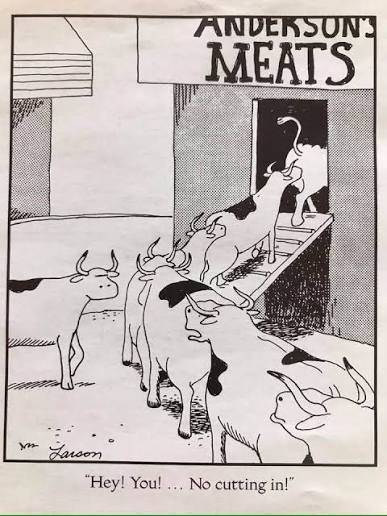
- 1983-1987: The Dark Turn. By the mid-80s, Larson had mastered the ability to blend the surreal with the macabre. Strips from this era, including depictions of cows at the slaughterhouse or plotting against their human owners, showcased a darker edge that set The Far Side apart from the softer, more family-friendly comics of the era.
The Thagomizer: When Fiction Becomes Science
One of the most profound implications of Larson’s work is the legacy of the "Thagomizer." In a 1982 strip, a caveman professor points to the spiky tail of a Stegosaurus and labels it a "thagomizer" in honor of "the late Thag Simmons."
At the time, the anatomical structure on the end of a Stegosaurus tail had no formal scientific name. The joke was so catchy and the visual so clear that the paleontological community eventually adopted the term. Today, "thagomizer" is the standard scientific term for the four spikes found on the tails of Stegosaurids. This stands as a rare testament to the influence of cartooning on legitimate scientific discourse, proving that even a joke about a prehistoric cow-like dinosaur could have lasting academic impact.
Official Responses and Creative Intent
Larson was famously guarded about his work, often letting the panels speak for themselves. However, the "Cow Tools" incident forced his hand. In an official press release issued the day after the comic’s publication, Larson expressed regret that his "fondness for cows" had created such confusion.
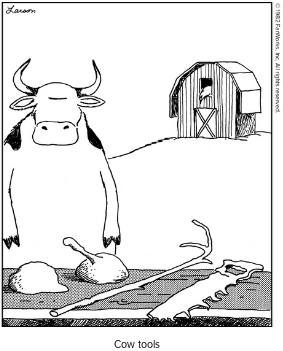
He clarified that the tools were intended to be "sorry specimens," emphasizing that the humor was derived from the lack of sophistication in the creatures’ handiwork. This transparency was uncharacteristic for the era, as most cartoonists rarely addressed their readership directly, but it solidified the bond between Larson and his fans. It established a precedent: the creator was not necessarily the source of the "truth," but he was an active participant in the dialogue surrounding his work.
Implications: The Legacy of the Surreal
The impact of The Far Side on the comic industry is difficult to overstate. Larson proved that a newspaper strip did not need a recurring cast or a traditional narrative structure to find long-term success. By utilizing a "single-panel" format, he could pivot daily between different genres—science fiction, history, biology, and domestic drama—without losing his core identity.
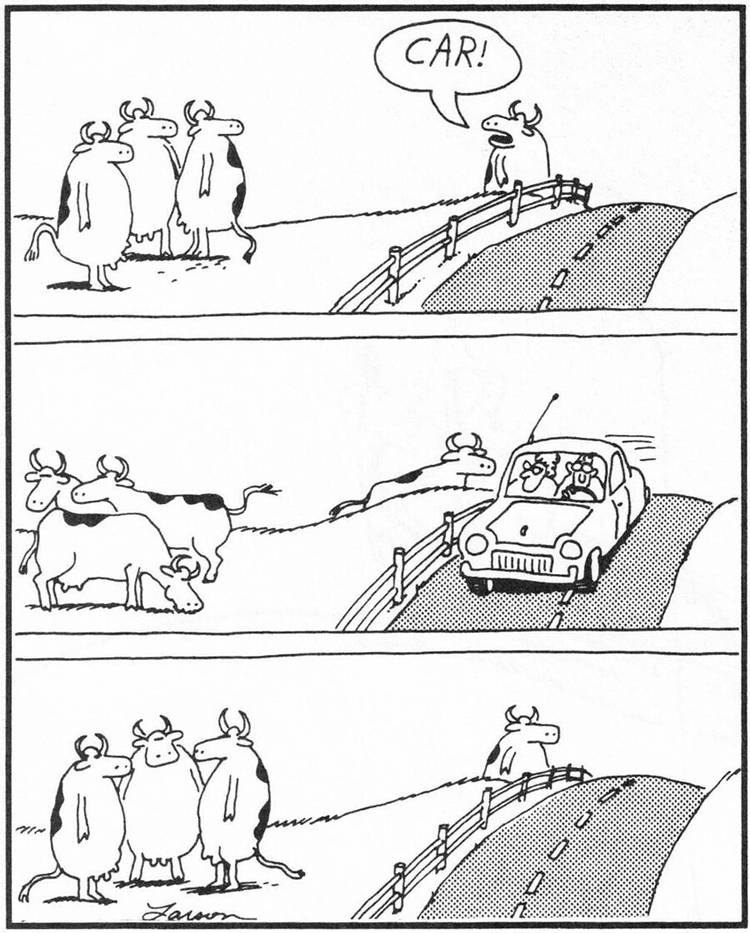
Furthermore, his portrayal of cows as sentient, conspiratorial, and sometimes bumbling beings changed the way we interact with animal-centric humor. He stripped away the "cute" factor found in animals in other comics, replacing it with a slightly unsettling, anthropomorphic wit.
Why Cows?
The reason Larson returned to cows so frequently remains a subject of debate among pop-culture historians. Some argue it was an exercise in repetition, a way to test how many different jokes could be mined from a single, static image. Others suggest it was a genuine reflection of his love for biology. Whatever the motivation, the results were consistent:
- Versatility: A cow can be a farmer, a scientist, a victim, or a mastermind.
- Tragedy: As Larson noted, the cow is a tragic figure. It stands in a field, seemingly oblivious to the world, yet often aware of its own limitations.
- The "Blank Slate": The cow’s face is inherently passive, making it the perfect canvas for whatever emotion or situation Larson projected onto it.
Conclusion: The Infinite Panel
As we look back at the nearly 4,500 panels produced during the strip’s original run, it is clear that Gary Larson’s cows were never really about the cows at all. They were, and remain, a reflection of the human condition. Whether they are pondering their dinner, trying to operate machinery, or standing in line at a slaughterhouse, they represent our own anxieties, our own failures to master our environment, and our own capacity to laugh in the face of the absurd.
In the end, The Far Side did more than just provide a morning laugh; it invited readers to look at the world through a skewed, bovine lens. It challenged the necessity of recurring characters, questioned the seriousness of scientific naming conventions, and successfully argued that a "moo" could, under the right circumstances, be the funniest word in the English language. Even decades later, as these panels continue to circulate in digital spaces, the humor remains as sharp and as vital as ever—a timeless testament to one man’s fixation on the funniest, most tragic creatures in the barnyard.