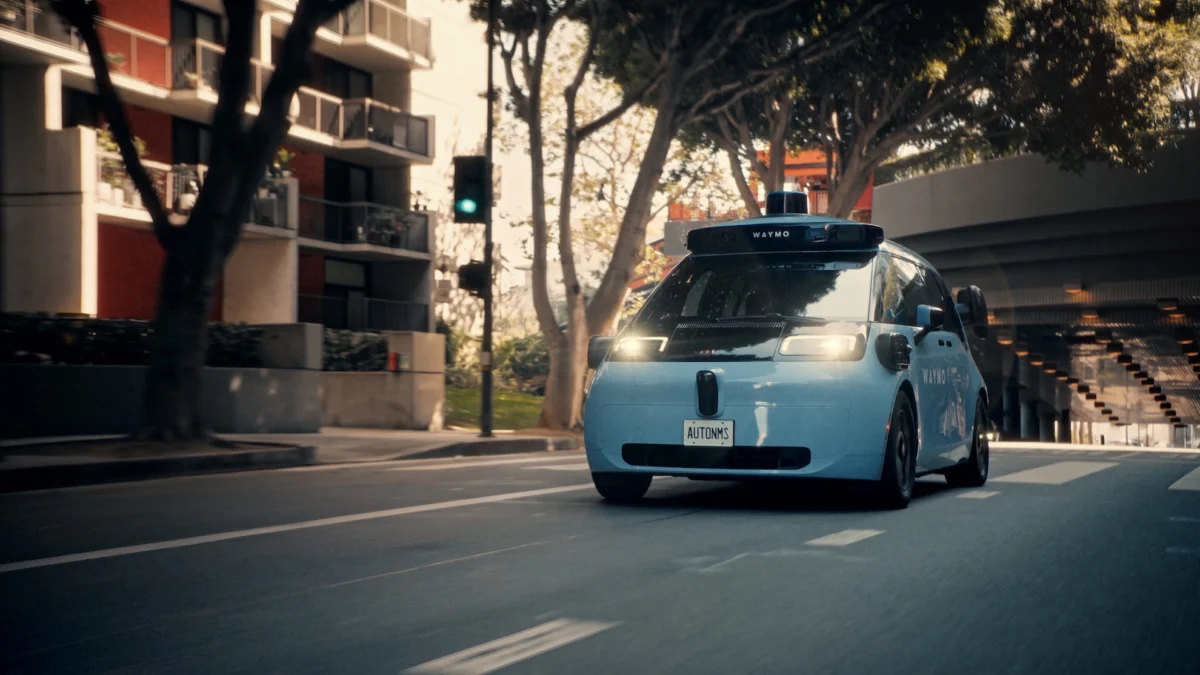
The landscape of urban mobility is undergoing a tectonic shift. Waymo, the autonomous driving subsidiary of Alphabet Inc., has officially launched its next-generation robotaxi—the "Ojai"—into active commercial service across Los Angeles, Phoenix, and San Francisco. This deployment marks more than just an operational update; it signifies the transition from the experimental, high-cost era of autonomous ride-hailing to a phase defined by mass-market scalability, logistical efficiency, and a renewed pursuit of profitability.
By integrating the Ojai into its daily fleet, Waymo is signaling that it is ready to move beyond the "stopgap" reliance on modified luxury vehicles and toward a purpose-built future.
The Core Facts: Introducing the Ojai
The Ojai (pronounced "oh-hi") represents the physical manifestation of Waymo’s sixth-generation self-driving hardware and software stack. Unlike its predecessor, the Jaguar I-Pace—an all-electric luxury crossover retrofitted with a dense array of sensors—the Ojai is a purpose-built minivan platform designed from the ground up for the specific rigors of ride-hailing.
Currently, riders in Waymo’s three primary markets may find themselves matched with an Ojai when requesting a trip via the app. While the company currently operates approximately 300 of these vehicles, the intention is to provide riders with a choice between the Ojai and the existing Jaguar fleet as supply increases.
Beyond its mechanical design, the Ojai introduces a sophisticated in-car experience. It features a redesigned user interface and integrates Google’s Gemini AI, which serves as an interactive, intelligent in-car assistant. This integration of generative AI aims to provide a more intuitive and responsive environment for passengers, effectively bridging the gap between a simple ride-hail service and a high-tech mobile lounge.
A Chronology of Progress: From Prototype to Production
Waymo’s path to the Ojai has been years in the making, defined by strategic partnerships and rigorous testing.
- December 2021: Waymo announced a landmark partnership with Zeekr, the premium electric vehicle brand owned by the Chinese conglomerate Geely Holding Group. The goal was clear: co-develop a bespoke, all-electric autonomous vehicle for the U.S. market.
- The Development Phase (2022–2024): Throughout this period, Waymo focused on testing prototypes. These vehicles were built on Zeekr’s "Sustainable Experience Architecture" (SEA-M), a modular platform specifically engineered to support vehicles like ride-hailing shuttles and autonomous delivery pods.
- Production-Intent Testing: Waymo spent the intervening years refining the integration of its sixth-generation autonomy stack into the SEA-M platform, ensuring the vehicle could withstand the near-constant, high-mileage demands of a commercial fleet.
- Mid-2026 Expansion: Following successful pilot programs, Waymo officially moved the Ojai into the commercial fold. The company has also signaled its intent to expand the Ojai’s footprint into Denver, Las Vegas, and San Diego before the end of the calendar year.
Supporting Data: The Logistics of Scale
The transition to the Ojai is not merely a design choice; it is a mathematical imperative. According to research from the New York-based firm MoffettNathanson, Waymo is rapidly accelerating its imports of the Ojai. By analyzing shipping data and receipts, the firm projects that Waymo is on track to bring 5,000 Ojai vehicles into the United States by the end of 2026.
To put this in perspective, 5,000 units would more than double the size of Waymo’s current Jaguar-based fleet. In July 2026 alone, import logs indicated that 725 units arrived in the U.S., showcasing the sheer pace of the company’s supply chain expansion.
However, this scaling effort faces significant macroeconomic hurdles. Because the base vehicles are manufactured in China, they are subject to steep U.S. import tariffs. This adds a layer of cost to every unit brought into the country. To mitigate risks and ensure regulatory compliance, Waymo imports the base vehicles without Chinese-made connected-car software. Once they arrive at Waymo’s facility in Arizona, the vehicles are retrofitted with the proprietary Waymo Driver system, ensuring that the critical "brain" of the vehicle remains entirely under Waymo’s control.
Implications for the Industry and the Consumer
The introduction of the Ojai has profound implications for the future of transportation, the economics of ride-hailing, and the global automotive supply chain.
1. The Economics of the Robotaxi
The Jaguar I-Pace served Waymo well as a vehicle to prove the technology worked, but it was never intended to be the primary vehicle for a mass-market business. It was expensive to purchase, complex to modify, and difficult to maintain at scale. The Ojai, conversely, is a minivan designed for ease of access, passenger comfort, and long-term durability. By utilizing a modular platform that is cheaper to build and service, Waymo is lowering the "unit cost" per ride—a critical step toward achieving sustainable profitability.
2. A Shift in Global Automotive Manufacturing
Waymo’s reliance on a Chinese-manufactured vehicle highlights a paradox in the current autonomous vehicle (AV) landscape. Despite the geopolitical friction between the U.S. and China regarding technology, U.S. companies are finding that the most efficient path to hardware scale often lies in partnering with Chinese manufacturers who have already perfected electric vehicle (EV) platforms. This reliance creates a complex dynamic: Waymo must balance the cost-efficiency of the Zeekr platform against the political and economic reality of trade tariffs.
3. The "Gemini" Experience
The inclusion of Google’s Gemini AI marks the next frontier of in-car tech. For years, the user experience in robotaxis was limited to a screen showing the route and the vehicle’s "vision." With a generative AI assistant, the vehicle becomes an interactive environment. This could eventually lead to personalized experiences, such as the car suggesting points of interest based on the rider’s profile, managing climate controls via natural language, or providing real-time information about the destination.
Official Responses and Strategic Outlook
Waymo has remained focused on the "modular" nature of its sixth-generation system. By designing the self-driving stack to be platform-agnostic, the company has ensured that its technology is not tethered to a single vehicle model. While the Ojai is the current star of the fleet, this modularity allows Waymo to swap out vehicle types in the future should supply chain conditions, regulations, or consumer preferences shift.
Industry analysts note that Waymo’s expansion into Denver, Las Vegas, and San Diego represents a "land grab" strategy. By scaling quickly across diverse climates and topographies, Waymo is attempting to widen its lead over competitors, effectively setting the standard for what a commercial robotaxi network looks like in the 21st century.
Looking Ahead
As Waymo continues to scale its Ojai fleet, the primary challenges will be navigating the regulatory environment and maintaining public trust. The transition from a "novelty" to a "utility" is never seamless. The company must prove that its increased fleet size does not lead to increased operational friction or diminished safety standards.
If Waymo can successfully scale the Ojai to the projected 5,000 units while keeping maintenance costs low and service availability high, it may well prove that the long-promised "robotaxi revolution" is not just a technological feat, but a viable, profitable business model that will fundamentally change how cities move.
The Ojai is not just a car; it is a signal that Waymo is no longer playing for the future—it is building it, one van at a time.