The American housing landscape is currently undergoing a structural transformation not seen since the pre-pandemic era. According to recent data from the Redfin Data Center, the United States is officially in one of the most significant buyer’s markets on record. While the average consumer may be forgiven for feeling that the “affordability crisis” makes the market feel anything but buyer-friendly, the raw statistics tell a compelling story of shifting leverage.
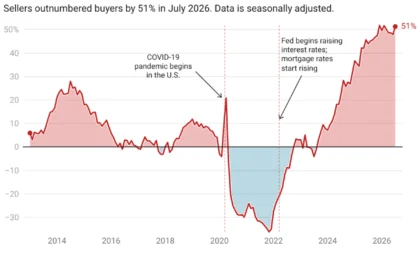
As of mid-2026, sellers outnumber buyers by over 51%—a near-record disparity. With an estimated 1.46 million sellers vying for the attention of just 966,000 active buyers, the traditional rules of real estate engagement are being rewritten. However, this is not a return to the "easy" market of the past; it is a complex, high-stakes environment defined by economic volatility and a profound disconnect between supply and demand.
The Chronology of a Market in Transition
To understand why the market feels so paradoxical, we must examine the trajectory of the last five years.
The Pandemic Peak (2020–2022)
The housing market of 2021 was characterized by a "fear of missing out" (FOMO) mentality. Fueled by historically low interest rates and a sudden shift in remote work preferences, demand skyrocketed. Buyers competed in frantic bidding wars, often waiving inspections and paying tens of thousands over asking price. This period effectively depleted inventory and created an unsustainable inflationary bubble in home prices.
The Cooling Period (2023–2025)
As the Federal Reserve moved to curb inflation, mortgage rates climbed, effectively putting the brakes on buyer demand. However, supply did not immediately follow suit. Many homeowners, locked into low-interest-rate mortgages from the pandemic era, refused to sell, leading to a "lock-in" effect that kept inventory historically low.
The 2026 Pivot
By July 2026, the cumulative weight of high mortgage rates, rising insurance costs, and economic uncertainty finally tipped the scales. The "buyer’s market" we see today is a result of a surge in inventory in specific regions—largely due to overbuilding in the Sun Belt—colliding with a consumer base that has become increasingly price-sensitive and hesitant.
Supporting Data: Where the Leverage Lies
The current market is defined by a massive regional divergence. Not all markets are experiencing this shift in the same way.
The Sun Belt: The Center of the Buyer’s Market
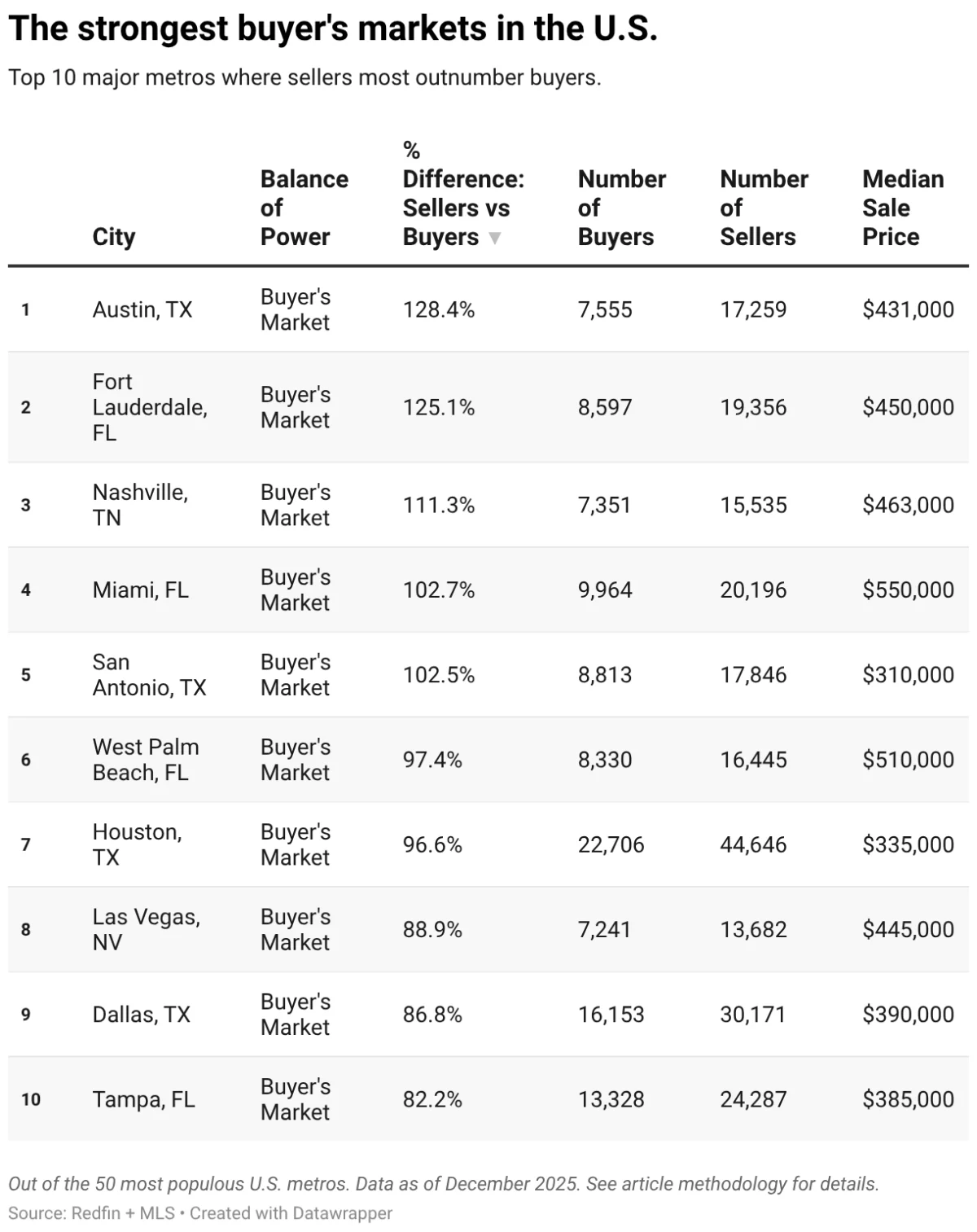
The Sun Belt, stretching from the Southeast to the Southwest, has become the primary battleground for buyers. Cities like Miami and Austin are currently the strongest buyer’s markets in the country.
- Inventory Glut: During the pandemic, developers rushed to meet demand with massive construction projects in Florida and Texas. Now, those homes are hitting the market exactly as buyer interest wanes.
- Climate & Insurance Factors: In Florida specifically, surging property insurance premiums and climate risks have added a "hidden cost" to homeownership, cooling demand and pushing inventory to record highs.
The Midwest and Northeast: The Last Bastions for Sellers
Conversely, the Midwest and Northeast maintain a tight grip on seller leverage. These regions have historically seen slower population growth and more conservative homebuilding patterns. With supply falling far short of demand, these areas remain competitive. Furthermore, San Francisco has emerged as an outlier, seeing a resurgence in demand driven by the influx of capital and high-income earners associated with the AI boom.
Defining the Metrics
Redfin categorizes a "buyer’s market" as any metro area where sellers outnumber buyers by at least 10%. Currently, 39 metros meet this criteria, and in 34 of them, buyers have seen their negotiating power increase significantly over the last quarter.
Official Perspectives and Economic Context
Market analysts and economists are viewing this transition with cautious optimism, though they acknowledge that the "affordability crisis" remains the primary obstacle to a healthy, functioning market.
The Impact of Economic Headwinds
The market does not exist in a vacuum. Several external pressures are influencing buyer behavior:
- Geopolitical Instability: The ongoing conflict in the Middle East and its subsequent impact on global oil prices and inflation continues to keep the Federal Reserve’s monetary policy tight.
- Trade Policy: Recent discussions regarding tariffs have injected a layer of uncertainty into the manufacturing and construction sectors, making the cost of building materials higher and less predictable.
- Immigration and Labor: The construction industry relies heavily on immigrant labor. Changes in immigration policy have historically impacted the cost and speed of new home builds, further complicating the supply-side equation.
The "Anomaly" Factor
Economists note that the current market is an anomaly. Usually, in a buyer’s market, home prices experience stagnant growth or decline. However, due to a severe shortage of affordable housing, prices in some sectors are still rising—even as buyers hold more leverage. This creates a "dual market" where luxury homes may see price cuts, but entry-level homes remain stubbornly expensive.
Strategic Implications: How to Navigate the Current Climate
Whether you are looking to enter the market or divest from it, the current climate demands a data-driven approach rather than a speculative one.
Guidance for Buyers
- Prioritize Concessions: In this market, buyers have the upper hand. Do not be afraid to ask for closing costs, repairs, or rate buydowns.
- Monitor "Days on Market": If a home has been sitting for over 30 days, the seller is likely feeling the pressure. This is where your leverage is strongest.
- Stay Local: The national average is just that—an average. Use the Redfin Data Center to drill down into the "months of supply" for your specific zip code. If the supply is above 6 months, you are firmly in the driver’s seat.
Guidance for Sellers
- Price Aggressively: In a market where buyers are cautious, overpricing is the quickest way to kill a sale. Analyze the most recent comparable sales—not the sales from six months ago.
- Highlight Value: If you are in a buyer’s market, your home must stand out. Professional staging, high-quality photography, and addressing necessary maintenance items are no longer "optional"—they are essential to attract a buyer who has many other options.
- Be Realistic about Timelines: Expect a longer closing process. With financing harder to secure, buyers may face more hurdles with lenders, requiring patience and flexibility.
Future Outlook: A Slow Path to Normalization
Looking toward the remainder of 2026 and into 2027, the outlook is one of gradual adjustment. While there will be bumps in the road, the consensus among housing experts is that the era of the "prolonged seller’s market" has concluded.
As price growth slows and, in some regions, even retreats, the market is expected to move toward a more balanced state. For the prospective homebuyer, this represents a unique window of opportunity. The competition that defined 2021 is largely absent, and while interest rates remain a hurdle, the ability to negotiate on price and terms provides a level of control that has been missing for nearly half a decade.
For those waiting on the sidelines, the advice from industry professionals is clear: Do your research, lean on local expert guidance, and do not be intimidated by national headlines. The housing market is local, and in many corners of the country, the pendulum has finally swung back in your favor.
Methodology Note
The insights provided in this analysis are based on data from July 2026, seasonally adjusted to ensure accuracy. The "months of supply" metric serves as the primary indicator for market health: supply below four months generally signals a seller’s advantage, while supply exceeding five to six months signals a buyer’s advantage. Readers are encouraged to utilize the Redfin Data Center for granular, metro-level updates as economic conditions evolve.