When a student at Bowdoin College recently opted to switch her grading status from a standard letter grade to a "credit/D/fail" option, it wasn’t because she was struggling. In fact, she was excelling. She made the change because she was earning an A-minus. In the current ecosystem of elite higher education, an A-minus—once considered a mark of distinction—is increasingly viewed as a liability.
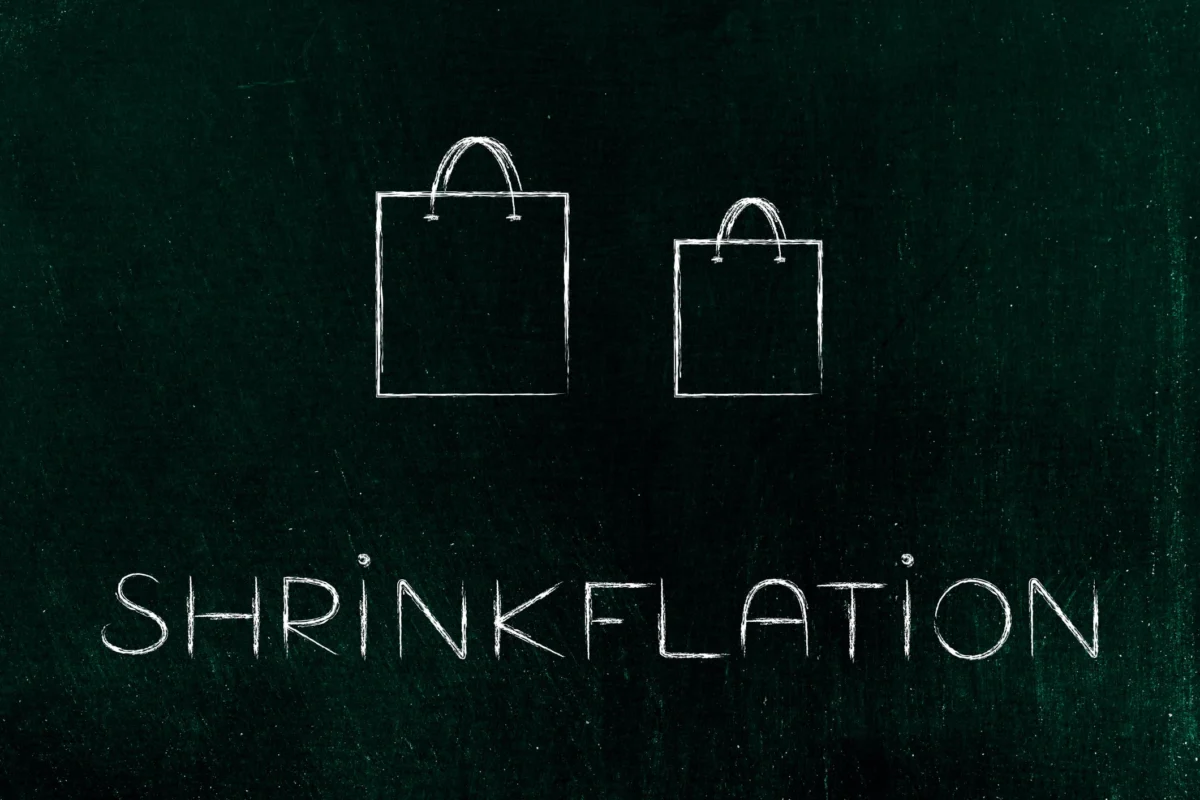
This anecdote, recounted by Zorina Khan, the William D. Shipman Professor of Economics at Bowdoin, highlights a growing crisis in academia: the devaluation of the grading system. As Harvard University recently made headlines by announcing a cap on the percentage of A’s that can be awarded, the debate over grade inflation has shifted from a faculty lounge grumble to a central administrative concern. However, while universities scramble to stabilize their "academic currency," economists warn that these cosmetic interventions ignore a more insidious phenomenon: academic "shrinkflation."
The Economics of the Classroom: A Broken Signal
To understand the current crisis, one must view grades as a form of currency. Effective grading, much like pricing in a market, serves as a signal of relative value. In a healthy economy, prices communicate scarcity and demand. In a healthy university, grades communicate mastery and performance.
However, when every institution inflates its grades, the signal degrades. If every professor in every country simultaneously increased the proportion of A’s by 10 percent, the impact might be negligible, as the relative ranking of students would remain unchanged. The problem arises when individual professors or departments act as outliers. If a professor maintains rigorous standards in an environment of rampant inflation, their students suffer a penalty in the labor market. They are effectively "overpriced" compared to their peers who received easier top grades elsewhere.
This creates a collective action problem. Professors, acting in their own self-interest to maximize positive student evaluations and ensure high course enrollment, are incentivized to inflate grades. As administrators treat students more like "customers" than scholars, faculty who maintain high standards risk being labeled as obstacles to student satisfaction, while those who inflate are rewarded with high enrollment numbers.
Chronology of a Crisis: From Inflation to Intervention
The history of grade inflation is not new, but its acceleration in the digital age has reached a breaking point.
- The Mid-20th Century: Grades were distributed along a standard bell curve. A "C" was truly average, and an "A" was reserved for exceptional performance.
- The Late 20th Century: As competition for graduate school and high-paying jobs intensified, the "A" began to proliferate. The cultural shift toward viewing students as "consumers" of education began to influence tenure and promotion committees.
- 2018–2025: The introduction of advanced Artificial Intelligence tools began to fundamentally alter the nature of coursework. AI usage allowed students to produce high-quality, polished assignments with minimal original effort.
- May 2026: Harvard University announces a formal cap on the percentage of A’s that can be awarded, signaling a desperate attempt by an elite institution to reclaim the prestige of its grading system.
This latest move by Harvard is an attempt to "re-denominate" the currency. Much like a central bank lopping zeros off hyper-inflated banknotes, the cap attempts to force a correction. But as history has shown with failing economies, changing the denomination of the currency does not solve the underlying inflation if the incentive to print more money remains.
The Invisible Threat: Academic "Shrinkflation"
While the media fixates on grade inflation, a more dangerous development is occurring under the radar: academic "shrinkflation."
In the consumer goods market, shrinkflation occurs when a company keeps the price of a product the same but reduces its size or quality. A pint of ice cream that suddenly contains 14 ounces instead of 16 is the classic example. In the university setting, shrinkflation manifests as a decline in rigor, learning, and academic challenge.
Academic courses are what economists call "experience goods." You cannot truly know the quality of the product until you have consumed it. Even then, without standardized testing across institutions, it is nearly impossible to tell if an "A" represents a rigorous mastery of quantum physics or a participation trophy for a poorly designed course.
Recent research into the impact of Artificial Intelligence provides empirical evidence for this trend. A working paper titled Artificial Intelligence and Grade Inflation analyzed courses at a public university between 2018 and 2025. The data revealed that "AI-exposed" courses saw a massive, unnatural upward shift in A grades. Crucially, this shift was not uniform; it was most pronounced in assignments that could be easily offloaded to LLMs (Large Language Models), while tasks requiring physical, embodied work—such as painting or sculpture—remained more stable.
The danger is that Harvard’s cap on grades does nothing to reverse this decline in rigor. If anything, it may exacerbate it. If a professor is forced to cap the number of A’s, yet students continue to use AI to bypass learning, the incentive structure becomes even more perverse. Students who are not among the "top" tier may feel an even greater pressure to turn to AI to maintain their competitive edge, further hollowing out the actual educational value of their degrees.
Distributional Implications: Who Pays the Price?
Perhaps the most overlooked aspect of grade inflation is its impact on equity. As the value of an "A" depreciates, elite students seek out new ways to signal their superiority. This often takes the form of "A-plus" markers: honors theses, prestigious fellowships, or research prizes.
However, research into prize systems reveals a sobering reality: these discretionary awards are frequently distributed based on social capital—connections, status, and inside knowledge—rather than raw merit.
This creates a two-tiered system. Wealthy or well-connected students are often coached on how to navigate these "hidden" signaling mechanisms. Meanwhile, first-generation or marginalized students, who may not have access to these networks or even know that such opportunities exist, are left with nothing but their deflated letter grades. By diluting the meaning of the primary signal (the grade), institutions are inadvertently punishing those who lack the resources to cultivate secondary signals.
The Path Forward: Transparency Over Controls
If top-down caps are, at best, a cosmetic fix and, at worst, an incentive for further shrinkflation, what is the alternative?
The solution lies in transparency rather than control. When Zorina Khan first arrived at Bowdoin, the dean published the grade distributions for every department each semester. This allowed the community to see exactly where the "hardest" and "easiest" graders were located.
By making grade distributions public, universities provide a commitment device. It allows professors who are tired of the "race to the bottom" to return to more rigorous standards without fear of being the only ones to do so. It also allows employers and graduate schools to act as "inflation-indexed" evaluators—discounting grades from departments or institutions known for excessive inflation.
Ultimately, the academic enterprise is a reputation-based market. When institutions prioritize student "satisfaction" over the rigorous, often uncomfortable process of learning, they are effectively liquidating their own assets. A cap on grades is a band-aid on a gaping wound. True reform requires changing the incentive structures that equate a student’s satisfaction with the university’s success, and acknowledging that when everyone gets an A, the grade ceases to have any meaning at all.