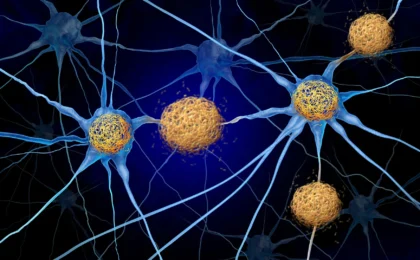
For years, neurobiologist Jan Deussing, a group leader at the Max Planck Institute of Psychiatry, observed a recurring biological puzzle. Whenever laboratory mice sustained brain injuries—often induced via controlled injections—a mysterious cluster of cells would consistently emerge and activate in the immediate vicinity of the lesion. Despite his extensive experience in the field, the identity of these cells remained elusive. This silent biological response, however, would soon become the catalyst for a breakthrough study that reshapes our understanding of brain repair, stress signaling, and psychiatric health.
The Genesis of a Discovery
The mystery was handed to Clemens Ries, a master’s student at the time, as a research challenge. Tasked with identifying these enigmatic cells, Ries employed a systematic approach, testing markers for every known cell type within the mouse brain. The results were singular: the cells were oligodendrocyte progenitor cells (OPCs).
OPCs are the precursor cells to oligodendrocytes—the specialized cells responsible for producing the myelin sheath. Myelin acts as the biological insulation for axons, the long extensions of nerve cells that transmit electrical signals. Much like the protective casing on a fiber-optic cable, myelin ensures that signals travel efficiently and provides essential metabolic support to the neurons. When this insulation is compromised—whether through physical trauma or autoimmune conditions like multiple sclerosis (MS)—the brain’s communication network begins to falter. In severe cases, the loss of myelin leads to neuronal death, making the rapid restoration of these sheaths a top priority for the brain’s survival.
Chronology of the Research
Ries’s initial inquiry, meant to be a simple master’s thesis, quickly evolved into a comprehensive doctoral project as the data revealed unprecedented biological activity.
The OPC Response (Post-Injury)
The research team observed that following an injury, OPCs do not merely migrate; they multiply aggressively around the wound’s periphery. Most eventually mature into fully functional oligodendrocytes. However, the researchers uncovered a startling secondary function: approximately one-third of these OPCs begin to express corticotropin-releasing hormone (CRH).
Historically, CRH has been understood exclusively as a neuropeptide that triggers the body’s systemic stress response. The fact that OPCs—cells traditionally viewed as "support staff" for myelin—could manufacture a hormone linked to stress was an entirely novel finding.
The Timeline of Activation
The production of CRH by OPCs is characterized by its high intensity and brevity. The researchers noted that CRH production spikes within just a few hours post-injury. However, this production shuts down as quickly as it begins, usually within three days. This temporal signature suggests that CRH serves as a "first responder" signal, necessary for initiating the early stages of the healing process before the brain shifts into a sustained repair mode.
Supporting Data: Regulating the Timing of Repair
To understand the functional role of this hormone, the researchers examined the interaction between CRH and its primary receptor, CRH receptor 1 (CRHR1). Their experiments revealed that CRHR1 is present on a separate sub-population of OPCs, effectively creating a feedback loop between the cells that release the hormone and those that respond to it.
When the researchers induced an injury in mice lacking the CRHR1 receptor, they observed an immediate, albeit paradoxical, effect: the OPCs multiplied even more rapidly than in wild-type mice. However, this increased proliferation was deceptive. Without the regulatory signal provided by the CRH-CRHR1 pathway, the OPCs failed to mature properly. The end result was a net decrease in the total number of mature, myelin-producing oligodendrocytes.
This data indicates that CRH acts as a "biological metronome." By controlling the timing of maturation, the hormone ensures that OPCs do not simply proliferate blindly, but instead coordinate their transformation into myelinating cells to achieve a functional repair of the damaged tissue.
The Evolutionary Role in Brain Development
The researchers hypothesized that if this system is vital for injury repair, it likely plays an equally significant role in the initial architecture of the brain. During postnatal development and into young adulthood, the brain undergoes a massive period of myelination.
Working with refined mouse models, the team investigated the presence of CRHR1 during normal development. They discovered that the receptor is active even in the absence of injury. Mice lacking the receptor showed an overproduction of OPCs during early development, a change that proved permanent. By adulthood, these mice exhibited structural deviations in their brains, specifically thicker myelin sheaths surrounding thin axons. These findings confirm that the CRH-OPC system is not just an emergency repair kit, but a fundamental regulator of brain structural integrity.
Official Perspectives and Hypotheses
The research, published in the prestigious journal Cell Reports, suggests that the source of CRH during normal development may be the neurons themselves. The team proposes that developing neurons release CRH, which acts as a chemical signal to instruct OPCs on when to multiply and when to finalize their transformation into myelin-producing cells.
Jan Deussing emphasizes the gravity of these findings, particularly concerning the overlap between developmental neurobiology and clinical psychiatry. "Our current findings suggest that in stress-associated psychiatric disorders such as depression, the CRH system in OPCs may play a greater role than previously known," Deussing states.
The scientific community has long recognized that early-life stress is a significant risk factor for the development of psychiatric conditions in adulthood. By linking the brain’s "stress hormone" (CRH) to the physical structure of the brain (myelin), this study provides a concrete biological mechanism through which stress might leave a lasting, physical imprint on the neural circuitry.
Implications for Future Medicine
The implications of this discovery are twofold: therapeutic and diagnostic.
- Regenerative Medicine: Understanding the CRH-OPC axis offers a potential new avenue for treating demyelinating diseases. If scientists can pharmacologically manipulate the timing of OPC maturation using CRH-receptor agonists or antagonists, they might be able to enhance the brain’s natural repair capacity following strokes, traumatic brain injuries, or MS flare-ups.
- Psychiatric Research: The link between CRH, OPCs, and mental health suggests that depression and anxiety may not be purely "chemical" imbalances in neurotransmitters, but could involve structural shifts in brain connectivity caused by abnormal myelination during developmental stress.
A New Frontier
As the research transitions from basic science to potential clinical applications, the focus remains on the plasticity of the adult brain. The realization that oligodendrocytes are active, responsive participants in the brain’s stress response, rather than passive structural supports, represents a paradigm shift.
"We have uncovered a dialogue between the brain’s stress system and its structural scaffolding," noted Ries, reflecting on his journey from an intern to a doctoral researcher. "The fact that this system operates in both injury and development suggests it is a core feature of brain resilience."
While the path to human therapy remains long and fraught with the complexities of neurobiology, the work conducted at the Max Planck Institute of Psychiatry provides a crucial map. By decoding how the brain manages its own repairs and development through the clever use of stress hormones, researchers are moving closer to a future where we might actively assist the brain in healing itself, potentially offering new hope to those living with the devastating effects of demyelination and stress-linked psychiatric disorders.