For decades, the global scientific community has operated under a dominant assumption: that Alzheimer’s disease is primarily a disorder of "protein garbage" buildup. The prevailing "amyloid hypothesis" posited that the accumulation of amyloid beta (a-beta) plaques outside of neurons was the primary culprit, acting like a toxic sludge that eventually suffocated the brain. Yet, despite billions of dollars in investment and thousands of clinical trials, drugs designed to scrub these plaques from the brain have consistently failed to stop—or even meaningfully slow—the progression of cognitive decline.
Now, a groundbreaking study from the University of California, Riverside (UCR), published in the Proceedings of the National Academy of Sciences, Nexus, offers a radical departure from this traditional narrative. Researchers suggest that the disease may not begin with external plaques at all, but rather through a subtle, internal mechanical failure: a protein "hijacking" that cripples the structural integrity of the neuron from the inside out.
The Mechanistic Core: A Tug-of-War Inside the Neuron
At the heart of the UCR team’s findings is a direct, competitive interaction between two proteins long associated with Alzheimer’s: amyloid beta and tau.
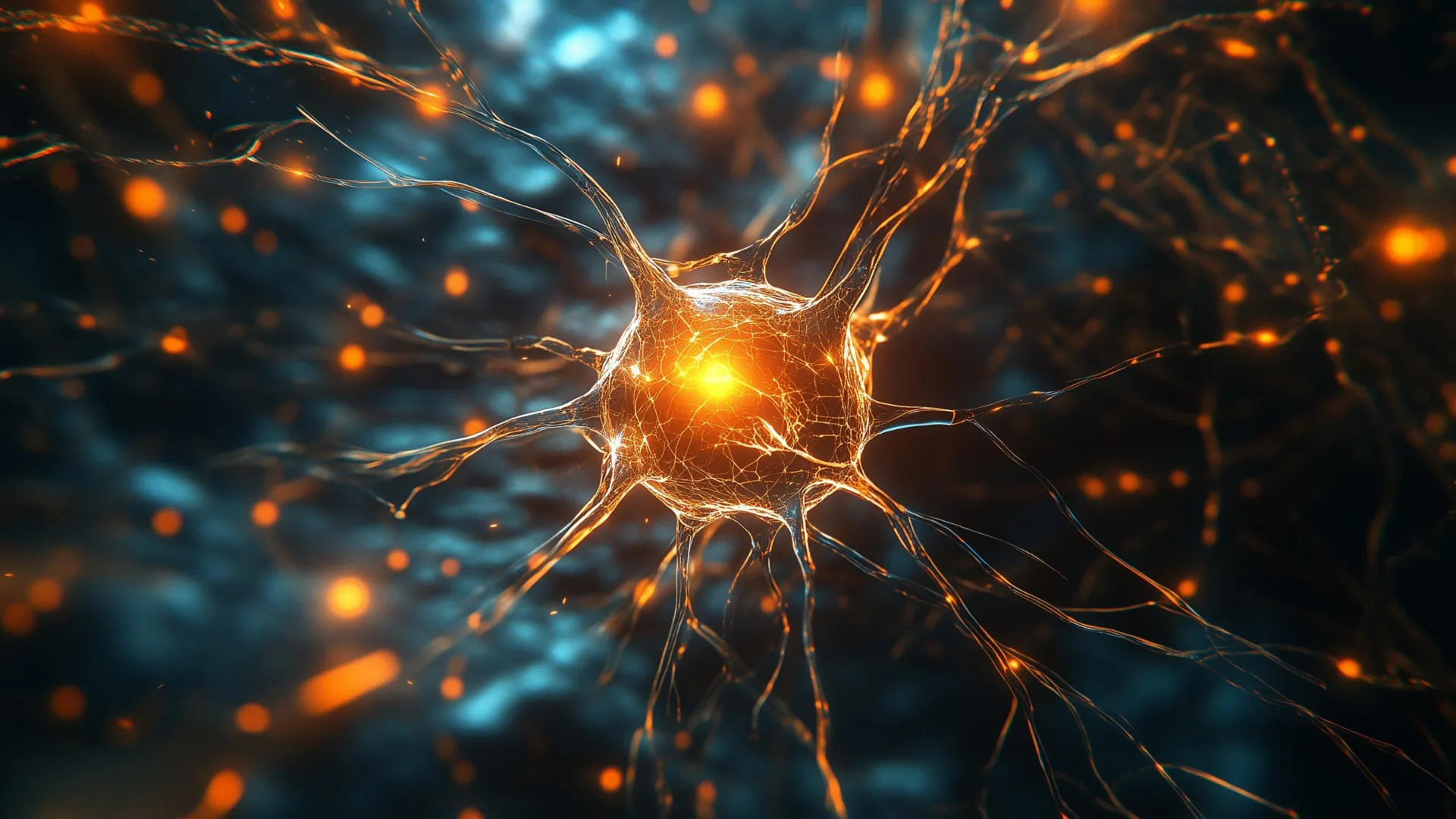
In a healthy brain, tau proteins serve as the "scaffolding" of the neuron. They bind to microtubules—tiny, straw-like structures that function as the cell’s internal highway system. These microtubules are essential for life, transporting vital nutrients, neurotransmitters, and organelles from the cell body to the synapses. Without them, the neuron cannot communicate, and it eventually dies.
For years, researchers have known that tau protein accumulation is a hallmark of Alzheimer’s. However, the exact connection between tau dysfunction and amyloid beta buildup remained an elusive puzzle. Ryan Julian, a chemistry professor at UCR and the lead author of the study, argues that the field has been fragmented for too long.
"In addition to having dementia, an Alzheimer’s diagnosis requires both a-beta and tau buildup in the brain," Julian noted. "But many labs focus on the role of one and ignore the other."
The UCR team’s investigation revealed that the portion of the tau protein responsible for binding to microtubules is structurally and dimensionally similar to amyloid beta. This similarity allows a-beta to act as an impostor. Using fluorescent markers to track protein movement, the researchers discovered that a-beta competes with tau for the exact same binding sites on the microtubules. When a-beta levels rise, it effectively "kicks" the tau off the microtubule, leaving the internal transport system unstable and forcing the displaced tau to aggregate into the toxic clumps that characterize the disease.
A Chronology of Scientific Misdirection
To understand why this discovery is so disruptive, one must look at the chronology of Alzheimer’s research over the last forty years.
- The 1980s and 90s (The Rise of the Amyloid Hypothesis): The discovery that amyloid beta forms the core of senile plaques led to a singular focus. The theory was reinforced by the observation that genetic mutations causing early-onset Alzheimer’s almost exclusively involve the overproduction of a-beta. This created a "gold rush" mentality in pharmaceutical research.
- The 2000s (The "Plaque-Busting" Era): Pharmaceutical giants poured resources into monoclonal antibodies designed to clear amyloid plaques. The assumption was that if you remove the plaques, you remove the disease.
- The 2010s (The Era of Disillusionment): Trial after trial failed. Patients showed significant reduction in brain plaque, yet their cognitive decline continued unabated. This led to a crisis of confidence in the amyloid hypothesis, with many researchers pivoting toward inflammation or vascular health as alternative causes.
- The 2020s (The Structural Turn): Current research, including the UCR study, represents a shift toward "mechanical biology." By moving the focus from the presence of protein clumps to the functionality of cellular machinery, scientists are finally addressing why removing plaques failed: the real damage occurs before the plaques even form, inside the neuron’s transport system.
Supporting Data: Why Size and Structure Matter
The UCR team’s experiments provided empirical weight to the theory of competitive binding. By measuring the binding strength of both proteins, they found that a-beta and tau attach to microtubules with nearly identical affinity. This makes the competition for space on the microtubule inevitable once the concentration of a-beta increases inside the cell.
Further supporting this model is the body of evidence surrounding autophagy—the body’s natural recycling system. As the human brain ages, autophagy becomes less efficient. Normally, a cell would "digest" excess a-beta before it could interfere with cellular mechanics. As this process slows, a-beta accumulates internally, eventually reaching a threshold where it begins to displace tau.
This provides a elegant explanation for the "age" factor in Alzheimer’s. It is not necessarily the presence of a-beta itself that is the trigger, but the failure of the aging cell to maintain its internal housekeeping.
Official Responses and Independent Perspectives
The scientific community has reacted with cautious optimism. Dr. Helena Rossi, a neurobiologist not involved in the study, commented on the implications: "The beauty of the UCR model is that it solves the ‘plaque paradox.’ We’ve long wondered why plaques exist outside the cell but the damage is seen within. If the plaque is merely a ‘trash heap’ formed by discarded, displaced tau, then focusing on the plaque is like trying to put out a forest fire by spraying the ashes rather than the flames."
However, some experts remain focused on the complexity of the disease. "Alzheimer’s is multifaceted," notes Dr. Marcus Thorne, a researcher in neurodegenerative diseases. "While the tau-microtubule displacement model is compelling, we must determine if this is the initiating event or one of several parallel pathways that lead to neurodegeneration. Nevertheless, the shift from ‘plaque-centric’ to ‘structure-centric’ research is a necessary evolution."
Implications for Future Therapeutics
If the UCR study holds up in clinical settings, it necessitates a pivot in how we design Alzheimer’s drugs. The current strategy of "plaque removal" might be missing the mark entirely by focusing on the symptom (the plaque) rather than the mechanism (the microtubule displacement).
New Avenues for Drug Development
- Microtubule Stabilizers: If a-beta is displacing tau, the most effective treatment might not be removing a-beta, but rather "locking" tau onto the microtubule or using pharmacological agents to stabilize the microtubules themselves. Interestingly, this aligns with recent observational studies showing that lithium—a mood stabilizer—appears to have a protective effect against Alzheimer’s, as it is known to help stabilize microtubules.
- Enhancing Autophagy: Instead of targeting the protein directly, researchers could look into therapies that "supercharge" the cell’s internal waste-management system. If the cell can clear a-beta before it reaches the microtubules, the disease process might be halted early.
- Preventative Screening: If the competition for microtubules is indeed the primary driver, biomarkers could be developed to detect "microtubule stress" long before cognitive decline appears, potentially allowing for preventative intervention years before symptoms manifest.
Conclusion
The UCR study provides a unifying framework that ties together the disparate observations of amyloid beta, tau, and the cellular aging process. By shifting the focus from the external landscape of the brain to the internal mechanical health of the neuron, researchers have opened a new door.
As Professor Julian stated, "It gives us a clearer picture of what may be going wrong inside neurons and where new treatments might start." The journey toward a cure remains long, but for the first time in decades, the scientific community is looking away from the plaque and toward the intricate, life-sustaining infrastructure of the cell. The "plaque hypothesis" may not be entirely wrong, but it may have been incomplete—and in the world of medicine, the difference between an incomplete theory and a mechanism is the difference between management and a cure.