For decades, the global scientific community has chased the "Holy Grail" of neurology: a therapeutic intervention capable of halting or reversing the devastating progression of Alzheimer’s disease. While current clinical options remain limited to palliative management that offers only modest, short-term delays in cognitive decline, a promising new development from ETH Zurich may have shifted the landscape. Ursula Quitterer, a Professor of Molecular Pharmacology, has unveiled a chemical substance known as "Compound 10"—a novel molecule that appears to interrupt the biological mechanism behind nerve cell death, potentially offering a new frontier in dementia treatment.
The Foundation of a Two-Decade Quest
The journey toward Compound 10 did not begin in a high-tech laboratory with synthetic modeling; it began with the altruism of patients in Cairo. Nearly 20 years ago, Professor Quitterer collaborated with colleagues at Ain Shams University Hospital to obtain brain tissue samples removed during tumor surgeries. These samples included tissue from patients suffering from dementia alongside non-dementia control subjects, providing a rare, human-derived baseline for comparative analysis.
This longitudinal research was anchored by a focus on a specific enzyme: GRK2 (G protein-coupled receptor kinase 2). Long recognized for its role in cellular regulation, GRK2 acts as a biological mediator, helping cells respond to stress, hormonal signals, and physical strain. It is a critical component in the maintenance of healthy heart and brain function. However, as Quitterer’s team discovered, when this regulator fails, it becomes a catalyst for neurodegeneration.
Chronology of a Discovery
The path from the initial Cairo tissue samples to the successful mouse models was characterized by the painstaking, slow-paced nature of neurodegenerative research.
- 2000s – Early Investigation: Quitterer’s team begins molecular analysis of the GRK2 enzyme, hypothesizing that its dysregulation might be a common denominator in various organ pathologies.
- 2010s – Identifying the Aggregates: Through comparative studies of human tissue and mouse models, the team identifies that GRK2 exists in two states: a functional, active form and an inactivated, metabolically damaged form. They observe that in dementia, the latter accumulates in dangerous quantities.
- 2020–2023 – Synthesis of Compound 10: After identifying the mechanism of GRK2 clumping, the team designs several chemical candidates. Compound 10 emerges as the most effective in preventing these aggregates from forming.
- 2024 – Publication: The findings are officially documented in the journal Cell Reports Medicine, signaling the completion of the basic research phase and the filing of a patent for the compound.
The Biological Mechanism: When GRK2 Turns Destructive
To understand the efficacy of Compound 10, one must first understand the "vicious circle" of Alzheimer’s pathology as identified by the ETH Zurich team. Within a healthy cell, GRK2 maintains homeostasis. In an Alzheimer’s-affected brain, however, metabolic stress leads to the inactivation of GRK2.
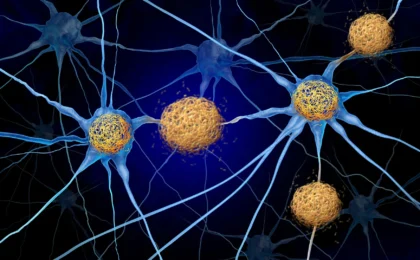
These inactive molecules do not simply dissipate; they clump together into dense aggregates. These protein clusters have a predilection for the mitochondria—the cell’s energy production centers. By physically blocking the pores of the mitochondria, these GRK2 aggregates starve the cell of energy, inducing internal cellular stress.
This stress acts as a feedback loop. The researchers discovered that this mitochondrial dysfunction directly increases the production of amyloid beta, the hallmark protein fragment associated with Alzheimer’s plaque formation. As amyloid beta levels rise, the cell experiences further stress, which triggers the inactivation of more GRK2, leading to more aggregates. It is a self-sustaining cycle of destruction that ultimately results in the apoptosis (death) of the nerve cell.
Compound 10: Breaking the Chain
Compound 10 functions as a molecular "blocker" or disruptor. By preventing the inactive GRK2 molecules from aggregating, the compound effectively protects the mitochondrial pores. With the "powerhouse" of the cell restored to functionality, the production of amyloid beta is significantly reduced.
In preclinical trials, the results were striking. Mice treated with Compound 10 showed a significant decrease in nerve cell death and lived noticeably longer than their untreated counterparts. Perhaps most intriguingly, the effects were systemic rather than localized. The treated mice exhibited improved heart function and, visibly, a reduction in age-related hair graying. These systemic benefits suggest that GRK2 aggregation is not merely an Alzheimer’s-specific phenomenon, but perhaps a broader marker of the aging process itself.
Supporting Data and Preclinical Rigor
The rigor of this study is defined by the unique challenges of Alzheimer’s research. As Quitterer notes, the disease is age-related, which necessitates that researchers work with older mice—typically those between 18 and 24 months of age.
"Everything takes so long in Alzheimer’s research," Quitterer explains. Unlike oncology, where tumor growth can be observed and measured in a matter of weeks, the progression of cognitive and neurological decline in animal models requires years of observation to ensure that the findings are robust and statistically significant. Each individual experiment can span up to two years, placing immense pressure on the researchers to ensure that every stage of the study is meticulously documented.
The published results in Cell Reports Medicine confirm that Compound 10 not only preserved mitochondrial function but also maintained nerve cell morphology, effectively keeping the cells "alive" and functioning in environments that would otherwise be lethal.
Official Responses and Strategic Implications
The academic and medical communities have reacted with cautious optimism. While the data is compelling, both the research team and independent experts emphasize that the jump from mouse models to human clinical trials is the most difficult hurdle in pharmaceutical development.
Quitterer and her team at ETH Zurich are now in the critical phase of seeking industrial partners. The goal is to translate this laboratory success into a scalable drug development program. The patent filing serves as the first step in protecting the intellectual property necessary to entice pharmaceutical investment.
A Complementary, Not Competitive, Approach
One of the most significant aspects of the ETH Zurich finding is the mechanism of action. Because Compound 10 works via the GRK2 pathway—a biological route distinct from the current standard-of-care medications—it offers a unique strategic advantage. Existing Alzheimer’s drugs are largely designed to target amyloid beta plaques directly, often with limited efficacy.
Quitterer envisions a future where Compound 10 does not necessarily replace current treatments but works in tandem with them. "Alzheimer’s is a very complex disease," she notes. "By targeting the GRK2 pathway, we are approaching the problem from a different angle." A cocktail of treatments—some addressing the symptoms, others, like Compound 10, addressing the fundamental metabolic stress of the cell—could potentially offer a multi-pronged defense that current monotherapies lack.
The Road Ahead: Challenges and Future Outlook
Despite the excitement surrounding the discovery, the road to the pharmacy shelf is long. The "valley of death"—the gap between successful preclinical results and clinical application—is littered with candidates that failed to replicate their success in human physiology.
- Safety and Toxicity: Future studies must determine if long-term administration of Compound 10 causes unintended side effects in humans.
- Dosage and Delivery: Finding a way to effectively deliver the compound across the blood-brain barrier is a priority.
- Human Trials: The transition to Phase I trials will require significant funding and regulatory approval, likely stretching over the next decade.
However, the implications of this study are profound. If the link between GRK2, mitochondrial health, and aging can be successfully manipulated, Compound 10 might eventually be viewed as a foundational breakthrough. By treating the cellular stress that leads to amyloid beta accumulation, rather than just the plaques themselves, the researchers have moved upstream in the disease’s timeline.
For the millions of families affected by dementia, the work of Professor Quitterer and her team provides a rare commodity: a scientifically grounded reason for hope. As the team moves forward, the global medical community will be watching closely to see if this "Compound 10" can truly break the cycle of one of the 21st century’s most intractable medical mysteries.