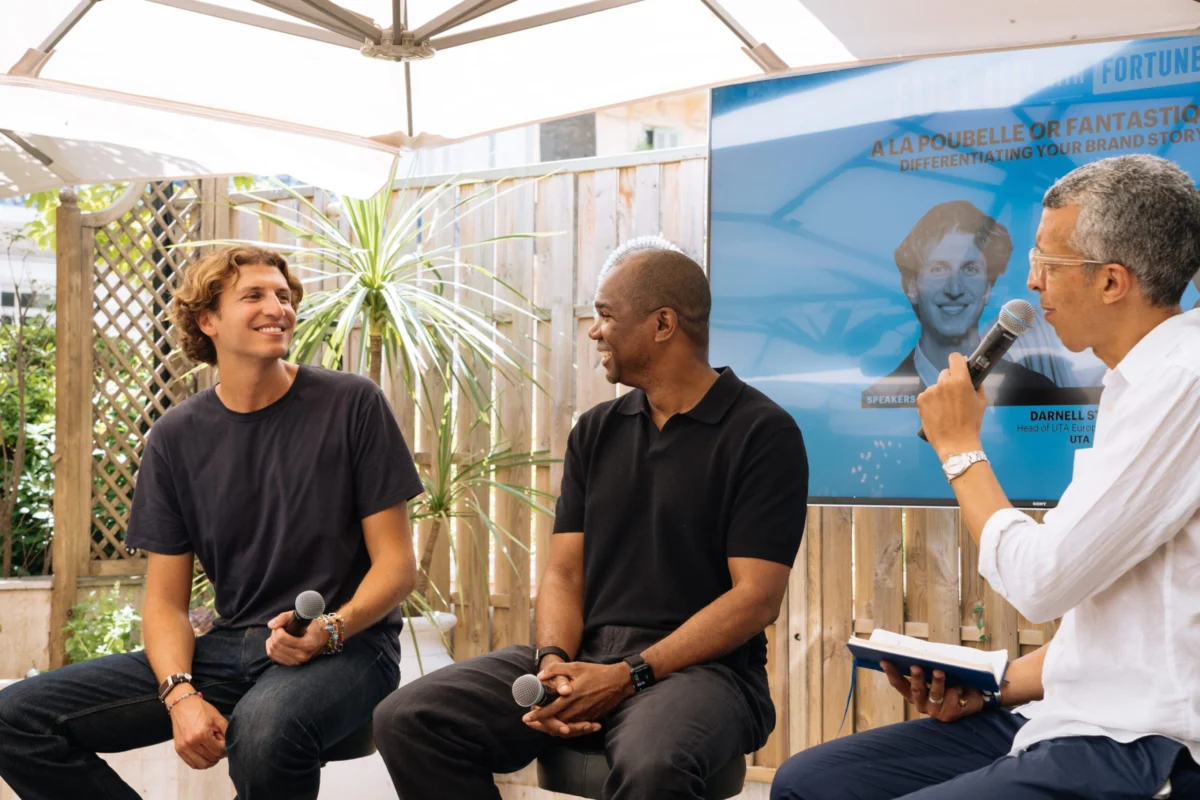
The Cannes Lions International Festival of Creativity has long been the global epicenter for the advertising elite—a sun-drenched gathering where the world’s most powerful brands attempt to decode the ever-shifting psyche of the consumer. However, at this year’s Fortune flagship "Fuel Up" event, the opening salvo didn’t come from a traditional CMO or a data scientist. Instead, it came from a fictional Swiss aristocrat who has built a career lampooning the very people in the room.
The Gstaad Guy, a satirical social media phenomenon, served as the catalyst for a broader discussion on the survival of brands in an era of skepticism. His signature catchphrase, “À la poubelle” (To the bin), became the unofficial theme of the day. As the marketing world grapples with the twin pressures of generative AI and a consumer base that can sniff out a "forced" partnership from a mile away, the message from Cannes was clear: if it isn’t authentic, it belongs in the trash.
Main Facts: The Crisis of Credibility
The central tension of modern marketing lies in the paradox of commercialization. As brands strive for "authenticity"—a word so overused it was itself consigned à la poubelle during the panel—they often achieve the exact opposite. The Fortune Fuel Up event brought together leaders from luxury, sports, technology, and FMCG (Fast-Moving Consumer Goods) to address how brands can maintain a soul while operating at scale.
Several core realities emerged from the discussions:
- The Satire-to-Sales Pipeline: Influencers like the Gstaad Guy demonstrate that "earned" authenticity—talking about brands long before a paycheck is involved—is the only currency that retains its value when a partnership becomes commercial.
- Sports as the Final Frontier of Attention: In a fragmented media landscape, live sports remains the last "lean-in" moment, but fans now demand to be treated as participants rather than targets.
- The AI Paradox: While AI offers unprecedented efficiency, it has simultaneously increased the "premium" on human creativity. The more AI-generated content floods the market, the more consumers crave the "uniquely human" elements of humor, irony, and emotional nuance.
Chronology of the Event: From Satire to Strategy
The Swiss Bon Vivant Sets the Stage
The event began with the Gstaad Guy—the alter ego of a creator who skewers the habits of the ultra-wealthy. Despite his videos mocking the pretension of luxury labels, he has become one of the industry’s most sought-after partners, recently fronting a collaboration with Bentley.
His presence highlighted a shift in influencer marketing. "People are buying the things I’m speaking about playfully, without me trying to sell them," he told the audience. His credibility with his 3.1 million followers on Instagram and TikTok stems from a simple rule: he only works with brands he was already mentioning for free. By the time a contract is signed, the "commercial" feel is mitigated by a pre-existing, genuine affinity. For the Gstaad Guy, the audience’s "bullshit detector" is the ultimate arbiter of success.
The Shift to Sports: "More Than a Logo"
The conversation then transitioned to the world of high-stakes sports marketing. Emily Ketchen, CMO of Lenovo’s Intelligent Devices Group, described sport as "the great unifier," a rare space where global audiences are emotionally invested. However, Toby Craig, Chief Communications Officer at Manchester United, warned that this investment comes with high expectations.
Craig argued that fans are "invested participants" who give their passion and time, expecting a reciprocal commitment from the club and its sponsors. He pointed to Manchester United’s partnership with Qualcomm’s Snapdragon brand as a blueprint. Rather than just "decorating the shirt," the partnership involves Snapdragon technology being used to create the club’s actual content. It is a functional, rather than purely aesthetic, relationship.
The "Unbriefed" Moment: Oscar Mayer and the Wienie 500
The afternoon sessions delved into the "how" of creative authenticity. Todd Kaplan, North America CMO for Kraft Heinz, introduced the concept of "identity over presence." He argued that brands should stop trying to "slap on a logo" and instead find ways to lean into their own eccentric histories.
The prime example provided was the "Wienie 500"—a race featuring six 27-foot-long "Wienermobiles" at the Indianapolis Motor Speedway. What could have been a cringeworthy marketing stunt worked because it leaned into Oscar Mayer’s 90-year history in American culture. Kaplan noted that the best ideas often come from "unbriefed" sessions where agency partners fire ideas at one another without the constraints of a formal corporate directive.
Supporting Data: The High Cost of Inauthenticity
The urgency of these discussions is backed by increasingly stark consumer data. According to a 2026 Clutch report, authenticity is no longer a "nice-to-have" but a prerequisite for business survival:
- 97% of consumers state that authenticity is a key factor in deciding which brands to support.
- 81% of consumers report they have actively stopped supporting a brand because it no longer felt genuine.
Furthermore, a Fortune survey conducted in partnership with Morning Consult, polling 1,100 marketing and finance decision-makers, revealed deep-seated anxieties regarding the rise of artificial intelligence:
- 78% of marketers are concerned that increased AI usage will erode consumer trust.
- 34% of professionals believe AI will replace certain creative functions entirely.
- 19% fear a significant reduction in the overall need for human creativity.
These figures suggest a "trust gap" that brands must navigate as they integrate automated tools into their creative processes.
Official Responses: Industry Leaders on the Future of the "Human Touch"
The panel featured a robust defense of human intuition against the encroaching tide of automation.
Lucinda Barlow, Head of International Marketing at Uber:
Barlow noted a significant vibe shift at Cannes compared to the previous year. While 2023 was defined by a "fear of replacement," 2024 has seen a "deep acknowledgment of the power of human creativity." She argued that feelings like humor and entertainment are "really hard to replicate with AI," making human-led creativity a "competitive advantage" for businesses.
Zena Srivatsa Arnold, CMO of Sephora:
Arnold emphasized the need to remember the "person behind the data." While Sephora uses AI to analyze massive trend datasets, Arnold reminded the room that they are ultimately selling to real people whose identities cannot be fully captured by an algorithm.
Timothy Young, CEO of Jasper AI:
Perhaps surprisingly, the head of an AI marketing firm agreed that the "magic accelerator" for a brand is a human "tastemaker." Young defined authenticity as "a function of trust over time" and warned against brands chasing every fleeting internet meme. "The brands that chase every meme are the equivalent of the artist who sold out on their sophomore album," he said. "Your whole catalog tells the story."
Implications: The Rise of the "Tastemaker" Economy
The insights shared at Fortune’s Fuel Up event point toward a fundamental restructuring of the marketing department. The era of the "Generalist Marketer" who follows a rigid brief may be ending, replaced by the era of the "Tastemaker."
1. The Death of the "Slap-on" Sponsorship
The consensus among leaders from Manchester United and Kraft Heinz is that passive sponsorship is dead. In the future, brands will be expected to provide utility or genuine entertainment within a community. If a brand sponsors a sports team or an influencer, they must contribute to the "lore" of that community rather than just interrupting it.
2. AI as a Commodity, Creativity as a Luxury
As AI makes the production of "average" content free and instantaneous, the value of "exceptional" content—content that contains irony, subtext, and cultural nuance—will skyrocket. Marketers who can use AI to handle the "grunt work" while providing the "human soul" will become the most valuable assets in the C-suite.
3. The Long Game vs. The Meme Cycle
Timothy Young’s warning about "selling out on the sophomore album" highlights a shift toward long-term brand building. In an age of instant viral cycles, the brands that thrive will be those that have the discipline to say "no" to trends that don’t fit their identity. Authenticity is built through consistency, not through being the first to use a new TikTok filter.
4. The "Unbriefed" Creative Process
Todd Kaplan’s success with the Wienie 500 suggests that corporate structures may need to become more fluid. The "best ideas are unbriefed" because they come from a place of play and cultural observation rather than a list of KPIs. Brands that allow their creative partners the room to experiment—and even to fail—are more likely to stumble upon the next authentic cultural moment.
Conclusion: The Verdict
As the sun sets on another Cannes Lions, the takeaway for the global marketing community is sobering. The tools of the trade—data, AI, and massive reach—are more powerful than ever, but they are also more dangerous. Without the "human tastemaker" to guide them, these tools risk producing a sea of bland, inauthentic content that consumers will instinctively consign à la poubelle.
The Gstaad Guy may be a fictional character, but his verdict is a real-world warning. In the high-stakes world of modern branding, you are either authentic, or you are trash. There is no longer any middle ground.