Introduction: A Somber Admission
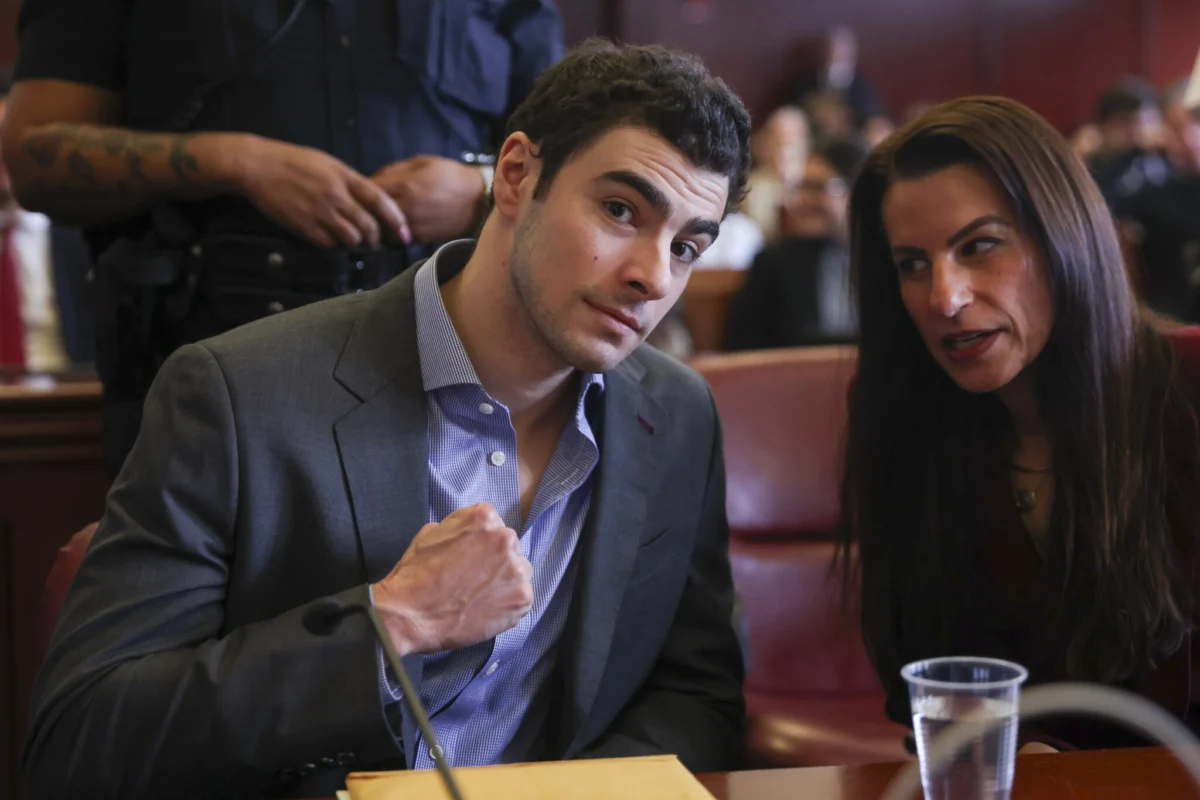
In a pivotal moment for a case that has gripped the nation, Luigi Mangione appeared in the United States District Court for the Southern District of New York on Friday to enter a guilty plea for the killing of UnitedHealthcare CEO Brian Thompson. The December 2024 assassination, which sent shockwaves through the American corporate and political landscape, has reached a critical legal juncture. By pleading guilty to the two remaining federal charges—interstate stalking resulting in death and stalking through the use of interstate facilities resulting in death—Mangione has effectively bypassed a protracted trial on these counts, moving the proceedings directly toward a December 18 sentencing date.
During his allocution, Mangione offered a stark, unvarnished admission: “I shot Mr. Thompson and he died. I knew what I was doing was illegal.” In a move that appeared designed to preempt potential defense strategies involving mental capacity, Mangione explicitly stated that he had never been treated for or hospitalized due to mental illness or addiction, insisting that his mind was clear and that he fully understood the gravity of his actions.
Chronology of a Targeted Killing
The events leading to this week’s plea hearing began in the final weeks of 2024, culminating in a brazen act of violence that targeted one of the nation’s most prominent healthcare executives.
- December 2024: Luigi Mangione executes the murder of Brian Thompson outside a UnitedHealthcare investor convergence. During the Friday hearing, Mangione revealed the meticulous, chilling nature of his planning, detailing how he identified the location of the investor event and the roster of attendees. He further disclosed that he utilized a 3D-printed firearm equipped with a suppressor to carry out the attack.
- January 30, 2026: In a significant legal development, U.S. District Judge Margaret Garnett issued a ruling that struck down two of the four federal charges initially brought against Mangione. Among the dismissed counts was the charge of "murder through use of a firearm during and in relation to the stalking crimes," a count that would have rendered the defendant eligible for the death penalty.
- June 2026: Mangione formally abandoned plans to pursue a defense based on claims of a mental health crisis, reinforcing his commitment to the narrative of a calculated, premeditated act.
- August 14, 2026: Defense attorney Karen Friedman Agnifilo filed a sweeping motion to dismiss pending state-level charges, citing double jeopardy concerns.
- August 2026: Mangione enters his guilty plea for the remaining federal counts, setting the stage for the December sentencing.
Legal Complexity: The Shadow of Double Jeopardy
While the federal case appears to be nearing its conclusion, a significant legal battle looms in the state courts. Mangione is currently scheduled to face trial on state-level charges on September 8. However, his legal team, led by Karen Friedman Agnifilo, has launched a robust challenge to these proceedings, filing a motion to dismiss based on the constitutional protection against double jeopardy.
The Scope of New York CPL § 40.20
The argument centers on New York’s double jeopardy statute, which is notably broader than the protections afforded under the federal Constitution. Under CPL § 40.20, a previous prosecution can, in certain circumstances, bar subsequent prosecution for the same act. However, the law provides nine narrow exceptions.
Agnifilo’s motion argues that the state’s pursuit of second-degree murder and firearms charges fails to meet these exceptions. Specifically, the defense is challenging the application of:
- CPL § 40.20(2)(b): Which applies when offenses are designed to prevent "very different kinds of harm" and contain distinct elements.
- CPL § 40.20(2)(f): Which addresses situations where a previous prosecution was terminated due to an insufficiency of evidence.
The defense maintains that because the federal government has already secured a conviction for the same conduct, the state’s continued pursuit of a trial constitutes a violation of due process. Prosecutors, conversely, argue that the state’s charges address specific jurisdictional interests that the federal government does not, and that the "different harms" doctrine should permit the state trial to proceed.
Supporting Data and Prosecutorial Stance
Federal prosecutor Jamie McDonald has been clear regarding the government’s position on sentencing. Despite the absence of a formal plea agreement, the prosecution has stated its intention to seek a sentence of life imprisonment without the possibility of parole.
The weight of the evidence, bolstered by Mangione’s own admission of the 3D-printing of the murder weapon and the premeditated nature of the stalking, leaves little room for leniency. The federal charges of interstate stalking resulting in death carry a statutory maximum of life in prison, and the government is signaling that it will pursue that maximum to the fullest extent of the law.
Implications: The Future of High-Profile Security
The murder of Brian Thompson and the subsequent prosecution of Luigi Mangione have triggered a national dialogue regarding the safety of corporate executives and the accessibility of illicit, untraceable weaponry.
Corporate Security Shifts
The revelation that Mangione was able to obtain detailed information about the investor convergence and the attendee list has prompted an industry-wide reassessment of corporate security. Investor relations departments and security firms are now moving toward "zero-trust" event protocols, where attendee lists are restricted even from internal staff, and physical security perimeters are being hardened against the threat of non-traditional, 3D-printed weapons.
The "Ghost Gun" Debate
The use of a 3D-printed firearm in such a high-profile assassination has reignited the legislative debate over the regulation of firearm manufacturing files. While the federal government has attempted to restrict the distribution of schematics for such weapons, the ease with which Mangione was able to produce a lethal device has highlighted the limitations of current gun control legislation in the digital age.
The Role of Mental Health in Criminal Defense
Mangione’s emphatic rejection of a mental health defense is a rare occurrence in high-stakes criminal litigation. Often, defendants in cases of extreme, inexplicable violence seek to mitigate sentencing through claims of diminished capacity. By rejecting this path, Mangione has effectively simplified the trial process, focusing the narrative squarely on personal accountability and ideological or personal grievances. This shift may influence how future courts view "clear-minded" defendants who commit acts of political or corporate violence.
Conclusion: Awaiting Finality
As the court looks toward the December 18 sentencing, the case of United States v. Luigi Mangione stands as a grim milestone. For the family of Brian Thompson, the guilty plea provides a measure of closure, though the looming state trial suggests that the legal journey is not yet over.
For the legal community, the case serves as a masterclass in the complexities of dual-sovereignty prosecution. The interplay between federal and state jurisdictions, the application of narrow double jeopardy exceptions, and the procedural nuances of a defendant entering a guilty plea without a deal all contribute to a case that will be studied in law schools for years to come.
As the calendar turns toward the autumn state trial and the winter federal sentencing, the public remains fixed on the outcome. Whether the state trial proceeds or the federal life sentence effectively concludes the matter, the memory of the December 2024 attack remains a chilling reminder of the vulnerabilities inherent in the modern corporate sphere. Luigi Mangione has admitted his guilt, but the broader questions regarding how such a tragedy was allowed to occur—and how the justice system navigates the overlapping claims of federal and state authority—remain at the forefront of the national conscience.