For decades, the story of human evolution—and the broader saga of our primate ancestors—has been anchored in the sun-drenched landscapes of East Africa. From the Rift Valley to the Ethiopian highlands, paleontologists have long held the conviction that the "cradle of humanity" and its ancestral precursors were firmly located in the southern reaches of the African continent. However, a groundbreaking discovery in the desert sands of northern Egypt has effectively dismantled this geographic orthodoxy, forcing the scientific community to look north toward the crossroads of continents.
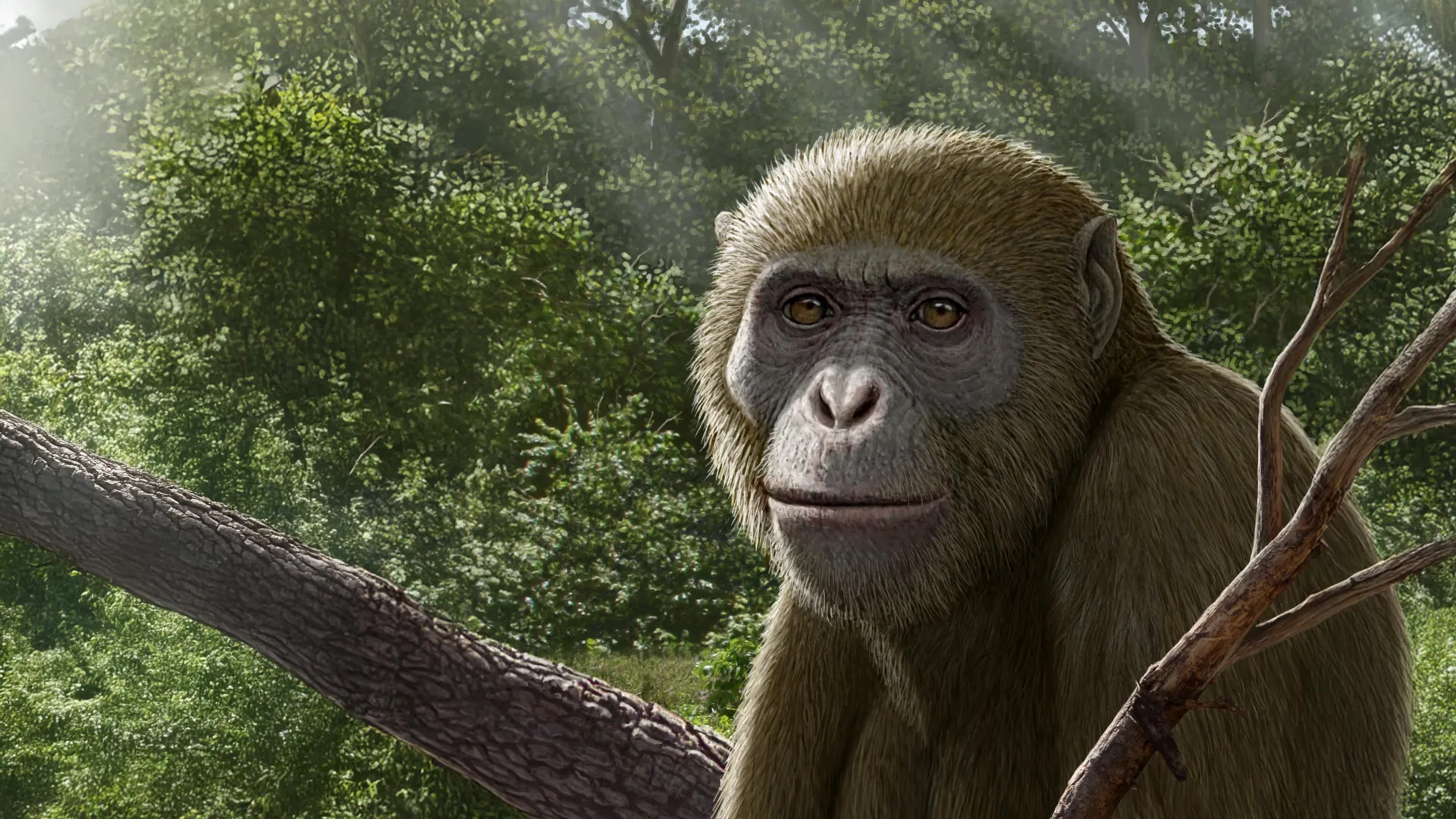
An international team of researchers, led by the Mansoura University Vertebrate Paleontology Center (MUVP) in Egypt and the University of Southern California (USC), has identified a previously unknown fossil ape that roamed the Earth 17 to 18 million years ago. Named Masripithecus moghraensis, this species offers the first definitive evidence that early apes were not merely peripheral inhabitants of North Africa but central players in the evolutionary drama that eventually gave rise to the crown Hominoidea—the group that includes modern gibbons, orangutans, gorillas, chimpanzees, and humans.
A Discovery at the Crossroads of History
The fossils were unearthed at Wadi Moghra, a fossil-rich region in northern Egypt that has long teased paleontologists with its geological secrets. During intensive fieldwork conducted in 2023 and 2024, the team from the Sallam Lab uncovered a partial lower jaw that, while small in size, is monumental in its implications.
The name itself pays homage to its origins: Masripithecus is a linguistic blend of "Masr"—the Arabic word for Egypt—and the Greek pithekos, meaning "ape." The species epithet, moghraensis, identifies the precise locality where the specimen was recovered. For lead paleontologist Hesham Sallam, this find is the culmination of a five-year, persistent search. "We spent five years searching for this kind of fossil because, when we look closely at the early ape family tree, it becomes clear that something is missing," Sallam noted. "And North Africa holds that missing piece."
Chronology of a Scientific Paradigm Shift
The timeline of primate evolution is complex, but the Early Miocene (roughly 23 to 16 million years ago) is considered a critical "crunch point" for the diversification of early apes. Before the discovery of Masripithecus, the fossil record in North Africa was notably skewed. While researchers had recovered numerous monkey remains, there was a glaring absence of confirmed apes. This led to a consensus among many in the field that apes were largely restricted to areas south of the Sahara during this epoch.
The discovery shifts this chronology:
- 17–18 Million Years Ago: Masripithecus moghraensis thrives in the lush, seasonal environments of northern Egypt.
- Early 20th Century to 2022: The prevailing theory suggests that early apes were exclusive to East Africa, with later migrations into Asia and Europe.
- 2023–2024: The Sallam Lab conducts focused excavations in the Wadi Moghra region, resulting in the recovery of the Masripithecus jaw.
- 2024: The study is published in the journal Science, formally identifying the species and proposing a new biogeographic model for ape evolution.
Anatomical Versatility: The Anatomy of Success
Although the fossil record for Masripithecus is currently limited to a fragment of the lower jaw, the morphology of the specimen is remarkably diagnostic. It possesses a unique combination of traits not found in any other ape of the same period.
The jaw features unusually large canine and premolar teeth, coupled with molars that exhibit rounded, heavily textured chewing surfaces. According to Shorouq Al-Ashqar, a researcher at MUVP and first author of the study, this anatomy speaks to a creature of significant evolutionary flexibility. "The study interprets its chewing anatomy as evidence of a flexible, mainly fruit-based diet, with the ability to process harder foods such as nuts or seeds when needed," Al-Ashqar explained.
This dietary adaptability was likely the key to the species’ survival. During the Early Miocene, North Africa was undergoing significant climatic shifts, leading to more pronounced seasonality. The ability to pivot between soft fruit and tougher, fibrous materials allowed Masripithecus to thrive in an environment that was increasingly demanding.
Supporting Data: Bayesian Phylogeny and Biogeography
The significance of Masripithecus is not based on guesswork, but on a rigorous, data-driven synthesis. The research team employed advanced Bayesian methods—a statistical approach that allows scientists to model complex evolutionary relationships by integrating diverse datasets.
By comparing the anatomical features of the Masripithecus jaw with those of known living and extinct apes, the team cross-referenced this physical evidence with DNA sequences from extant primate species and the geological dating of fossil sites. The result of these calculations was startling: Masripithecus appears to be more closely related to living apes than any other Early Miocene species currently documented in East Africa.
Furthermore, the team conducted a biogeographic analysis to map the probable origin point of the common ancestor of all living apes. Rather than pointing toward the southern regions, the data strongly favored a point of origin in northern Africa and the Middle East.
Official Responses: A Challenge to Long-Held Theories
The implications of this study have rippled through the paleontology community, forcing a re-evaluation of long-standing models. Perhaps the most candid reaction came from Dr. Erik Seiffert, a paleontologist at the University of Southern California and a co-author of the study, who admitted that the findings challenged his own professional life’s work.
"For my entire career, I considered it probable that the common ancestor of all living apes lived in or around East Africa," Seiffert said. "But this new discovery, and our new and novel analyses of hominoid phylogeny and biogeography, now strongly challenge that idea. And, importantly, the likelihood of this scenario doesn’t depend on Masripithecus—but it is very much consistent with it."
This indicates that while Masripithecus is the "smoking gun," the evidence for a northern origin is becoming a broader, multi-faceted consensus that can no longer be ignored.
Implications: The Northern Gateway
Why was North Africa such a hotbed for early ape diversification? The answer lies in the tectonic and geographic realities of the Early Miocene. During this period, the African and Arabian plates were pushing northward, entering the final stages of their collision with Asia. This tectonic activity did more than create mountains; it created "gateways."
Fluctuating sea levels occasionally narrowed or removed the marine barriers that separated the African continent from the Eurasian landmass. These intermittent land bridges provided a corridor for fauna to migrate between regions. Masripithecus acts as a crucial link, bridging the previously disjointed fossil records of Africa and Eurasia. The presence of such a distinct, well-adapted ape in Egypt suggests that these primates were already diversifying in the north long before the land bridges became permanent, allowing them to eventually spread into Europe and Asia.
Conclusion: Looking Toward the Future
The discovery of Masripithecus moghraensis serves as a humbling reminder of the "unknown unknowns" in the history of life on Earth. Paleontology, at its core, is a science of gaps—a puzzle where the majority of the pieces are missing. By filling one of these gaps in North Africa, the team from Mansoura University and USC has fundamentally altered the trajectory of our understanding of primate evolution.
As the research team prepares for future fieldwork, the scientific community is watching with anticipation. If Masripithecus is a representative of a larger, previously hidden chapter of evolutionary history, it suggests that the origins of our ancestors may be buried in regions that have historically been overlooked. The sands of northern Egypt and the wider Middle East may yet yield more treasures, shifting our perspective on where we come from and how our distant cousins first began their journey toward the modern world.