For nearly four decades, a quiet, meticulously monitored patch of earth in central Massachusetts has been telling a story that the scientific community is only now beginning to fully comprehend. Hidden beneath the canopy of the Harvard Forest, a long-running experiment has shattered a foundational assumption in climate science: that the vast stores of carbon locked deep within forest soils are permanent, stable, and immune to the accelerating pace of global warming.
The findings, led by Dr. Jerry Melillo, a Distinguished Scientist at the Marine Biological Laboratory, suggest that as the planet warms, the earth beneath our feet may be transitioning from a reliable carbon sink into a significant carbon source. This revelation threatens to undermine current climate projections, suggesting that the "feedback loop" between warming temperatures and soil decomposition could be far more potent than previously envisioned.
The Experiment: Four Decades of Sustained Heat
The project began in 1988, a time when the conversation surrounding global warming was just beginning to permeate mainstream public policy. Dr. Melillo and his team sought to understand the "hidden" side of the climate equation—the soil. While most climate research focused on the immediate impacts of atmospheric CO2, the team at the Harvard Forest looked downward, setting up a series of experimental plots designed to simulate a warmer, future world.
To achieve this, researchers installed underground heating cables across designated test sites, maintaining the soil temperature at precisely 5°C (9°F) above the ambient temperature of the surrounding forest floor. This delta was chosen based on the most aggressive climate modeling projections available at the time, representing the upper-bound expectations for 21st-century warming.
For 37 years, the study has run continuously, regardless of the season. Through scorching New England summers and brutal, sub-zero winters, the cables have hummed, keeping the experimental soil in a perpetual state of "future warming." This duration is what sets the study apart; while most ecological experiments last for three to five years, the Harvard Forest study provides a rare longitudinal view of how ecosystems acclimate—or fail to acclimate—to environmental stress over multiple decades.
Chronology of a Climate Discovery
The timeline of this research provides a roadmap for understanding the complex interaction between microbial life and carbon storage.
The Initial Phase (1988–2000)
In the early years, the results were consistent with traditional ecological theory. As the soil warmed, microbial activity increased. Microbes, the primary decomposers in soil ecosystems, began breaking down organic matter—such as fallen leaves, twigs, and detritus—at an accelerated rate. This led to an initial spike in the release of carbon dioxide into the atmosphere. Scientists observed this, noted the accelerated "respiration" of the soil, and generally assumed that after a period of adjustment, the microbial communities would reach a new equilibrium, and the rate of carbon loss would stabilize.
The Middle Period (2000–2015)
As the experiment entered its second and third decades, the researchers continued to observe sustained carbon loss. While there were fluctuations, the basic mechanism remained: warmth stimulated the microbes, and the microbes released carbon. During this time, the scientific consensus remained that the "recalcitrant" or stable carbon—the organic matter bound deeply within the soil structure—was effectively locked away, resistant to the microbial-driven decomposition that affected fresher organic matter on the surface.
The Turning Point (2015–Present)
The most significant finding occurred during the fourth decade of the experiment. The researchers discovered that the "stable" carbon stores—material that had been sequestered in the ground for centuries—began to break down. This was a critical failure of the previous model. The warming had not just accelerated the surface cycle; it had penetrated the deeper, slower-moving pools of carbon. This breakdown signifies that there is no "safe" layer of soil carbon in a warming world; given enough heat and enough time, even the most stubborn organic matter becomes vulnerable to decomposition.
Supporting Data: Why Microbes Matter
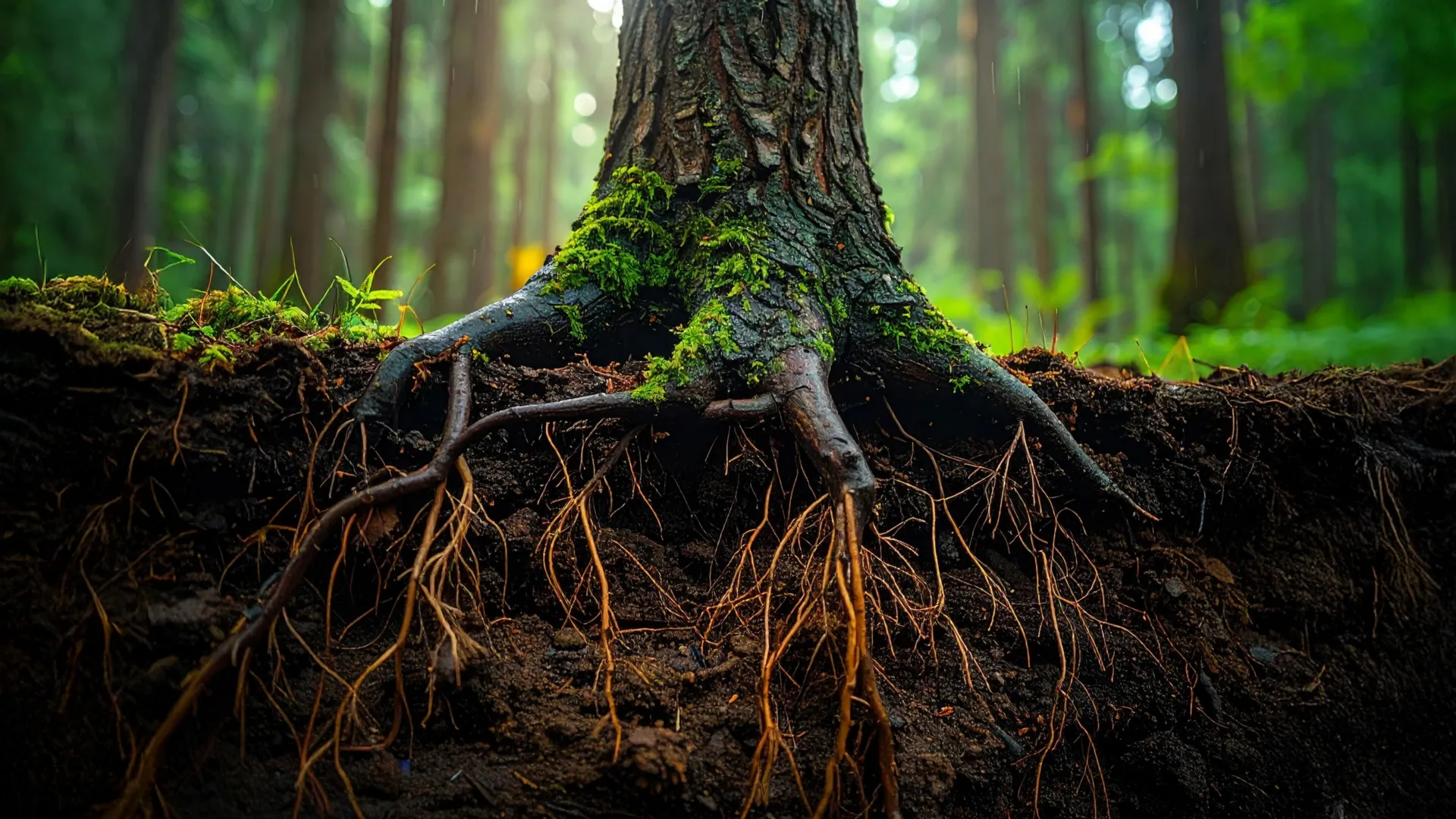
To understand the gravity of these findings, one must look at the role of the soil microbiome. Soil is not merely dirt; it is a complex, living biological engine. Microbes are the engineers of this engine, responsible for the chemical transformation of organic matter into nutrients that sustain forest growth.
Dr. Melillo explains that the 5°C warming experiment fundamentally reshaped the microbial community structure. As temperatures rise, the microbial population shifts, favoring organisms that are more efficient at breaking down complex, high-carbon compounds. This shift effectively "unlocks" carbon that had been safely stored in the soil for centuries.
The data from the Harvard Forest indicates a consistent, long-term trend of carbon loss. When these microbes consume the organic matter, they respire CO2 as a byproduct, venting it directly into the atmosphere. Because this process is happening globally—and because soil holds roughly three times as much carbon as the atmosphere—the implications of even a small percentage of this carbon being released are staggering.
Official Responses and Scientific Consensus
The findings have sent ripples through the climate modeling community. For years, models used by the Intergovernmental Panel on Climate Change (IPCC) have relied on the assumption that soil carbon would remain relatively stable.
Leading climate scientists who were not involved in the study have praised the rigorous nature of the Harvard Forest experiment. "This is the gold standard for long-term ecological research," noted one peer-reviewed assessment. "By pushing the duration of the study to nearly 40 years, Melillo has provided data that can only be obtained through extreme patience and institutional commitment."
The consensus is shifting toward the idea that the "carbon-climate feedback loop" is stronger than previously documented. If the earth’s soils release more carbon as the atmosphere warms, the atmosphere will, in turn, become warmer, leading to further soil carbon release. It is a self-reinforcing cycle that complicates the task of keeping global temperature increases below the 1.5°C threshold established by the Paris Agreement.
Implications: A Challenge to Climate Models
The implications of this research are twofold: the need for better data and the urgent necessity of mitigation.
Improving Climate Models
Currently, most climate models struggle to accurately account for the complex biological processes occurring within the soil. By incorporating the "breakdown of stable carbon" into these models, scientists can create more accurate projections. This will likely show that the remaining "carbon budget"—the amount of CO2 humanity can emit before hitting critical warming thresholds—is smaller than we previously estimated. The Harvard Forest study serves as a warning that our models may have been overly optimistic regarding the earth’s ability to act as a buffer.
Mitigation and the Path Forward
Dr. Melillo is careful to note that the findings are not a reason for despair, but rather a call to action. The rate at which these soil processes accelerate is directly tied to the rate of global temperature rise.
"If we dramatically cut CO2 emissions from fossil fuel burning, or reduce deforestation, the projected increase would be lower," Melillo notes. The experiment proves that the soil’s response is a function of the external temperature. Therefore, every fraction of a degree of warming prevented by human policy is a fraction of a degree of soil stability preserved.
The research also highlights the importance of soil health in climate strategy. Protecting old-growth forests and preventing the disturbance of soil through industrial agriculture or deforestation can help keep this carbon buried. However, the study suggests that even if we stop all human emissions tomorrow, the legacy of the warming we have already caused will continue to influence soil carbon release for years to come.
Conclusion
The 37-year experiment in the Harvard Forest has revealed a profound truth: the earth is not a static platform, but a dynamic, reactive system. The hidden carbon stores that have helped regulate the planet’s climate for millennia are now being exposed to a temperature regime they have not seen in human history.
As we move forward, the integration of these findings into our global understanding of climate change is paramount. We are no longer just fighting the emissions coming out of tailpipes and smokestacks; we are now racing against the biological processes occurring deep within the forest floor. The "sleeping giant" of soil carbon is beginning to stir, and the lesson from Dr. Melillo’s decades of work is clear: the faster we reduce our reliance on fossil fuels, the better chance we have of keeping that carbon safely in the ground.