By International News Desk
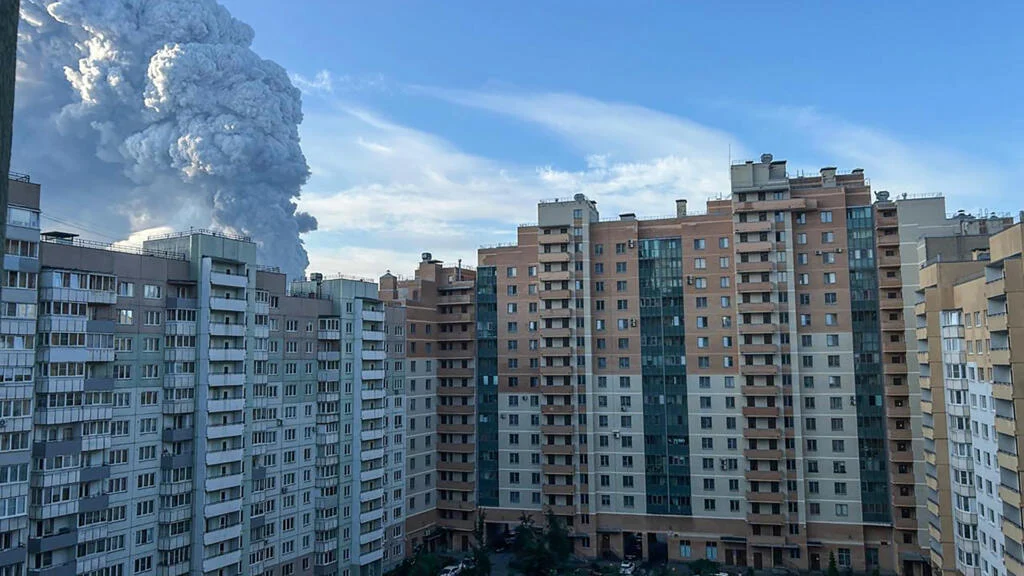
In a significant intensification of its long-range offensive, Ukraine launched one of its most expansive drone swarms to date early Friday, striking deep into Russian territory. The primary target was a major logistics hub belonging to Wildberries—Russia’s largest e-commerce retailer—located near Saint Petersburg. The attack triggered a massive inferno, sending plumes of thick, grey smoke billowing over the historic city, more than 800 kilometers from the Ukrainian border. This strike, which wounded at least three people, marks a pivotal shift in the ongoing conflict, as Kyiv increasingly pivots toward dismantling the logistical and economic infrastructure that sustains the Russian war effort.
The Strike: A Blow to Russia’s "Amazon"
The assault on the Wildberries facility near Saint Petersburg was part of a broader, synchronized operation that saw hundreds of Ukrainian drones penetrate Russian airspace. According to local officials, the strike on the e-commerce giant’s warehouse resulted in significant structural damage and a localized humanitarian emergency. Alexander Drozdenko, the governor of the Leningrad region, confirmed the casualties via social media, though the full extent of the property loss remains under assessment.
The attack on the Saint Petersburg facility is not an isolated incident; it represents a targeted campaign against the company, which is often referred to as "Russia’s Amazon." Since July 18, Ukraine has successfully struck five Wildberries warehouses, effectively neutralizing roughly 10 percent of the company’s total logistics capacity. These facilities are not merely retail hubs; they are critical cogs in a national supply chain that contributes significantly to the Russian economy.
The disruption was felt across the region, with Pulkovo Airport in Saint Petersburg forced to suspend all flights during the early hours of Friday. Operations did not resume until approximately 6:00 a.m. local time, leaving roughly 50 departures disrupted and hundreds of travelers stranded. Wildberries confirmed that two of its warehouses in the area had halted operations, signaling the severity of the infrastructure damage.
Chronology of the Escalation
The recent campaign against Russian logistics hubs follows a period of heightened activity on both sides of the front line. The timeline of this specific escalation highlights a shift in tactical focus:
- Mid-July 2026: Ukraine initiates a concerted campaign targeting Russian e-commerce and logistics centers, specifically focusing on the supply networks of Wildberries and Ozon.
- July 18, 2026: A devastating strike hits a logistics hub outside Moscow. The resulting fire completely destroys the facility and kills eight night-shift workers, marking one of the deadliest strikes on civilian-adjacent infrastructure to date.
- July 23, 2026: Imagery emerges of the charred remains of the Elektrostal warehouse, underscoring the lethal efficacy of the drone strikes.
- July 24–25, 2026: Ukraine readies and executes a massive multi-region drone swarm.
- July 26, 2026 (Friday Morning): The Saint Petersburg facility is struck. Simultaneously, the Russian Ministry of Defence reports the interception of 571 drones across more than a dozen regions and the annexed Crimean Peninsula.
This rapid-fire series of attacks suggests a highly organized strategy aimed at overwhelming Russian air defense systems through sheer volume—a tactic Kyiv has dubbed "long-range sanctions."
Supporting Data: The Economic Toll
The strategic choice to target firms like Wildberries and Ozon is rooted in their outsized role in the Russian economy. Combined, these retailers represent an economic force equivalent to 8.5 percent of Russia’s Gross Domestic Product (GDP). Furthermore, they serve as the primary employers for approximately 4 million people—more than 5 percent of the country’s entire workforce.
By crippling these hubs, Ukraine is attempting to do more than disrupt retail; it is targeting the financial stability of the Russian consumer economy. This "economic warfare" is a direct response to the constant barrage of missiles and drones that have pummeled Ukrainian cities throughout the war.
Kyiv’s argument is that these warehouses are dual-use facilities. President Volodymyr Zelensky has publicly alleged that these logistics centers are being repurposed to "supply sanctioned components for drone production and navigation equipment." While Moscow categorically denies that its e-commerce sector is involved in military logistics, the repeated targeting of these sites suggests that Ukrainian intelligence has identified them as essential nodes in the Russian military-industrial supply chain.

The cumulative effect of these strikes on oil refineries, energy infrastructure, and now retail logistics has begun to manifest as nationwide fuel shortages and a tangible strain on Russia’s "financial war chest."
Official Responses and Tactical Narratives
The Russian Ministry of Defence maintains a policy of minimizing the impact of these strikes, typically reporting only the number of intercepted drones. Following the Friday operation, Moscow claimed to have shot down 571 drones—an extraordinarily high figure that, if accurate, confirms the scale of the drone swarm but also suggests that a significant number of these devices may have successfully bypassed Russian air defenses.
Governor Drozdenko, meanwhile, stated that 59 drones were destroyed over the Leningrad region alone. However, the visual evidence of rising smoke over Saint Petersburg serves as a stark rebuttal to the narrative of total interception. Russian officials rarely admit that specific high-value targets have been hit, often attributing fires to "falling debris" rather than direct tactical hits.
In Kyiv, the narrative is framed as justified retribution. Ukrainian military officials describe the campaign as a "necessary response" to the Russian missile barrages that have repeatedly destroyed residential apartment blocks and critical energy infrastructure in Ukrainian cities. For Ukraine, the war is no longer confined to the front lines in the east; it has become a struggle of attrition fought across the entirety of the Russian landmass.
Implications: The New Front
The escalation of these strikes carries profound implications for the trajectory of the war.
The "Escalation" Dilemma
Both Russia and Ukraine have entered a dangerous phase of escalation. Moscow has intensified its use of ballistic missiles against Kyiv, resulting in a surge of civilian casualties. According to recent reports from the United Nations, 2026 has seen a sharp rise in civilian deaths, with June being recorded as the deadliest month since the early stages of the full-scale invasion in 2022.
International Perspectives
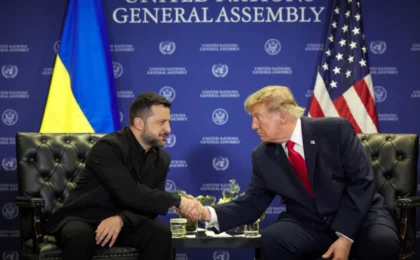
The international community remains divided on the morality and legality of these strikes. However, there are signs of shifting political support. US President Donald Trump has recently signaled a degree of backing for Ukraine’s counter-attacks on Russian soil, describing the strikes as "an escalation that can lead to an end." This rhetoric suggests a move toward accepting that the war must be brought to the Russian doorstep to force a diplomatic resolution.
The Human Cost
Behind the statistics of destroyed warehouses and intercepted drones lies a devastating human toll. Hundreds of thousands of soldiers have perished since February 2022, and tens of thousands of civilians have been killed. Despite the intensity of the conflict, neither side provides accurate or transparent data regarding their losses, leaving the true scale of the tragedy obscured.
Conclusion
The strike on the Saint Petersburg Wildberries warehouse is a bellwether for the next phase of the Russia-Ukraine war. By expanding its reach to the outskirts of Russia’s second city, Ukraine has demonstrated an ability to project power far beyond the frontline, forcing the Kremlin to confront the domestic costs of its aggression. As the campaign of "long-range sanctions" continues, the distinction between the military and civilian economy in Russia is likely to continue to blur, setting the stage for a period of heightened instability within the Russian heartland. Whether these strikes will hasten an end to the conflict or merely deepen the cycle of violence remains the most pressing question in the geopolitical landscape.