For months, the halls of Wall Street have echoed with a singular, skeptical refrain: Is Alphabet’s multi-billion-dollar gamble on artificial intelligence a bridge to the future or a fiscal black hole? As the tech giant faced mounting pressure over its aggressive capital expenditure, the release of its latest earnings report has served as a decisive rebuttal. Alphabet is not merely spending on AI; it is successfully commercializing it at a scale that is silencing its most vocal critics.
With a blowout quarter that saw Google Cloud revenue soar and massive growth in its AI-powered services, Alphabet has demonstrated that the "AI bubble" may have more substance than investors previously dared to hope.
The Main Facts: A Financial Powerhouse in Motion
Alphabet’s latest fiscal results tell a story of aggressive, high-stakes expansion that is yielding tangible dividends. The company reported a total revenue of $119.8 billion for the quarter, a robust 24% increase year-over-year. Even more impressive is the surge in profitability; the company posted a profit of $112.1 billion, a staggering jump compared to the $28.1 billion reported during the same period last year.
The engine driving this growth is undeniably the enterprise sector. Google Cloud, once considered a distant runner-up to AWS and Microsoft Azure, has become the company’s primary growth catalyst. Cloud revenue skyrocketed by 82% to $24.8 billion, a figure that obliterated analyst expectations of $22.46 billion. This performance marks the 12th consecutive quarter of double-digit revenue growth for Alphabet, a streak that underscores the company’s ability to maintain momentum even as its total revenue reaches unprecedented heights.
Chronology of the AI Buildout
To understand how Alphabet reached this inflection point, one must look at the progression of its strategic shift:
- 2024 – The Pivot: Faced with the explosive rise of generative AI, Alphabet began aggressively shifting its infrastructure priorities toward custom silicon (TPUs) and large-scale data center expansion.
- Early 2025 – The Skepticism: As capital expenditure (CapEx) began to balloon, investors questioned whether the costs of training foundation models and building AI-ready infrastructure were sustainable.
- Q4 2025 – Initial Adoption: Google reported that its Gemini chatbot hit 750 million monthly active users, signaling that consumer interest was finally catching up to the technology.
- Q2 2026 – The Breakthrough: With Gemini now commanding 950 million monthly active users, the "AI moat" has solidified. The cloud division’s 82% revenue growth confirms that enterprise clients are no longer just experimenting with AI—they are building their core operations on top of Google’s AI infrastructure.
Supporting Data: The Scale of the Bet
The sheer scale of Alphabet’s investment is unprecedented in corporate history. The company estimates its total capital expenditure for the current year to be between $180 billion and $190 billion. To put this in perspective, this spending—primarily dedicated to building high-density data centers, procuring cutting-edge chips, and optimizing global networking—is equivalent to the GDP of many mid-sized nations.
However, the "backlog" metric provides the best evidence that this spending is not in vain. Alphabet reported a staggering $514 billion in cloud contracting work—revenue that has been signed for but not yet recognized. This indicates a long-term commitment from enterprise clients, effectively guaranteeing that the revenue stream from the cloud business will remain robust for years to come.
Furthermore, the Google Services segment, which houses the company’s advertising and search engines, grew by 15% to $94.5 billion. This growth proves that the integration of generative AI into search and user-facing tools has not cannibalized the business model, but rather enhanced it, making Google’s ecosystem more indispensable to both advertisers and consumers.
Official Responses: Sundar Pichai on the "Healthier" Horizon
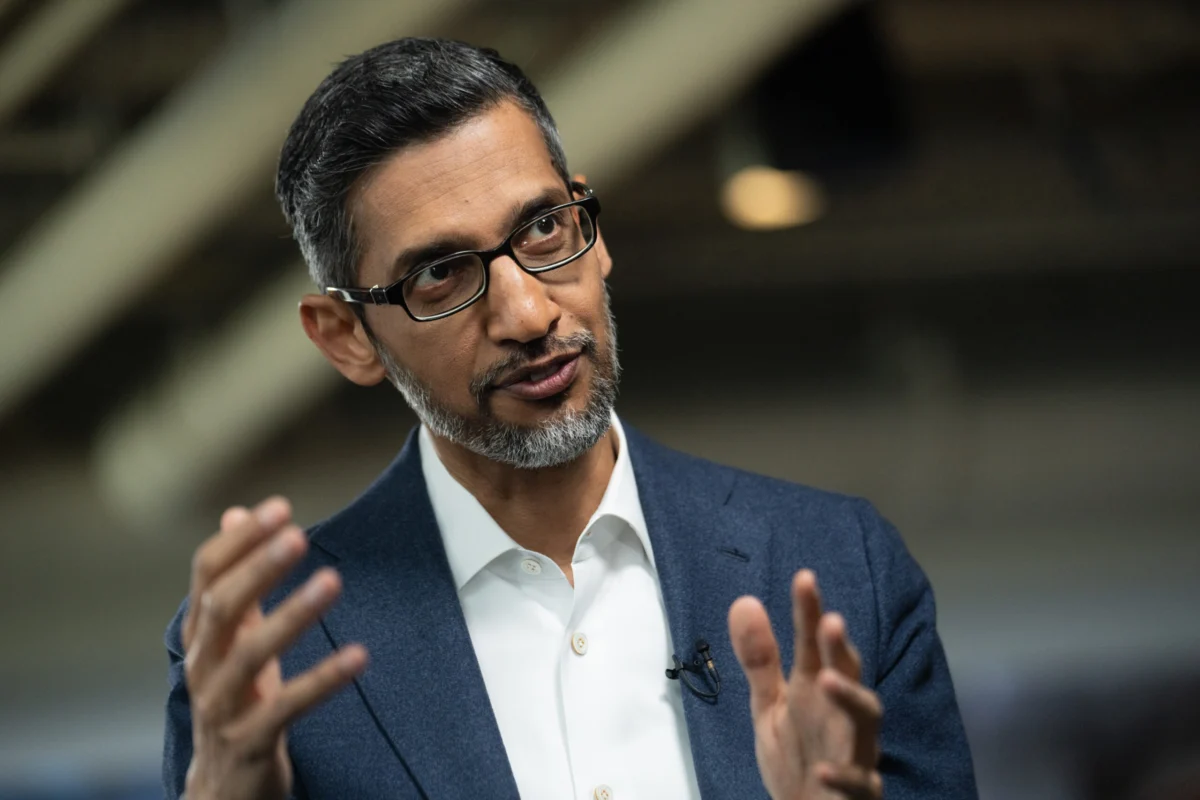
During the earnings call, CEO Sundar Pichai faced rigorous questioning regarding the long-term sustainability of the company’s capital outlays. Analysts expressed concern over whether the returns on infrastructure would eventually plateau or lead to diminishing marginal utility.
Pichai’s response was one of calculated confidence. "Our AI investments are redefining what’s possible across every part of our business," he noted, emphasizing that the company is experiencing "exciting momentum across the board."
Addressing the skepticism directly, Pichai suggested that the current market environment for AI compute is actually more favorable than it was a year ago. "I think our compute capacity investments in ’27," he stated. "We are seeing strong demand indicators, including long-term deals. I think, if anything, the dynamics look healthier than where we were about a year ago, so that’s what gives us the confidence to undertake those investments."
Pichai’s message is clear: Alphabet is not building for the next quarter; it is building for the next decade. By securing long-term contracts and establishing a massive user base for Gemini, the company believes it is creating an infrastructure that will serve as the "utility grid" for the global AI economy.
Implications: The New Era of Tech Valuation
The implications of these results extend far beyond Alphabet’s stock price. They suggest that the "AI buildout" phase is transitioning into a "monetization" phase. For the broader tech industry, Alphabet’s success serves as a blueprint:
- Cloud as the Primary AI Delivery Vehicle: The massive growth in Google Cloud confirms that the future of AI is not just in standalone apps, but in the underlying compute and API services that power global enterprise workflows.
- The "Moat" is Infrastructure: In the world of generative AI, software is easy to replicate, but global-scale infrastructure—data centers, cooling, high-speed fiber, and custom silicon—is not. By spending billions now, Alphabet is effectively raising the barrier to entry for smaller competitors.
- Consumer Integration: The jump to 950 million monthly active users for Gemini is a significant milestone. It suggests that AI is no longer a niche tool for developers; it is becoming a standard consumer interface, much like the search bar was in the early 2000s.
Looking Ahead: The Sustainability Challenge
While the current figures are impressive, the challenges remain. The energy requirements for maintaining this infrastructure are immense, and regulatory scrutiny regarding data privacy and the ethical implications of AI continues to intensify. Furthermore, the pressure to maintain such high growth rates will only increase as the year progresses.
However, the prevailing narrative has shifted. Six months ago, the discussion was centered on whether Alphabet was wasting money on a speculative trend. Today, the conversation has moved to how the company plans to manage its dominant position.
As Alphabet continues to pour capital into its infrastructure, it is betting that the demand for AI compute will outpace even the most aggressive supply projections. If the current trajectory holds, the company’s $180 billion-plus investment will not be remembered as a reckless gamble, but as the foundational expenditure that allowed it to define the next generation of the internet.
For investors, the takeaway is clear: the AI bubble may be a myth, but the AI transformation is very real, and Alphabet is currently leading the charge. As the company continues to execute its strategy, it is effectively turning the cost of innovation into a barrier to entry that competitors will find increasingly difficult to surmount.